
 E-Paper


Mamata Banerjee storms out of NITI Aayog meet: ‘Wanted to speak but my mic… This is insulting’
West Bengal chief minister Mamata Banerjee walked out of Niti Aayog meeting, claiming that she was allowed to speak only for five minutes.

 Prefer HTon Google


West Bengal chief minister Mamata Banerjee on Saturday, July 27, walked out of NITI Aayog's 9th Governing Council meeting in New Delhi, claiming that she was allowed to speak only for five minutes. The NITI Aayog meeting is being chaired by Prime Minister Narendra Modi.
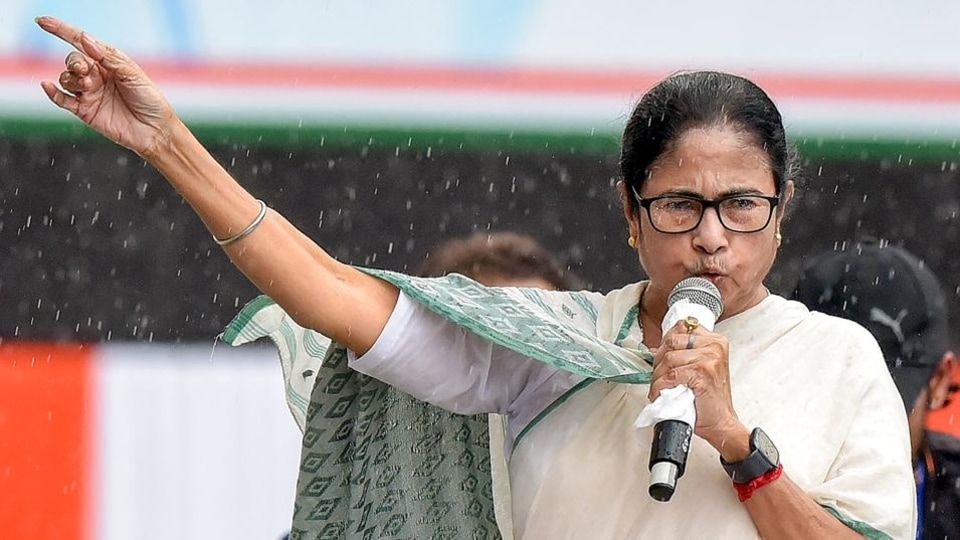
"...I said you (central government) should not discriminate against state governments. I wanted to speak but my mic was muted. I was allowed to speak only for five minutes. People before me spoke for 10-20 minutes," Mamata Banerjee told reporters after she stormed out of the NITI Aayog meeting.
"I was the only one from the opposition who was participating but still, I was not allowed to speak. This is insulting...," the Bengal chief minister added.
Also Read | PM Modi to chair NITI Aayog meeting today: Who is attending, who's skipping
Several Opposition-ruled states have announced they will boycott the meeting. Chief ministers of three Congress-ruled states - Karnataka's Siddaramaiah, Himachal Pradesh's Sukhvinder Singh Sukhu and Telangana's Revanth Reddy have announced they will not attend the meeting over alleged bias against their states in the Union Budget 2024.
Tamil Nadu's chief minister and DMK leader MK Stalin along with Kerala chief minister Pinarayi Vijayan and Aam Aadmi Party-led Punjab and Delhi governments have said they would also boycott the meeting.
Mamata Banerjee, who attended the meeting, earlier said she felt their voices should be raised on a common platform.
The meeting focuses on making India a developed nation by 2047. It aims to foster participative governance and collaboration between the Centre and state governments, enhancing the quality of life for both rural and urban populations by strengthening the delivery mechanisms of government interventions.
The council, the apex body of NITI Aayog, includes all state chief ministers, lieutenant governors of Union Territories, and several Union ministers. Prime Minister Modi is the chairman of NITI Aayog.
The meeting also focusses on recommendations of the 3rd National Conference of chief secretaries held in December last year.
During the conference, recommendations were made on five key themes--drinking water: access, quantity, and quality; electricity: quality, efficiency, and reliability; health: accessibility, affordability, and quality of care; schooling: access and quality and land and property: accessibility, digitization, registration, and mutation.
A vision document is being prepared to help India become a developed economy of USD 30 trillion by 2047, the 100th year of its independence.
In 2023, NITI Aayog was entrusted with the task of consolidating the 10 sectoral thematic visions into a combined vision for Viksit Bharat @2047.
The vision encompasses various aspects of development, including economic growth, social progress, environmental sustainability, and good governance, among other.


