
 E-Paper



May hear Ayodhya case 5 days a week, says top court
This is a departure from the norm, as Mondays and Fridays are reserved by the court for hearing fresh cases and cases coming up after notice.

 Prefer HTon Google


The Supreme Court would appear to have fast- tracked the hearing in the RamJanmabhoomi-Babri Masjid title dispute case, and indicated on Thursday that the five-judge bench led by Chief Justice Ranjan Gogoi will hear the case all five days of the working week. Earlier, the case was to be taken up on three days – Tuesday, Wednesday and Thursday.
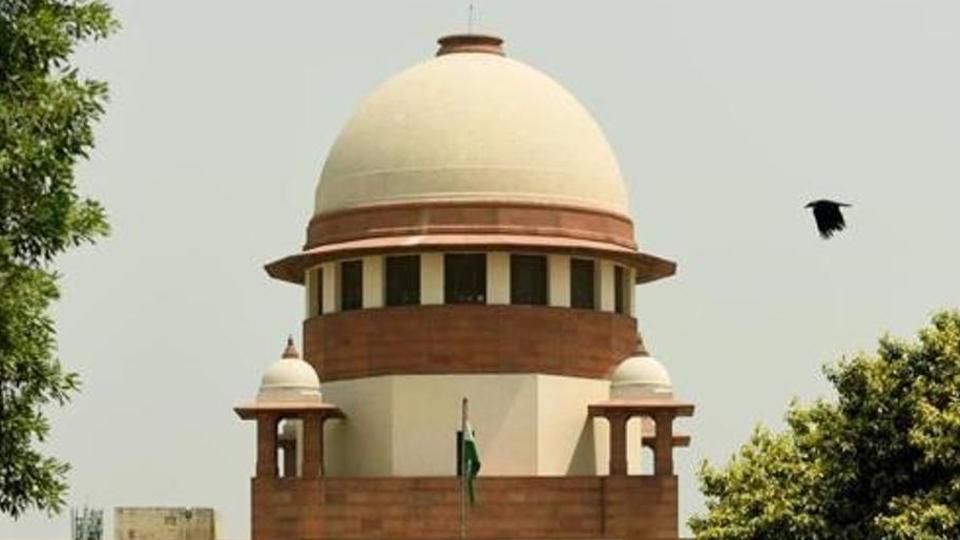
The first indication of the court’s intent to fast-track the case came when the bench said it would assemble on August 9 to let senior advocate K Parasaran continue his arguments on behalf of Ram Lalla – the personification of the deity. ““We may hear the case on all five days of the week,” Chief Justice Gogoi said as the proceedings ended on the third day of the hearing.
This is a departure from the norm, as Mondays and Fridays are reserved by the court for hearing fresh cases and cases coming up after notice. Even if a case has to be taken up urgently on a Monday or Friday, its generally done in the afternoon session from 2 pm.
But the bench in the Ayodhya matter has decided to hear the politically sensitive case the whole day.
According to the cause list-- a list of cases to be taken up by the Supreme Court on Friday-- the Ayodhya case will be heard from 10.30 in the morning.
During the Thursday hearing, a lot of the discussion was on whether a location could be a so-called juridical person, a non-human legal entity. Such entities are recognized as a legal person and as having a distinct identity.
The bench, comprising justices SA Bobde, DY Chandrachud, Ashok Bhushan and SA Nazeer, apart from the Chief Justice, posed a query to Parasaran on whether a birthplace of Lord Rama can be a juridical person. The question came while the senior advocate was reading out paragraphs from the judgement rendered by the Allahabad High Court that is being appealed in the top court. Parasaran quoted portions from the HC judgement that declared the “janmasthan” (birthplace of Ram) as a juridical person and allowed a representative to advance arguments on behalf of the same.
Justice Bhushan asked the senior lawyer: “How can a “janmasthan” be a juridical person. We can understand about the deity being one.” Parasaran replied that temples are a “matter of worship.” He cited example of how Lord Shiva is worshipped in the “linga form” in temples. “Can we say that linga is not a juridical person?” he asked.
Justice Chandrachud sought to know from Parasaran if the notion of juridical personality can be extended to a source of worship. “You argue that the worship is not just of the physical form of the idol but the divine spirit a deity underlines. Your plea that “janma sthan” is a juridical personality is founded on the belief that this place is a source of worship. But can a source of worship be a juridical person?” the judge wondered.
Parasaran said he would elaborate this principle in due course and then went on to read paragraphs from the HC judgement.


