E-Paper



Mediation is not law’s weakness but its highest evolution: CJI Surya Kant
CJI Surya Kant emphasizes mediation as law's evolution, advocating for a multi-door courthouse system and a compassionate approach to drug abuse.

 Prefer HTon Google


Chief Justice of India Surya Kant on Friday said mediation is not a sign of the law’s weakness but its highest evolution.
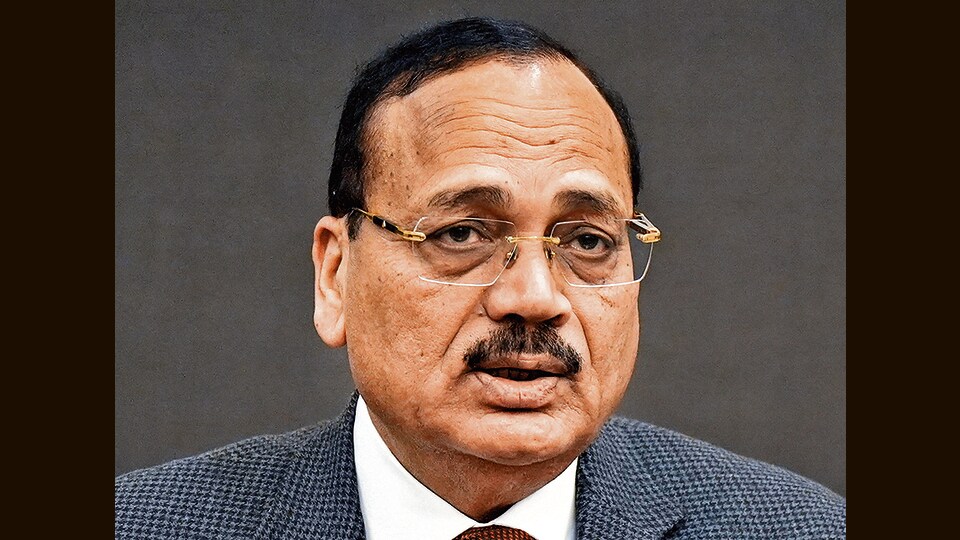
“Mediation is not a sign of the weakness of the law, but rather the mediation is the highest evolution. It is the true transition from the culture of adjudication, where we merely manage conflicts. Rather, we are shifting to a culture of participation where we actively cultivate harmony,” he said.
Justice Kant was addressing a two-day National Conference and Symposium on Mediation: How Far Significant in the Present-Day Context, organised by the Bar Council of India and the Bar Council of India Trust – Pearl First, in collaboration with the India International University of Legal Education and Research (IIULER), Goa. The CJI inaugurated the symposium on Friday.
Calling mediation an issue close to his heart, the CJI said it was not a Western concept but “the genius of our soil.”
“In truth, we are not learning a new discipline; we are simply remembering a language we once spoke with fluent ease. Mediation is the genius of our soil. It is the ancient art of kshama, reclaimed and recontextualised for a modern era,” he said.
The Chief Justice described litigation as the “autopsy of a dead relationship”, “a clinical dissection of what went wrong”, while meditation, he said, was “a remedial surgery that seeks to preserve the living pulse of a connection.” He also called for a transition towards a multi-door courthouse system.
“This is a visionary concept where the court ceases to be a singular venue for trials, but becomes a comprehensive centre for dispute resolution. Those doors are mediation, arbitration, and eventually, litigation too. Each is tailored to the specific nature of grievances. This is the ultimate empowerment of the litigant, ensuring that the method of resolution is as nuanced and varied as the dispute itself,” he added.
Earlier in the day, the CJI launched a 30-day awareness campaign — ‘Drug Abuse: A Menace to Society” organised by the Goa State Legal Services Authority. Speaking at the event, the CJI stressed that “the law must speak firmly, decisively, and without hesitation” when dealing with traffickers and those who profit from human vulnerability.
However, he said, “The law’s response must be different when it encounters a first-time user, a student, or a young adult struggling with dependency. In such cases, the central question is no longer one of culpability; it becomes a question of recovery. Punishment by itself cannot be the end. Justice must ask whether it is merely closing a case or preserving a future that might otherwise be lost.”
“Addiction cannot be legislated out of existence; it can only be confronted through a calibrated balance of deterrence, treatment, and social reintegration. No single institution can address substance abuse alone. Prevention requires coordination, and recovery requires continuity. Where institutions act in isolation, gaps emerge and addiction finds space to grow. When they act together, the response becomes preventive rather than reactive and compassionate rather than punitive. Justice in India can be firm without being cruel, and compassionate without being naive,” he said.
The CJI also paid tribute to the 25 people who lost their lives in the recent Goa nightclub fire, calling it “a profound loss for their loved ones and a tragedy for our entire nation.”
“...I wish to offer my heartfelt condolences regarding the recent tragedy in Arpora, Goa. We mourn the loss of many young lives — individuals who were there to enjoy a well-earned break, as well as those working hard to support their families,” he said.