
Sign in

‘Military priority is to have adequate inventory for 30-day war’

The Defence Planning Committee came to the conclusion that the armed forces just about had adequate ammunition for a short 10-day war.

Published on: May 8, 2018, 07:18:55 IST
Hindustan Times, New Delhi | By
Share
Share via
  • facebook
  • twitter
  • linkedin
  • whatsapp
Copy link
  • copy link

The Defence Planning Committee (DPC) has made it clear that the priority of the military should be to have adequate ammunition inventory for a 30-day war rather than acquiring hi-tech high value weapons platforms from foreign arms makers, according to defence ministry officials familiar with happenings at its first meeting. Headed by the national security adviser Ajit Doval, the DPC, which has the three service chiefs, and the defence, foreign and expenditure secretaries as members, met on May 3.
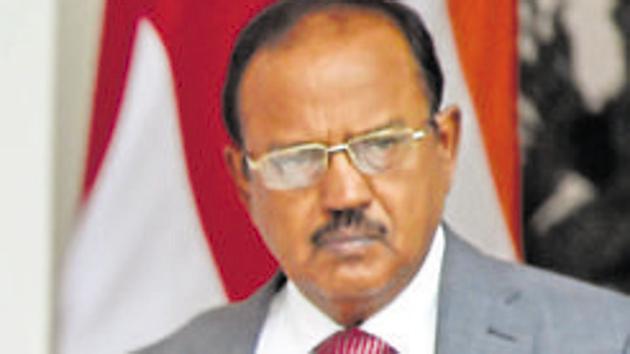
Headed by the national security adviser Ajit Doval, the Defence Planning Committee, which has the three service chiefs, and the defence, foreign and expenditure secretaries as members, met on May 3. (HT File Photo)

South Block officials who spoke on condition of anonymity told Hindustan Times that the apex committee came to the conclusion that the armed forces just about had adequate ammunition for a short 10-day war but were keen on buying high value futuristic platforms. The DPC decided that before the Indian armed forces commit to acquiring any platform in the future, the manufacturer will have to set up an ammunition factory through the joint venture route in India. The DPC advocated that ammunition purchase should be an on-going process with 25% of inventory dedicated for training purposes.

This decision was taken after it was brought to the notice of the recently created DPC that the armed forces largely bought ammunition from the revenue budget and appeared more focused on acquiring big ticket hardware such as aircraft carriers and top-end fighter planes from their capital budget. Focusing on ammunition as part of capability development, the DPC said, according to the officials, was the need of the hour.

Before India undertook surgical strikes in Pakistan Occupied Kashmir in 2016, it made emergency purchases of ammunition, laser guided bombs and missiles from Russia. This was the case even after the military was mobilized after Parliament attack in December 2001 and after the Kaluchak massacre in May 2002.

The DPC, which has been set-up on the basis of a 2009 Defence Minister operational directive and the Chiefs of Staff Committee, also reviewed the situation on the Line of Actual Control with China and Line of Control with Pakistan. It was decided that all border infrastructure projects should be completed by 2022 even if they involves private companies such as Mahindra & Mahindra, Larsen & Toubro, and the Kalyani group, in road and bridge building.

Prime Minister Narendra Modi’s informal summit with Chinese President Xi Jinping was also discussed within the apex group with the bottomline being that there should be no lowering of the guard or delaying of critical border infrastructure projects in the name of any perceived bonhomie between the two countries.

  • Shishir Gupta
    ABOUT THE AUTHOR
    Shishir Gupta

    Shishir Gupta is Executive Editor at Hindustan Times and one of India's top journalists covering national security, strategic affairs, foreign policy and geopolitics. Over the past three decades, he has extensively reported on India's military, diplomatic and security landscape, covering every major conflict and national security challenge, from the 1999 Kargil War and the 2020 East Ladakh standoff to Operation Sindoor in 2025. He has also covered major terror attacks, including the IC-814 hijacking, the 26/11 Mumbai attacks and the 2025 Pahalgam terror strike, along with numerous Pakistan-backed terrorist incidents in the Kashmir Valley and across India. He has reported on national and state elections for more than three decades. A recognised authority on strategic affairs, Gupta has covered India's nuclear programme since the Pokhran-II (Shakti series) tests in May 1998 and has written extensively on global nuclear issues, Indian diplomacy and the country's expanding global outreach. He has also reported widely on international conflicts and terrorism, with a special focus on the Indian subcontinent. Gupta has interviewed Prime Minister Narendra Modi more than four times, including Modi's first interview with the print media after becoming Prime Minister in May 2014. His other interviews include three with the Dalai Lama, as well as conversations with Benjamin Netanyahu, Amit Shah, Yogi Adityanath, S. Jaishankar, Nirmala Sitharaman and Piyush Goyal. He is the author of Indian Mujahideen: The Enemy Within (Hachette, 2011) and Himalayan Face-off: Chinese Assertion and Indian Riposte (Hachette, 2014). He was awarded the Chevening-Wolfson Joint Scholarship at Wolfson College, University of Cambridge, UK, in 1998 and participated in the International Visitor Leadership Program (IVLP) of the US State Department in 2006. He received the Ben Gurion Prize from Israel in 2011 and the K. Subrahmanyam Prize for Strategic Studies in 2015 from the Manohar Parrikar Institute for Defence Studies and Analyses (MP-IDSA). Since 2024, he has hosted Point Blank, Hindustan Times' weekly YouTube show on global geopolitics.Read More

Get the latest India News, breaking headlines and real-time updates from across the country. Stay informed about politics, government policies, crime, weather and major national developments.