
 E-Paper



Mixing terror with politics will damage national security
Such was the radicalisation that led to the Ahmedabad blasts that accused Imran Ibrahim Sheikh targeted the city hospital trauma centre, where his father had undergone a state-subsidised bypass surgery just a month ago, with a car bomb within an hour of the serial bombing.

 Prefer HTon Google


Azamgarh ideologue of banned Students Islamic Movement of India (SIMI) Mufti Abu Bashar was one of the 38 sentenced to death by a special court in Gujarat last Friday for the 2008 Ahmedabad bombing that killed 56 innocents and maimed 200 others. Mufti Bashar was tracked down by Gujarat Police and Intelligence Bureau counter-terror department based on call record of another SIMI militant from Vadodara Mohammed Usman Agarbattiwala. Agarbattiwala has also been sent to death row by the court.
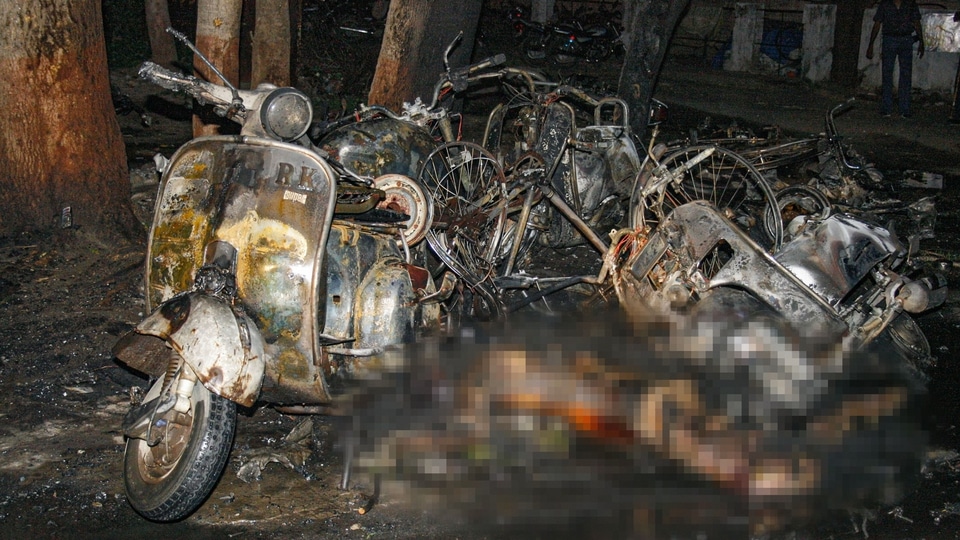
While Ahmedabad serial blasts investigations have been brought to a close, the Indian security agencies have not been able to arrest Riyaz and Iqbal Bhatkal, the main perpetrators behind the blasts and co-founders of the Indian Mujahideen terrorist group. The Bhatkal brothers are based in Pakistan and are still actively planning against India, at the behest of the Pakistani deep state, to cause communal conflagration by weaponizing local radicalized youth all over the country. The recovery of improvised explosive devices in Delhi, Punjab and Jammu and Kashmir recently have ominous portents.
Although Mufti Bashar was apprehended and brought to Ahmedabad for interrogation by IB and Gujarat police, his arrest from Saraimeer village outside Azamgarh was no less dramatic with a toxic mixture of politics and terrorism. The Gujarat Police and the Intelligence Bureau had to virtually fight it out with the then Mayawati government to secure custody of Mufti Bashar as the local Azamgarh police said that the arrest would lead to a communally sensitive situation. Such was the toxic politics at play that the then Gujarat Chief Minister Narendra Modi had to hire a chartered aircraft to fly Bashar from Lucknow airport.
The situation was no different when the Intelligence Bureau picked up Yasin Bhatkal, one of the key members of the Indian Mujahideen group, from Pokhara in Nepal with the full cooperation of the police of the neighbouring country on August 28, 2013. Again, the toxic mix of terror and politics was at play with IB sleuths made to sweat and fret for hours altogether before the terrorist was handed over to the Bihar police and then NIA for formal registration of case. The terrorist was handed over after intervention at the highest levels between the Central and State government, which was then ruled by present Chief Minister Nitish Kumar without BJP as an electoral ally.
The same politics was played out in New Delhi when top Indian Mujahideen terrorists like Atif Ameen were killed in an encounter with Delhi Police at Batla House in Jamia Nagar. The tip-off to Batla House was provided by the Gujarat Police and IB because of meticulous Ahmedabad blast investigations.
The deadly mixture of politics and terror has created the same problems in the sensitive Union territory of Jammu and Kashmir, and Punjab with politicians using separatist elements as muscle, funders and force multipliers. There is ready support available from across the border with Pakistan still dreaming about Mission K-2 (Kashmir-Khalistan) and giving shelter to terror elements supporting the Khalistan or Kashmir cause. The presence of leaders of Khalistan Zindabad Force and Hizbul Mujahideen in Pakistan and occupied Kashmir gives away the larger conspiracy and plan.
With UP and Punjab going to Assembly polls today, it is in the national interest that separatist elements do not get a legitimate voice in the legislative process by riding on mainstream political parties. A weak and fractured UP mandate or a hung Punjab assembly will not only make border protection difficult politically but also damage internal security.


