
 E-Paper



May 7 Mock drills: India gears up for wartime blackouts, sirens and more
On Monday, the Ministry of Home Affairs (MHA) directed all states and union territories to conduct full-scale civil defence mock drills.

 Prefer HTon Google


India will conduct one of its most extensive civil defence preparedness exercises in decades on Wednesday (May 7) as part of a nationwide mock drill to test emergency response preparedness amid heightened tensions with Pakistan after the ghastly Pahalgam terror attack.
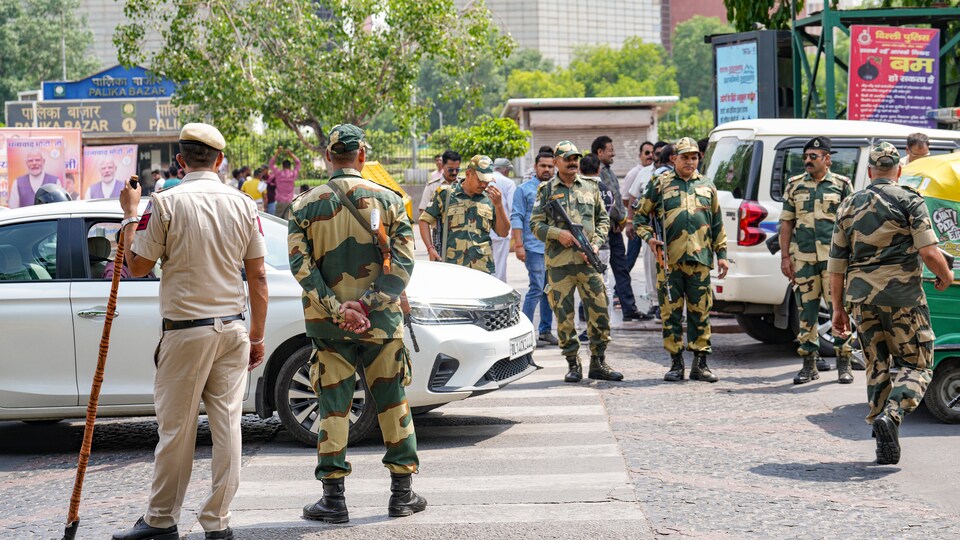
On Monday, the Ministry of Home Affairs (MHA) directed all states and union territories to conduct full-scale civil defence mock drills to check preparedness against "new and complex threats".
The mock drills, as per the government, will involve air raid siren tests, wartime blackout simulations, activation of emergency control rooms, evacuation rehearsals, and coordination with the Indian Air Force.
Also Read | 'Absurd': India tears into OIC's statement on Pakistan standoff over Pahalgam attack
Along with the civil defence mock drills, the Indian Air Force will also launch a high-intensity aerial exercise over the desert sector and adjoining areas along the Western border starting Tuesday, ANI reported, citing IAF officials. It will be a two-day mega military exercise.
These security mock drills come just weeks after the Pahalgam terror attack in Jammu and Kashmir, in which 26 people were killed. The Centre, since then, vowed a “zero-tolerance” approach to security threats.
Mock security drills tomorrow: Top updates
- Mock drills: According to an MHA list doing the rounds, mock security drills are expected to be carried out at 259 categorised civil defence districts across the country on May 7.
- Mock drill time: According to information we could gather, mock drills across several cities are expected to start around 4 pm. The timing across cities may vary.
- Measures: The measures to be taken during the mock drills include the operationalisation of air-raid warning sirens, training civilians on civil-defence aspects to protect themselves in the event of a "hostile attack" and cleaning of bunkers and trenches.
- Objectives: The primary objectives of the mock drill include assessment of the effectiveness of air raid warning systems, operationalisation of hotline/radio communication links with the Indian Air Force, testing of the functionality of control rooms and shadow control rooms and training of civilians, students, etc., on civil defence aspects to protect themselves in the event of a hostile attack.
- Who's involved: The authorities in all states will involve students of educational institutions, employees of government and private organisations, hospital staff, railway and metro officials, besides uniformed personnel of the police, paramilitary and defence forces, while conducting the mock drills.
- Nuclear plants, military bases: Mock drills will be conducted in regions with sensitive installations like nuclear plants, military bases, refineries, and hydroelectric dams.
- Vulnerable cities: Most vulnerable places include metro cities like Delhi, Chennai, Mumbai and Kolkata and cities that have vital installations like nuclear facilities or are along the border, they said.
- Mock drill in Delhi: The Delhi government issued a list of dos' and don'ts for the exercise 'Operation Abhyaas' at 55 locations across the national capital.
- Will daily services run? Despite the scale of the operation, officials have confirmed that daily services, including public transport systems, trains, buses, and flights, will continue to operate on schedule.
- IAF's aerial exercise: The Indian Air Force (IAF) will launch a two-day high-intensity aerial exercise over the desert sector and adjoining areas along the Western border starting Wednesday.


