
 E-Paper



Modi’s ‘Atmanirbhar Bharat’ mission depends on success of his US, France visits
India will cement ties with US and France during PM Modi’s upcoming visits to Washington and Paris.

 Prefer HTon Google


The success of Prime Minister Narendra Modi’s “Atmanirbhar Bharat” mission aimed at developing an advanced military-industrial complex in India will depend on his upcoming visits to the US on June 22 and to France on July 14.
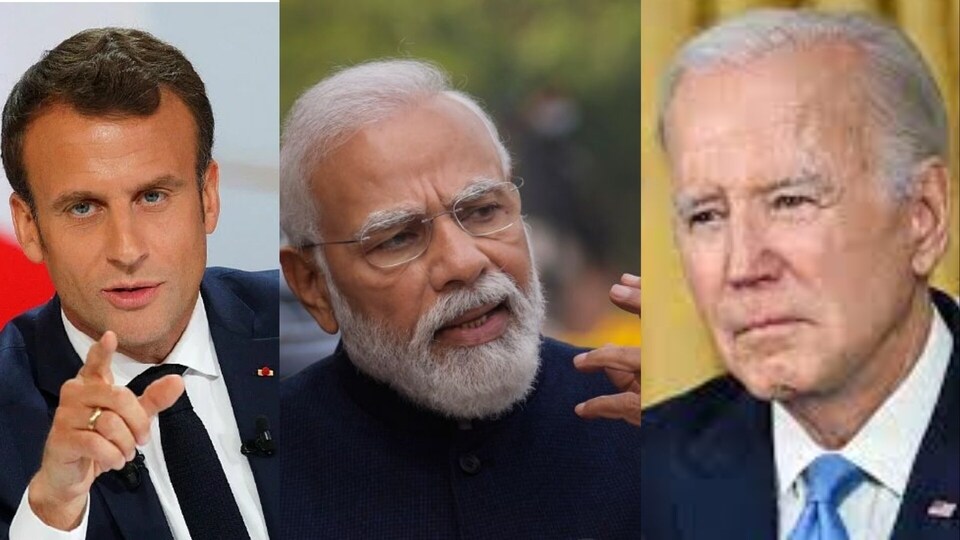
While President Joe Biden has invited him for a state visit with a rare second opportunity to address the Congress, French President Emmanuel Macron has invited him to be part of the Bastille Day celebrations with a tri-services contingent of Indian military participating in the parade. There are some 4000 war memorials in France, which remember the contributions of Indian soldiers in the two great wars last century.
Even though archrival China has tried to belittle Indian military design, development and manufacturing through junior-level military officers briefing media on the sidelines of the recently concluded Shangri La Dialogue, the Modi government has taken significant steps to get its hardware design and manufacturing in order. While these junior PLA officials parrot the line that India is no military threat to China, they also conversely try to pitch the line that New Delhi will not be a loyal partner to Washington. Fact is that they are wrong on both counts as only India can keep more than 80,000 PLA troopers with aircraft, rockets and big guns engaged on its northern borders and distract China from any military adventure on Taiwan, which will draw Japan into military emergency and cause havoc in the South China Sea. This apart, only India has the navy prowess to counter the PLA Navy challenge in the Indian Ocean and beyond. Lastly, the Indian Army stand-offs with belligerent PLA on Doklam plateau in 2017 and in Galwan on June 15, 2020, shows the Modi government’s decisive ability to take on a military challenge and come out without yielding an inch of territory or military pride unlike in the past. Both incidents could have flared into a full-fledged conflict.
Apart from the atmosphere of PM Modi’s visit to US, the content of the visit will reveal the depth of India-US relations today with the Biden government ready to part with top-end military technology for manufacturing in India. Even though the Biden government is still to give approval to General Electric to manufacture F-414 jet engines to power Indian Tejas Mark II fighter, it is now given that GE will manufacture the engine on themaximum transfer of technology with Indian HAL and the partnership will be later upgraded to other engines. The US is also ready to sell top-end armed drones to India and even look at manufacturing surveillance drones at a later day. With China acquiring hybrid warfare capabilities, the US is ready to share cyber-security tools and experts with India in order to firewall critical infrastructure against attacks from Beijing-sponsored hackers.
The visit to France is equally important if not more in terms of Paris ready to manufacture hardware in India and even use these manufacturing and fabrication plants for future military exports to third countries. Today, India and France are looking towards theconstruction of air independent propulsion equipped submarines at Mazagon Dockyards to provide the Indian Navy with six more latest submarines under the Project 75 India category and also using the same facility for building submarines for export to Indonesia and others. As India’s closest military partner, France is even willing to build nuclear-powered and conventionally armed submarines for India this decade to meet the Chinese challenge.
While Airbus is manufacturing C-295 transport aircraft in India, French aircraft engine maker Safran is ready to co-develop and then manufacture a 100-110 Kilo Newton aircraft jet engine which will power DRDO-designed India’s twin-engine fighter. There is also a strong possibility that French Dassault may provide two squadrons of Rafale-Maritime for INS Vikrant aircraft carrier and look towards manufacturing of Rafale fighters in India in the near future.
While all these proposals are under serious consideration and not pipedreams, the decision ultimately lies with India and its manufacturing and financial capacity to accept and absorb the new technology. The Indian decision to stay strategically autonomous is based on its national interest and is today ready to partner with the West to counter the challenge from China and its satellites in the Indian sub-continent.


