
 E-Paper



Mothers who gave birth in police vans during the lockdown recount journey
Nearly a year after their births, HT tracked down five of the six children born in PCR vans. The babies are healthy, but their parents struggle to recover from the financial shock and job loss suffered due to the pandemic.


When Kiran Aharwar went into labour on May 16 last year, her husband Ashok was despondent. The nation was under lockdown to arrest the spread of Covid-19, public transport was suspended, private vehicles were allowed at night only with special permission, and despite emergency services functioning in Delhi, medical facilities were stretched thin.
Ashok dialled the local hospital but was told an ambulance would take two hours to reach their house in outer Delhi’s Rohini. With his wife’s condition deteriorating, an Asha worker in the neighbourhood called the local police station, hoping for some help.
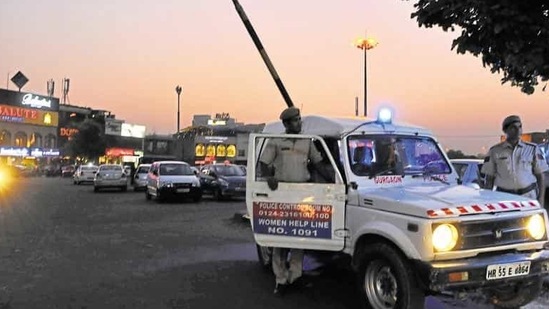
Within 10 minutes, a local police control room (PCR) vehicle had appeared. With the help of two officers, Aharwar was put in the car and it sped off to the local hospital.
Aharwar, however, was well into labour. Ten minutes later, she delivered a healthy girl child, Shanvi, in the PCR van, with the help of two officers. None of the policemen were medically trained or had any special equipment to help with the delivery.
They ensured the van was parked at an isolated spot to offer privacy and helped with the delivery.
“After my baby was born, the policemen helped with the cleaning work before moving us to Sanjay Gandhi Hospital,” said Aharwar.
Shanvi is among six babies delivered in PCR vans with the help of Delhi Police personnel during the lockdown months. Each of these children was born in a PCR van after their mother, while in labour pain, failed to find an ambulance and ended up dialling the police as last resort. Each of these cases involved police personnel helping deliver the baby without technical knowhow, using ordinary objects as makeshift medical equipment. In each case, the police personnel involved in helping were men.
“These policemen went beyond their gender roles and boundaries and their general duties,” said Chinmoy Biswal, Delhi Police spokesperson.
Assistant sub-inspector (ASI) Umed Singh, who was in charge of the PCR van in which Kiran delivered her baby, said they were in Aman Vihar, about four kilometres away, when they got a message about the emergency on the wireless set. Singh and the van’s driver, ASI Ramesh, immediately shifted the woman on the stretcher available in the vehicle.
“We requested some women in the neighbourhood to accompany us, but they refused citing personal reasons. As it was an emergency situation, we did not waste any time and left for Sanjay Gandhi Memorial Hospital with the woman’s husband and a relative. The woman delivered the baby en route to hospital. We provided all possible assistance ,” said Singh, who is retiring from the force next year.
Police data show that last year, 997 women in labour were rushed to hospitals in PCR vans. Only five of these instances were reported before the lockdown was imposed on March 25. Overall, through the year, nine babies were delivered in the vans – each of them involving male police personnel, the police data show.
Nearly a year after their births, HT tracked down five of the six children born in PCR vans. The babies are healthy, but their parents struggle to recover from the financial shock and job loss suffered due to the pandemic.
But they all say local police were in constant touch with them. Every month, they received a call from the local station. Occasionally, the officer paid them a visit. On International Women’s Day, March 8, these mothers were guests at celebration at the Delhi Police headquarters and the babies were showered with gifts.
“The police’s phone calls and visits didn’t change my financial situation and struggles, but I know there is someone we can call if in an emergency,” said Anita Singh, one of the mothers.
Six babies were delivered in PCR vans with the help of Delhi Police personnel during the lockdown months. Each of these children was born in a PCR van after their mother, while in labour pain, failed to find an ambulance and ended up dialling the police as the last resort. Each of these cases involved police personnel who helped deliver the baby despite no formal training, using ordinary objects as makeshift medical equipment. A year after the nationwide lockdown, Shiv Sunny and Karn Pratap Singh speak to the parents of five of these children.
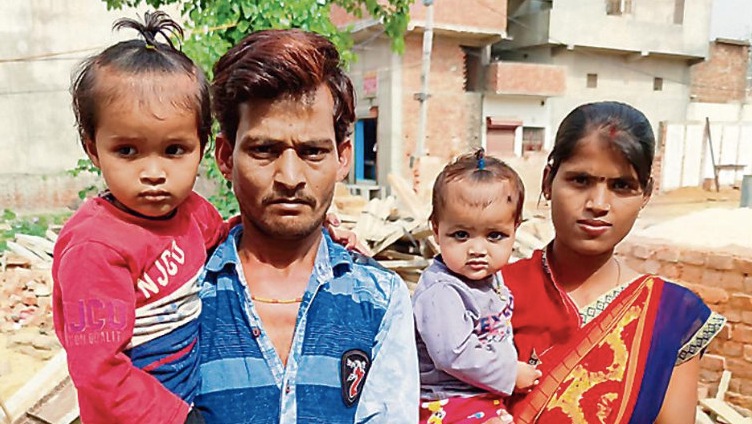
'My condition then was way too serious’: Kiran Aharwar and Ashok Kumar Aharwarparents to Shanvi
When Ashok Kumar Aharwar called an ambulance to attend to his wife Kiran in labour on May 16 last year, he was told that the vehicle could only come to his Rohini house two hours later. It was 11am but the nationwide lockdown kept public transport off the roads and medical services were stretched thin in dealing with surging Covid-19 patients.
Kiran was in pain, so the family called the local Accredited Social Health Activist (ASHA) worker. She came within minutes, but the ambulance hadn’t reached. Desperate, the ASHA worker dialled the police station.
The PCR van reached the Aharwar residence about 10 minutes later. Police personnel quickly put the family in the car and sped towards the local hospital. But before they reached, Kiran delivered the baby in the car. Police personnel helped her, parked the van by the roadside and covered it to give the mother privacy.
When Kiran and her newborn baby, Shanvi, were eventually admitted to the hospital, she realised the scale of the medical emergency that had gripped the city. “There were two patients on every bed in the hospital. The rush was such that doctors decided to discharge me in two hours,” said Kiran.
For Kiran, it was the second such experience in three years. Her first daughter, Tannu, too was born in a car on their way to a hospital in Chhatarpur in Madhya Pradesh. But this time, the condition was far more serious, and she was thankful to the policemen. “Until my baby was in my arms, I thought this time I would lose the child,” she said.
Unlike many other families, the lockdown had a limited impact on the Aharwars. “I am a daily wage mason hired by a government contractor. When there was no work for a month during the lockdown, my contractor gave me some money to stop me from returning to my village,” said Ashok. He is paid Rs.400 as his daily wage.
Ashok chose to stay back in Delhi, and found work easily when the economy reopened.
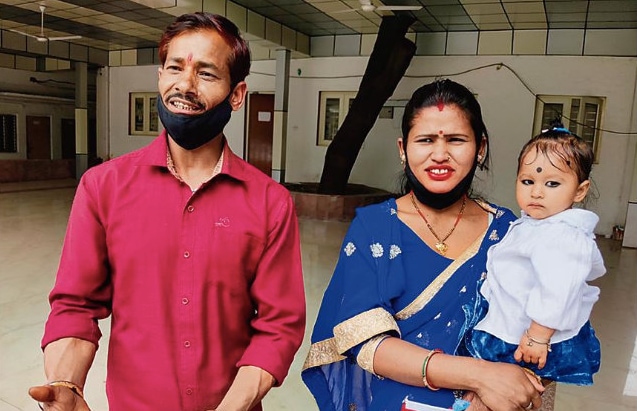
‘Wouldn’t be able to bear if things went awry’: Sangeeta and Sant Kumar parents to Harshita
For two hours on April 30, Sant Kumar made desperate phone calls to various ambulance services. His wife, Sangeeta, was in labour; his home was located right next to Outer Ring Road, but that did not make a difference. Every single ambulance service said they were too busy. Their neighbours advised them to call the police.
Less than 10 minutes later, they were on their way to a hospital that was about four kilometers away. Sangeeta delivered a baby in the police van while two policemen helped her and his mother with the delivery.
It was the toughest few minutes in the couple’s lives. “I am 35 and we were trying for a child for a long time. We wouldn’t have been able to bear the loss of our baby,” said Kumar.
The responsibility wasn’t easy on them. Kumar lost his job during the lockdown, about a month before their daughter’s birth.
“While mother’s milk doesn’t cost money, we had no money to buy me nutritional food. We depended on the meals provided by government,” said Sangeeta.
“Not many children are born under such trying circumstances,” said Kumar.
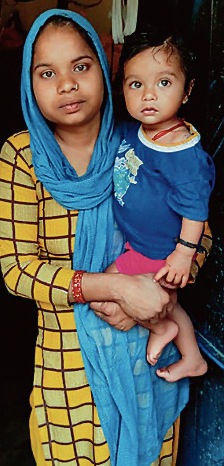
‘We borrowed money to ensure our baby did not lack anything’: Asha and Shravan Lalparents to Divyansh
In the early hours of May 19, Asha Lal went into labour. Her husband, Shravan, dialed several ambulance services but received no response. “When someone eventually did take the call, they plainly refused to attend to us,” said the daily wage labourer.
Eventually, the family called an Accredited Social Health Activist (ASHA), Jyoti, who suggested they call the local police station.
The ASHA worker’s husband owned an auto-rickshaw, but was afraid to take it out during the lockdown and the night curfew.
A police van was outside the neighbourhood in five minutes but it was another 25 before Asha was on her way to the hospital.
“All the three gates of the neighbourhood in which our shanty is located were locked at the time [to prevent the movement of people]. Because of this, it took us a lot of time to guide the PCR van to my home,” said Shravan.
Their baby boy, Divyansh, was born in the PCR van, with help from the policemen.
“If the gates were not locked, the police had responded quick enough for the delivery to happen in hospital,” said Asha.
This was a period when Shravan was without work for three months, but the family did not let that hinder their care for their baby.
“My husband and I ate meals offered by the government, but we borrowed money to ensure our baby did not lack anything,” said Asha.
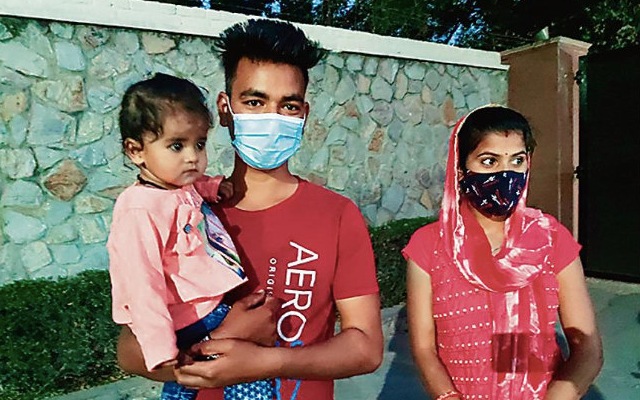
‘When the police van came, we knew situation wouldn’t hinder the delivery’: Anita Singh and Monu Singhparents to Niharika
Anita Singh went into labour on the night of May 1. Her husband, Monu Singh, was immediately worried. “There was strict enforcement of lockdown in our neighbourhood. Police were chasing people into their homes,” said Monu Singh, a resident of south Delhi’s Aya Nagar.
When frantic calls to ambulance services yielded no results, the family decided to seek help from the police. Even neighbours who owned cars refused to venture out.
Ten minutes later, Anita was riding out in a PCR van with her mother-in-law, and her husband following them on his motorcycle. Barely a couple of kilometers away, Anita delivered a baby girl, Niharika, in the police van. The usually busy road was deserted due to the lockdown, giving the family the necessary privacy during childbirth.
The family was under great financial stress at the time because Monu lost his job as a security guard. They had to depend on his parents for survival.
“To survive, we sought help from my father who works as a gardener at a farmhouse in Fatehpur Beri. He got me a job alongside him three months after the lockdown,” said Monu.
But they were thankful to the police for their help. “When the PCR arrived, we knew our economic situation wouldn’t be a hindrance in the delivery,” said Monu Singh.
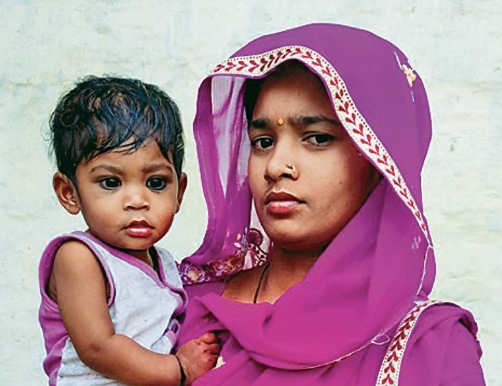
‘I realised later that any more delay and I would have lost my baby’: Vandana Kumari, Suraj kumar parents to Himanshi
When several ambulance services refused to attend to his pregnant wife Vandana in the early hours of May 1, Suraj Kumar panicked. The lockdown meant there was no public transport available. He planned to take her on his motorcycle and rush her to the nearest hospital in Rohini. But before he could roll out his motorcycle, neighbours advised him to call the police station.
Minutes later, the police van arrived, and whisked Vandana away to the local hospital. On the way, Vandana gave birth to a baby girl, Himanshi, in the PCR van. It was a premature baby.
When the family reached the hospital, tragic news awaited them. They were expecting twins but her other child was stillborn. Still, the family is grateful to the police for their response. “I realised later that any more delay and I would have lost my other baby,” said Vandana.
They still regret not hurrying more. “We also erred in guiding the PCR van to our home. We weren’t able to explain our location properly which caused a little delay,” says Vandana’s mother-in-law, Veena Devi.
The family says the local police have been kind. “They even called us to the station to ask about a few times,” said Devi.


