E-Paper



MP polls: Identity politics plays key role in communally fragile Malwa region
The Malwa Nimar region of Madhya Pradesh has seen a spurt in the number of communal clashes cases in the past five years

 Prefer HTon Google


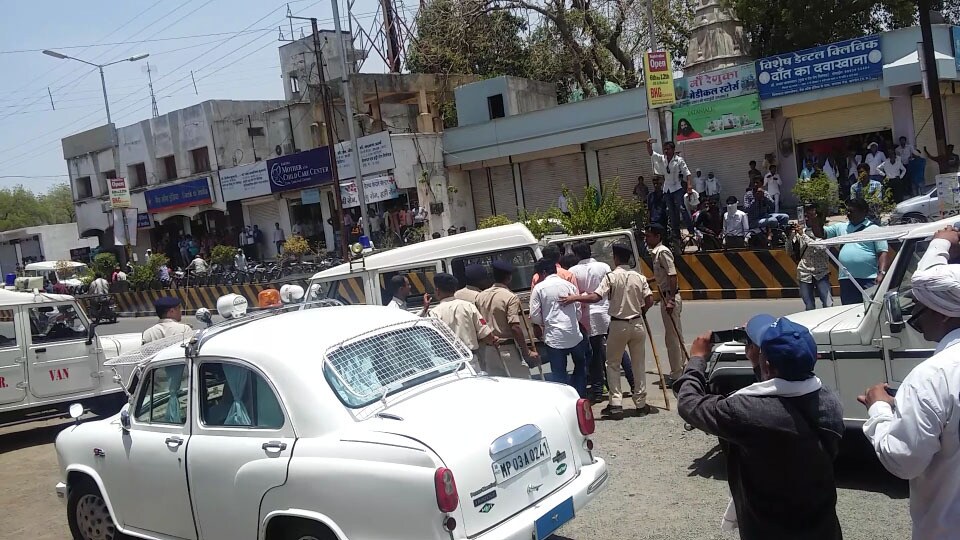
Ujjain/Indore/Khargone: Mumtaz Khan, 52 and Shivam Joshi, 18, live three kilometres apart in Khargone district of Madhya Pradesh, and both blame communal politics for their pain. Khan lost her son in an April 2022 communal clash; Joshi’s cousin was badly injured and was bedridden for five months because of it. The riots were news for a few days, but the two families are now on their own in the communally sensitive Malwa-Nimar region of Madhya Pradesh which votes to elect a new assembly on November 17.
“After the death of my son, both Congress and BJP leaders assured a government job to another of my sons. We waited but nothing happened. I don’t trust anyone now,” said Khan, whose son Ibraish Khan was killed in communal violence. Ram Joshi, Shivam’s cousin brother, said, “Whether its BJP or Congress, we didn’t get any relief.”
The sensibilities of the region can be gauged from the prevailing electoral narratives: the Israel-Hamas conflict ; the movie Kashmir Files (screened in Khargone in March); the ban on the Popular Front of India; the demolition of homes of Muslim families whose members were allegedly involved in communal riots; and the construction of the Ram Temple in Ayodhya.
The Malwa Nimar region of Madhya Pradesh has seen a spurt in the number of communal clashes cases in the past five years. According to the National Crime Records Bureau (NCRB) reports for 2021 and 2020 , as many as 34 cases related to communal clashes (22 cases in 2021 and 12 cases in 2020) and 128 cases of promoting enmity between two groups (50 and 78 cases) were registered despite bandh due to Covid 19. In 2018, the corresponding numbers were 12 and 82.
In 2018, the BJP won 28 of the 66 assembly constituencies in the region as compared to the 56 seats it won in 2013 (it won 41 in 2008). The Congress won 35 seats in 2018 against 9 seats in 2013 (24 in 2008).
Also Read: Illegal mining casts shadow on Narmada politics in poll season
As one travels across the region, saffron flags of the BJP can be seen fluttering atop homes, shops and cars with campaign vehicles blasting songs, including a popular one that promises to reward those who have “given us Ram”, a reference to the temple being built in Ayodhya. Trees in Indore have been painted with the name of Ram. BJP national secretary Kailash Vijayvargiya is contesting against sitting Congress MLA Sanjay Shukla from Indore 1 assembly constituency, where Muslim bangle seller Taslim was beaten up for allegedly sexually harassing a minor girl in Govind Colony in 2021. Tasleem was booked under Protection Of Children from Sexual Offence (POCSO) Act and over a dozen people were booked for assaulting him. Three Muslim men who protested against the beating were booked under National Security Act (NSA).
Hindu residents have put up photos of Hindu gods and goddess outside their homes to display their religious identity. In a colony of at least 150 houses, people are not comfortable talking about the incident and police said both the father of the girl, who was allegedly sexually harassed and Tasleem have withdrawn their complaints .
Geeta Bhatnagar, mother of one of the accused in the case said, “My son tried to help his friend from the shakha (the branch of the Rashtryia Swayamsewak Sangh, the BJP;s idological parent) as he claimed that his daughter was harassed by Tasleem. But things turned sour after the video of people thrashing Tasleem went viral. We faced a lot of criticism. No BJP leader came to support us. Later, the matter was disposed of. Now, they want us to ask for votes from public in favour of the party.”
Local BJP leader Ramesh Mohte refuted this and said the party helped the families and highlighted how their “identity was at risk” due to Muslims. “Tasleem is just one example,” he said, launching into a tirade of how the banned PFI is trying to disturb peace in the Malwa region.
The Congress sees this as an attempt to polarise.
The Congress candidate from Indore 1, Sanjay Shukla, the sitting MLA, said: “The BJP led-state government is pushing its agenda of targetting one community to polarise voters. They have not succeeded in their communalisation bid and has therefore, fielded a senior leader like Vijayvargiya. Still, the BJP will lose.”
Polarisation is also evident in Bhavsar Mohalla, Khaskhaswadi, Anand Nagar and Sanjay Nagar in Khargone, about 150 km from Indore. In the April 2022 Khargone riots, caused by overlapping RamNavami and Ramdan celebrations in the Talab Chowk area of the town, 62 FIRs have been registered and more than 160 people arrested. Half of them are still in jail, said a police officer who asked not to be named. The riots resulted in one death and 50 injured including a superintendent of police.
Indeed, some seats in the region will vote on the basis of communal issues but the “election is about the work (chief minister) Shivraj (Chouhan) has done in 18 years,” said Indor- based journalist Arvind Dubey.