
 E-Paper



NGOs file PIL in Supreme Court, seek end to provisional, estimated poll results
In the PIL, the Association for Democratic Reforms and Common Cause have sought an end to the practice of declaration of provisional and estimated election results.

 Prefer HTon Google


Two non-governmental organisations (NGOs) have filed a public interest litigation (PIL) in the Supreme Court seeking directions for the Election Commission (EC) to carry out actual and accurate reconciliation of data on vote count before the declaration of final results of any election.
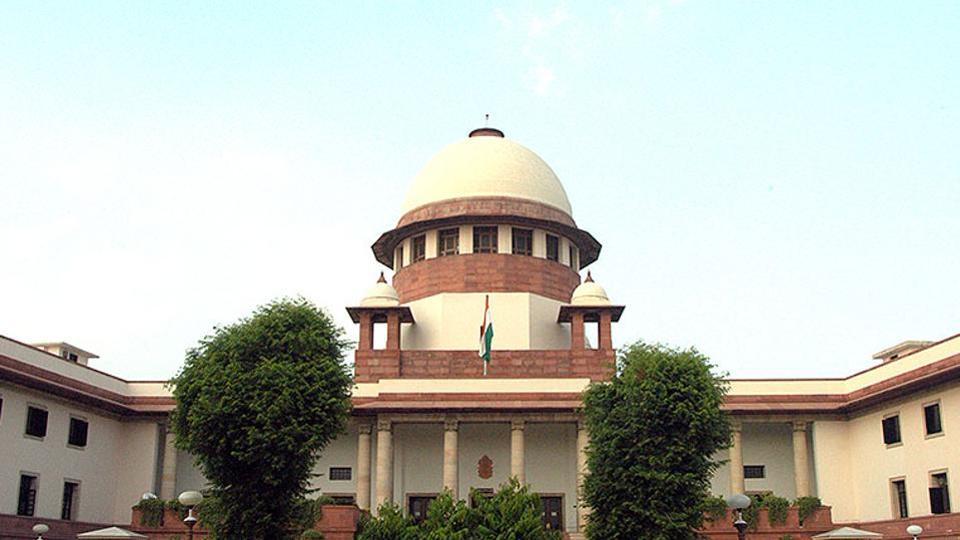
In the PIL, the Association for Democratic Reforms and Common Cause have sought an end to the practice of declaration of provisional and estimated election results.
Currently, the EC declares election results based on estimates. The Result Sheet on the website of EC indicates that the results are provisional based on estimates which are subject to change. The actual data on vote count is finalised few days after the results are declared.
The PIL also argues that the EC has not laid down any prescribed system for compiling, reconciling and publishing poll data.
The PIL says that the methodology the EC uses for compiling and publishing poll data has not been placed in public domain. It adds that the press releases the EC puts out are the only source of information for public regarding discrepancies encountered in election process .
The petitioners say that declaration of election results before finalising and releasing the actual authentic data on vote count thus has no statutory validity and there is no justification in doing the same.
The petition explains the statutory framework in place for counting of votes and declaration of results. It says that the EC has a statutory duty to collate and publish accurate data relating to elections.
The petition says that only statutorily valid election result should be announced even if there is a delay of a few days in making such announcement. This is essential to maintain the veracity of elections and uphold voters’ confidence, it says.
“Election results based on estimates and assumptions and without any statutory backing defeats the very purpose of elections,” the petition says.
The petitioners relied upon data from the 2019 Lok Sabha elections regarding discrepancies in the election results. As per the data, there were discrepancies between the voter turnout and number of votes counted in 347 out of the 542 constituencies. In 6 seats, the discrepancy in votes was higher than the winning margin, the petition says. The discrepancies ranged from 1 to 1,01,323 votes, it adds.
The Election Commission did not respond.
Speaking on the matter, Ameen Jauhar, senior resident Fellow at Vidhi, said: “Framing a robust methodology for declaring election results based on estimates might be a legitimate claim. This is especially important considering how exit polls of media houses often loses credibility, primarily for lacking sound methodology in sampling and analyses. So, Election Commission might consider formulating and putting out in public domain, the methodology which it employs in arriving at provisional results”


