
 E-Paper



India warns Iran of consequences after 2 tankers attacked in Strait of Hormuz: Officials
Sources said that the IRGC wants to levy a toll on all ships passing the strait amid a conflict with the US and Israel.

 Prefer HTon Google


There were no casualties on the two Indian crude oil ships that came under fire by the Iranian navy, officials confirmed on Sunday, even as they said that the glass of one of the cabins on the ships was shattered in the incident, and Indian authorities have made it clear to Tehran that there will be consequences to such an act.
It is understood that there’s a discrepancy between the stance of the Iranian diplomatic mission in India and that of the Islamic Revolutionary Guard Corps (IRGC) regarding the incident. Sources said that the IRGC wants to levy a toll on all ships passing the Strait of Hormuz amid a conflict with the US and Israel, even as the Indian authorities are not willing to give in to any such demands.
The incident of the firing on the two Indian ships – Jag Arnav and Sanmar Herald – comes even as the Iranian warship IRIS Lavan, which sought refuge from India, remains docked at the Kochi port. About 120 of the 183 crew members of the Iranian ship have already been repatriated, even as some essential crew members stay back to maintain the warship at the Kerala port. The Iranian ship sought refuge from India after another warship, IRIS Dena, was torpedoed and sunk by a US submarine near Sri Lanka on March 4.
While there have been reports that the IRGC is collecting toll from ships crossing the Strait of Hormuz, an Indian official said there was no chance of India paying any such toll, adding that there will be consequences to the Iranian firing incident.
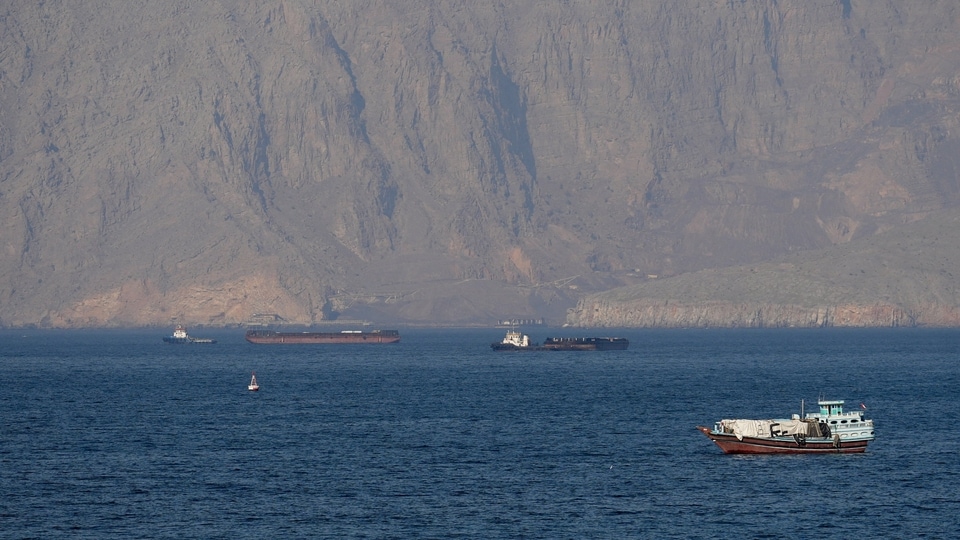
The two Indian vessels, both large crude oil tankers carrying millions of barrels of oil, were on Saturday fired upon by the Iranian Navy north of Oman, forced to turn back from the Strait of Hormuz.
Iran has previously said that countries not involved in the conflict with the US and Israel will not be targeted.
The development has prompted a strong protest from India's foreign ministry, with New Delhi summoning the Iranian envoy over the matter and conveying its deep displeasure at the incident.
According to Marine Traffic, Jag Arnav, a bulk carrier sailing under the Indian flag, was travelling from Al Jubail, Saudi Arabia, and en route to India. Meanwhile, the second ship, Sanmar Herald, was en route to India and carrying crude oil from Iraq.
The officials said that India is taking the firing by the Islamic Revolutionary Guard Corps seriously and the country stands for open and free navigation in the Strait of Hormuz.
The Strait of Hormuz, located between Iran and Oman, is one of the world's most vital oil transit corridors, through which 20% share of global crude shipments pass.
Also Read | ‘You gave me clearance. You are firing now': Audio from Indian tanker shot at by Iran navy
India is among the countries with the highest number of vessels passing through the Strait, reflecting its dependence on energy imports from the Gulf region.
Iran has, amid the war with the US, listed India among friendly nations whose ships it is allowing to cross through the vital strait while keeping others halted with threats of drone-missile attack.
The attacks come even as Iran announced the temporary reopening of the Strait of Hormuz on Friday after a US-brokered 10-day ceasefire agreement on Thursday between Israel and Lebanon.


