
 E-Paper



No-confidence move against Om Birla set to dominate Lok Sabha as session resumes; West Asia, US deal also on cards
In Parliament, issues likely to come up are a motion against Rahul Gandhi; Mamata's alleged insult of the President; the Iran conflict, and Trump’s trade deal.

 Prefer HTon Google


The Parliament looked set for a high-stakes, high-friction resumption on Monday, March 9, after a recess in the ongoing Budget Session, with the Lok Sabha seeing much of the action. This part of the session, which concludes on April 2, begins with the House taking up a formal resolution moved by the Congress-led Opposition to remove Speaker Om Birla.
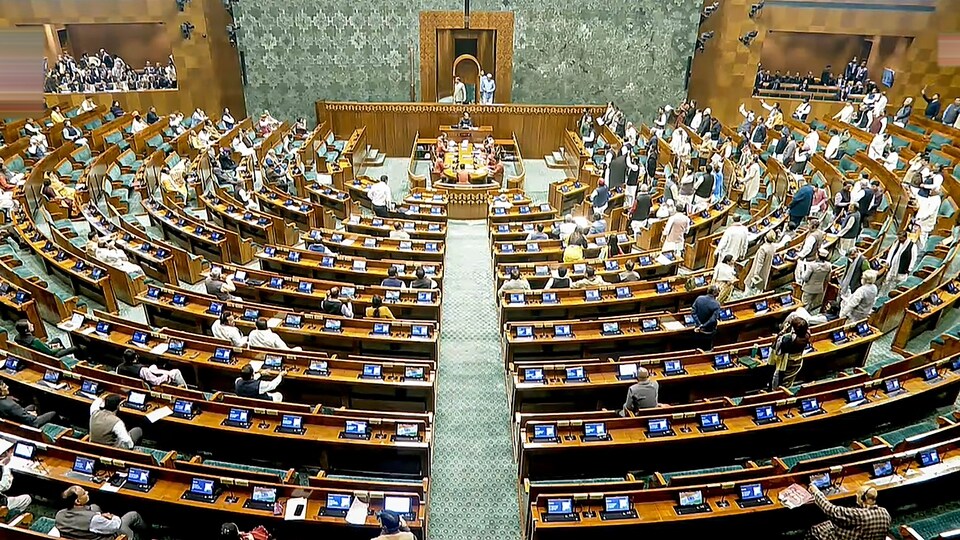
The BJP-led NDA’s treasury benches are preparing a counter-offensive to put the Leader of the Opposition, Rahul Gandhi, in a situation wherein he may face expulsion from Parliament altogether.
The ongoing US-Iran conflict is set to make an appearance too.
Parliament agenda as session resumes
The primary agenda for the day is a no-confidence motion backed by 118 MPs from the INDIA bloc against Speaker Om Birla. The Opposition has accused Birla of “brazenly partisan” conduct, alleging that he has muzzled their voices and favoured the ruling Bharatiya Janata Party (BJP).
While the Trinamool Congress (TMC), election-bound West Bengal’s ruling party, initially hesitated to sign the notice, the party has confirmed that its MPs will support the resolution.
This comes at a time when the BJP led by Prime Minister Narendra Modi has accused TMC boss and Bengal CM Mamata Banerjee of insulting President Droupadi Murmu by not attending an event. Mamata Banerjee has hit back with allegations that the BJP was “misusing the President’s stature” and making false accusations.
Among other issues, price-rise may fuel the fire. On March 7, the price of domestic LPG cylinders was hiked by ₹60.
Motion against Om Birla
Because the Lok Sabha has lacked a deputy speaker since the BJP-led NDA won a second term in 2019, the procedure for the motion against Om Birla may run into a challenge.
Under normal rules, a deputy speaker would preside while the speaker defends himself as an ordinary member; however, experts note that Birla may now have to handpick a member from the panel of chairpersons — likely a senior BJP MP such as Jagdambika Pal — to oversee the proceedings.
PM Modi has proactively defended the speaker this past week, describing him as a “brilliant” presiding officer who is “completely dedicated to the Constitution”. In a virtual speech, Modi praised Birla for his patience, noting that he handles “arrogant and unruly” members from "big families" with a smile — a pointed swipe at the Gandhi family.
The debate may be intense, but BJP-led NDA’s majority means the motion cannot go through mathematically. So, Om Birla looks set to survive; but only after huge ruckus.
Expulsion threat against Rahul
Parallel to the motion against Om Birla, the government is moving to target Rahul Gandhi through a ‘substantive motion’ submitted by BJP MP Nishikant Dubey. Unlike a standard breach-of-privilege notice, a substantive motion is a self-contained proposal that can lead directly to a member’s expulsion by a majority vote. Dubey has sought Rahil Gandhi’s permanent removal from Parliament and a lifetime ban from elections, citing “continual misdeeds for destabilising the country”. He had given a notice for this, but it was not immediately clear if and when this would be taken up.
At the heart of this conflict, which has since widened, is Rahul Gandhi’s flashing of an unpublished memoir, ‘Four Stars of Destiny’ by former Indian Army chief General MM Naravane. During the first half of the session, Rahul Gandhi cited excerpts from the manuscript, claiming they "exposed" PM Modi’s failure to take responsibility during the 2020 border conflict with China.
The government argued that referencing a manuscript not yet cleared by the Ministry of Defence was illegal and violated parliamentary rules. Defence minister Rajnath Singh argued that the purported contents were “incorrect”, and the writer (Naravane) could have gone to court if he did not agree with the MoD holding back its approval since at least 2023.
Foreign policy on focus: US deal and West Asia conflict
Beyond domestic politics, external affairs minister S Jaishankar is scheduled to deliver a statement on the West Asia crisis triggered by the US and Israel’s conflict with Iran. The Congress has said Modi had “abdicated” his responsibility towards age-old ally Iran as he was “under some kind of pressure” from the US and Israel.
The INDIA bloc has also demanded a full discussion on the India-US trade deal, which Rahul Gandhi has labeled “anti-farmer” and “a surrender of sovereign interests”.
In the latest, the Opposition pointed to a recent 30-day waiver granted by the US for Indian refiners to buy Russian oil as “evidence” that India’s energy policy is now subject to American "blackmail".
Surprise legislation?
Some reports citing government sources hinted over the past week that the session may see the introduction of legislation without prior consultation with the Opposition.
Speculation ranged from a new law on political funding to replacing the scrapped electoral bond scheme, to populist measures aimed at upcoming state elections.
The government has denied any plans to form a new UT by clubbing some districts of Bihar and West Bengal.
As for the budget itself getting the House’s approval, parliamentary affairs minister Kiren Rijiju has warned that if disruptions continue, the government will not hesitate to use the “guillotine” — a parliamentary tool to club all pending budgetary grants together and pass them without further debate.


