E-Paper



Number Theory: How formidable is the SP-Congress alliance in UP?
The SP’s performance has been largely consistent in terms of vote share, unlike the Congress which has seen a long-term decline in vote share barring 2009.
Published on: Feb 23, 2024, 09:28:30 IST

 Prefer HTon Google
Share via


Copy link

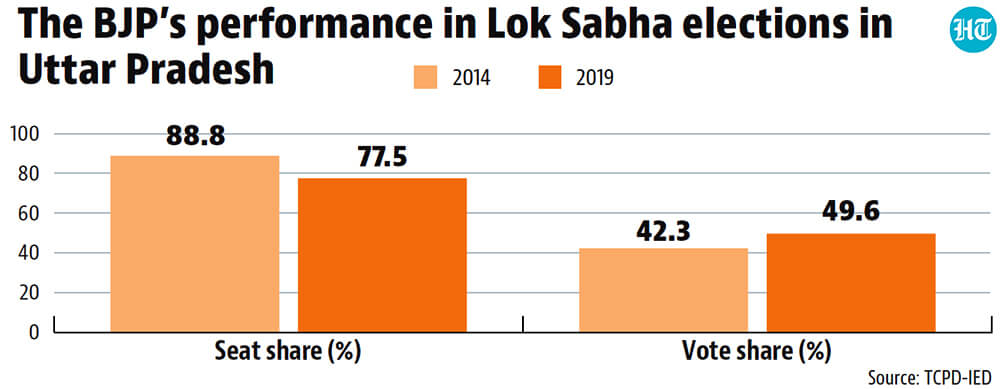
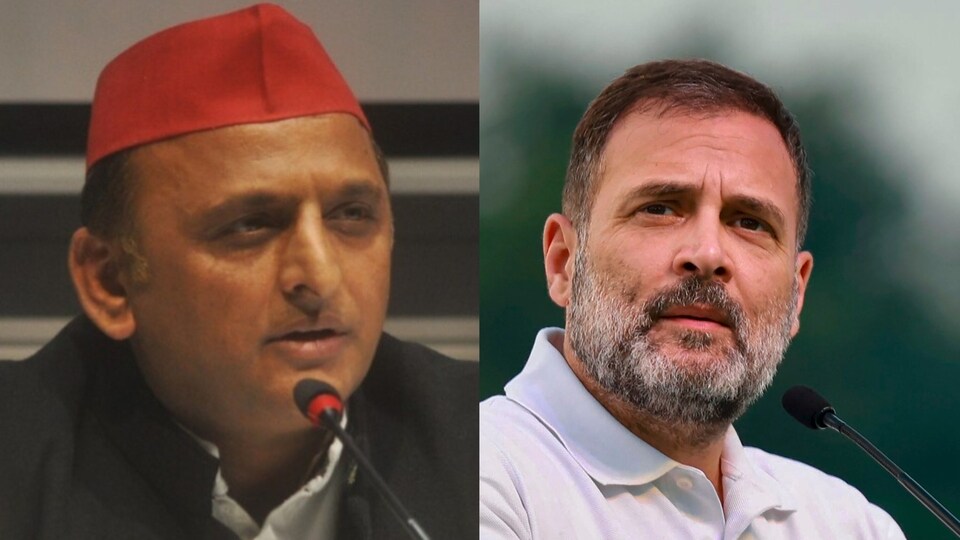
With 80 MPs in the Lok Sabha, Uttar Pradesh is the most important and largest state in terms of political representation in the country. Both in 2014 and 2019, when the Bharatiya Janata Party (BJP) won a majority in Lok Sabha, it has pretty much swept the state, winning 88.8% and 77.5% of the total constituencies. Can an alliance of the Samajwadi Party (SP) and the Congress challenge the BJP’s dominance in the 2024 elections? Here are three charts that try to answer this question.
How formidable is the SP-Congress alliance in UP?
 What is the level of BJP’s current dominance in Uttar Pradesh?While the BJP saw a fall in the number of parliamentary constituencies (PCs) won in Uttar Pradesh between 2014 and 2019, its vote share increased by 7.5 percentage points in the state. On a PC-wise basis, the BJP’s vote share increased in 71 out of the 77 PCs it contested in both 2014 and 2019.
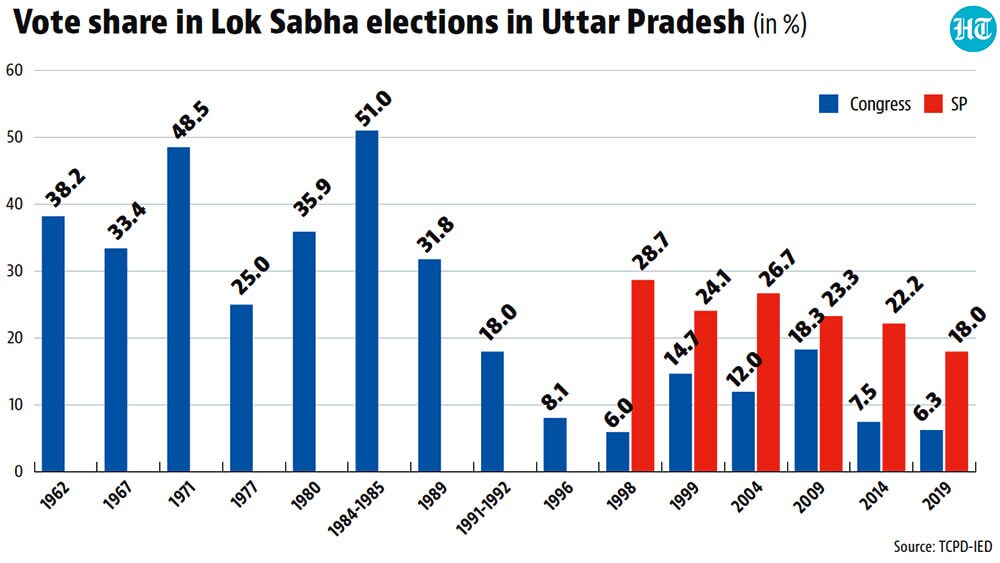
- What has been the past performance of the SP and the Congress in the state?This question is best answered by looking at vote shares of major parties in Lok Sabha elections in Uttar Pradesh. But realignment in alliance makes this comparison slightly complicated. The SP fought the 2019 elections in an alliance with the Bahujan Samaj Party (BSP) and the Rashtriya Lok Dal (RLD) and contested only 37 out of the 80 PCs in the state. In the alliance announced this year, the SP is the senior partner by a distance, contesting 63 out of the 80 PCs. Similarly, the Congress is contesting the lowest ever number of PCs it has ever contested in Uttar Pradesh. If one compares the vote shares of SP and Congress in the 2014 elections, when they contested 78 and 67 PCs respectively, with 2009, when they contested 75 and 69 PCs respectively, the drop in the SP vote share does not seem to be as high as that of the Congress. In fact, the SP’s performance has been largely consistent in terms of vote share, unlike that of the Congress which has seen a long-term decline in vote share barring the 2009 aberration. In a way, the Congress agreeing to be a part of the alliance shows that it is finally reconciling itself to its diminished footprint in the state.
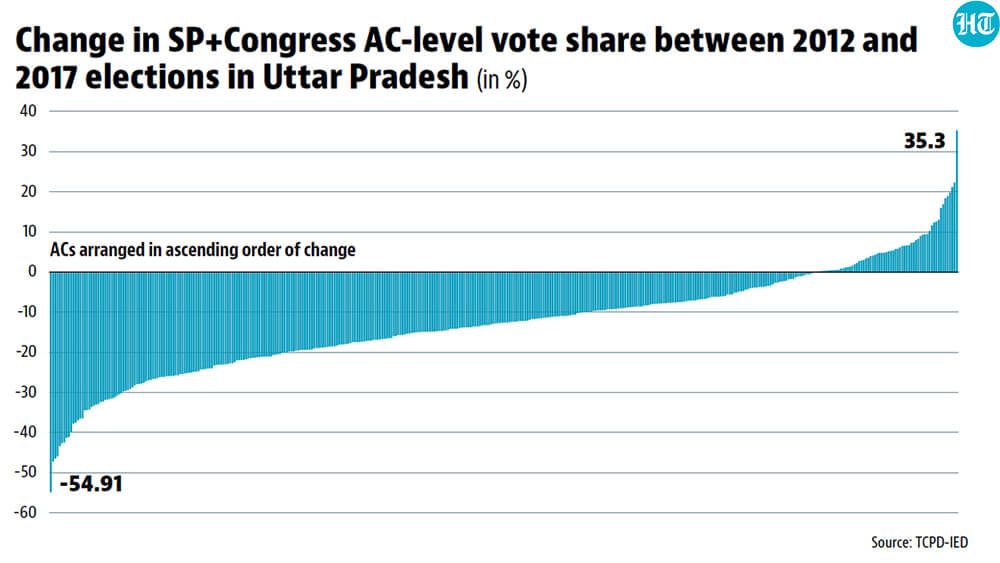
- Can the Congress and SP coming together consolidate opposition votes?The best way to answer this question is to look at the change in political arithmetic in the state between the 2014 Lok Sabha elections and the 2017 assembly elections in the state. The SP and the Congress contested almost all seats in 2014 and then fought together in 2017. The alliance could not stop the BJP’s juggernaut and it ended up winning more than a three-fourth majority in the state. In terms of strike rate, the Congress’s performance was worse than that of the Samajwadi Party's. Although the political landscape of Uttar Pradesh changed decisively in the 2014 elections, the combined vote share of SP and Congress fell in 337 out of the 400 assembly constituencies at least one of them contested in the 2012 and 2017 assembly elections. To be sure, the alliance of the SP and the BSP also suffered a similar fate in the 2019 Lok Sabha elections, with their combined vote share falling compared to 2014 in 52 out of the 75 PCs at least one of them contested in one of these elections.
- Does it mean that the SP-Congress alliance is meaningless?Far from it. Even if one assumes that the BJP will continue to dominate Uttar Pradesh’s politics in the 2024 elections, the opposition space in the state might see significant churn if the BSP suffers a further decline over its 2022 assembly election performance. This leaves a possibility that some of the anti-BJP vote might consolidate behind the SP-Congress alliance which, going by past statistics, is clearly the second (even if by a distance) political force in the state. However, the recent past also shows that opposition unity in Uttar Pradesh (the SP-Congress in 2017, SP-BSP in 2019, and even SP and other smaller parties in 2022) has never lasted for two elections. This could be the biggest reason for their lack of credibility.