E-Paper



Number Theory: Record dry, wet spells define 2023 monsoon
The season is also ending with some of the longest continuous spells of dry and wet weather
Published on: Sep 26, 2023, 07:31:38 IST


Share via


Copy link


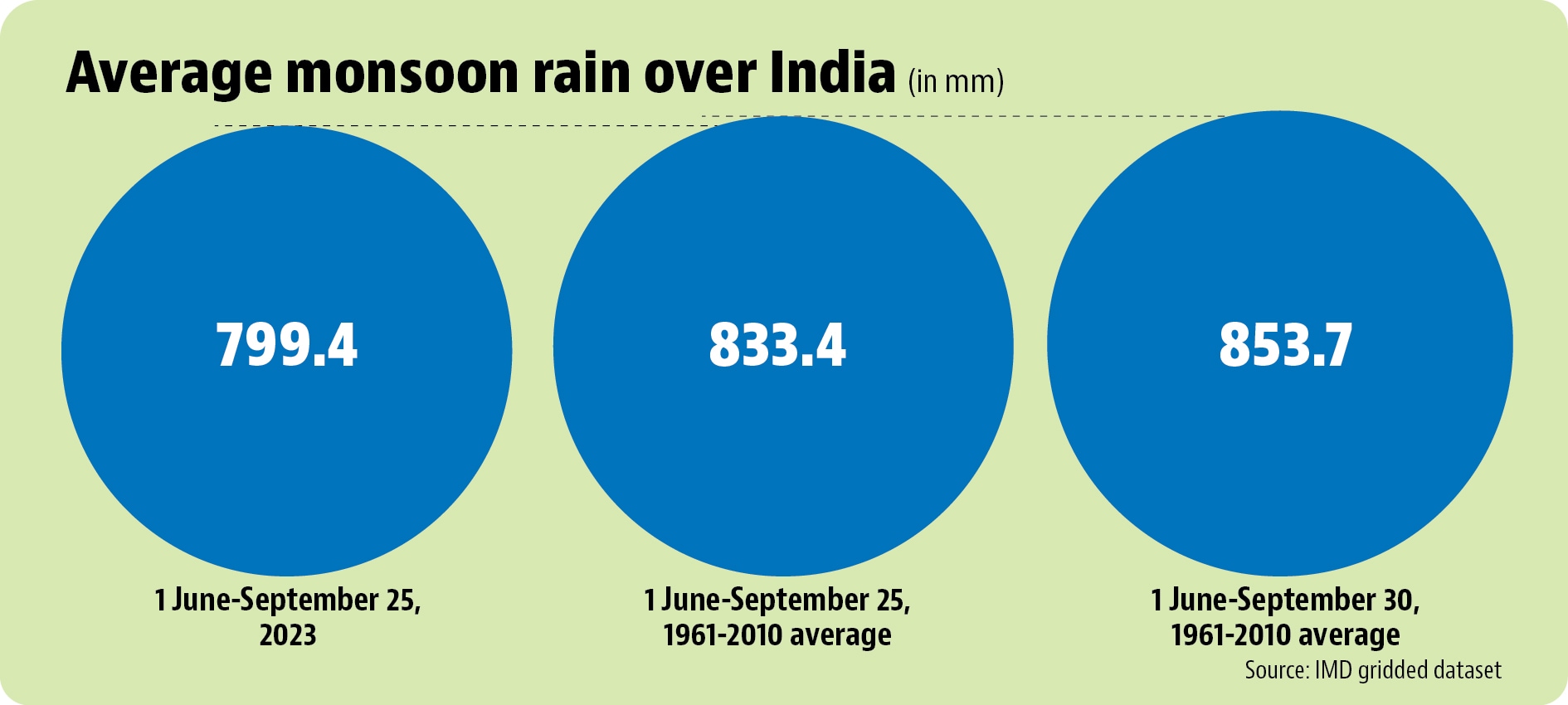
 With a week to go, this is the 34th driest monsoon since 1901India has received 799mm of rainfall this monsoon season up to September 25, according to IMD’s gridded data. This is 4.1% less than the 1961-2010 average for the June 1-September 25 period, a benchmark for rain, and the 36th lowest since 1901. The 1961-2010 average for the entire season is 853.7mm. This means that India needs 10.9mm rain daily on average in the last five days of September to end with no deficit when the daily average so far this month is 6.7mm. This appears to be a difficult task unless floods, such as those in Nagpur over the weekend, continue, because the monsoon started withdrawing from Rajasthan on September 25, according to IMD.
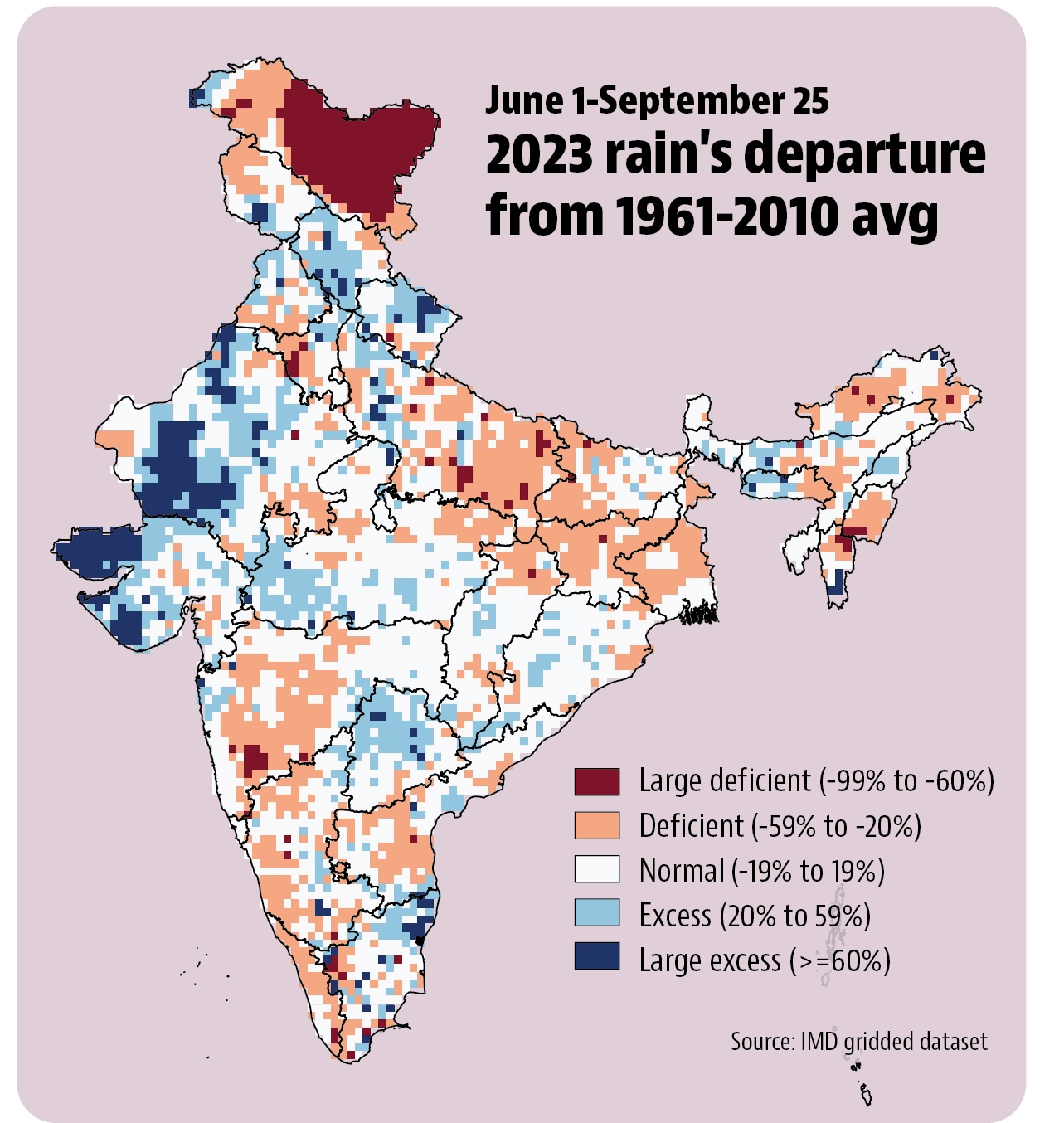
- Large parts of India will remain outside the “normal” rangeLike all averages, India’s average deficit does not show how the season behaved in particular regions. A disaggregated analysis shows that 27.6% of India has received rain that is 20-60% less than the 1961-2010 average or “deficient” and 4.8% of India has a deficit of 60% or more, classified as “large deficient”. Such dry pockets still make up at least 50% of the area in Kerala, Uttar Pradesh, Bihar, Jharkhand, and West Bengal. To be sure, the dry conditions of the northern states in this list are in keeping with the long-term trend of these states becoming drier during the monsoon season, as HT has explained before. Apart from such dry pockets, parts of the country — particularly Himachal Pradesh and Uttarakhand — also experienced devastating floods due to rains. Therefore, 21.7% of the country is also ending the season with a surplus of 20% or more, classified as “excess” or “large excess”, leaving only 45.9% of the country with neither a big deficit nor a large surplus.
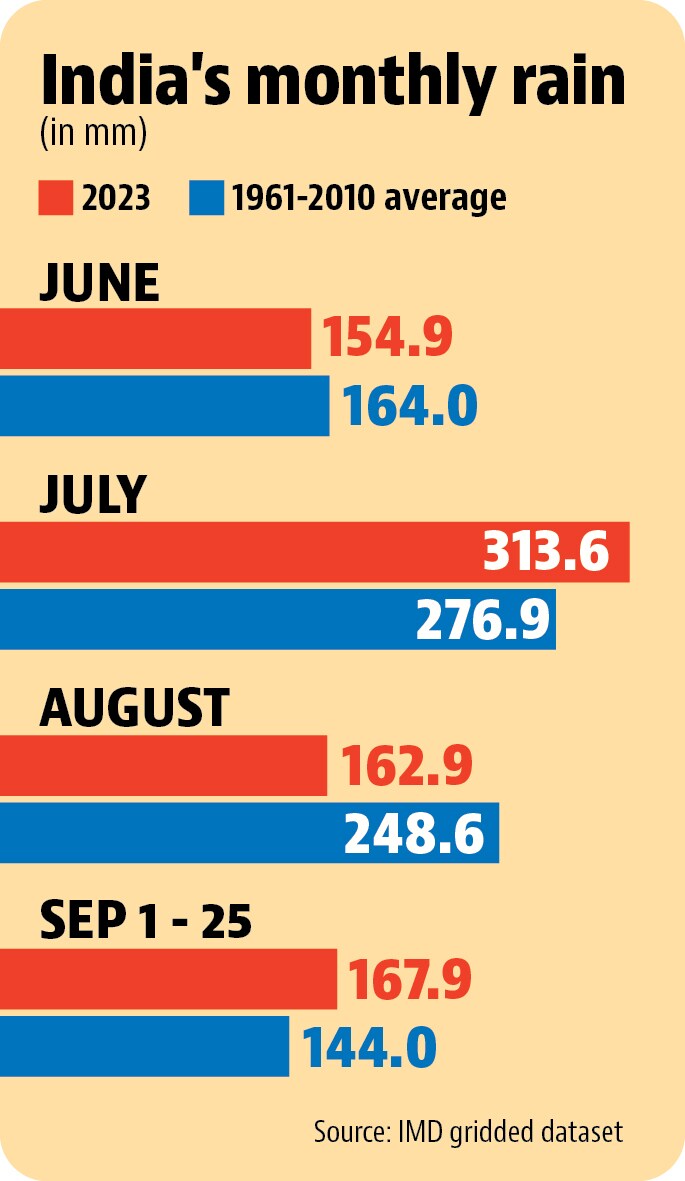
- Individual months were either too dry or too wetIndia’s overall performance in the season also hides the fact that it alternated between very dry and very wet months. For example, June this year was the 49th driest since 1901 and had a 5.5% deficit, July was the 22nd wettest this year and had a 13.3% surplus, August was the driest ever and had a 34.5% deficit, and September (up to September 25) is the 36th wettest and has a 17% surplus.
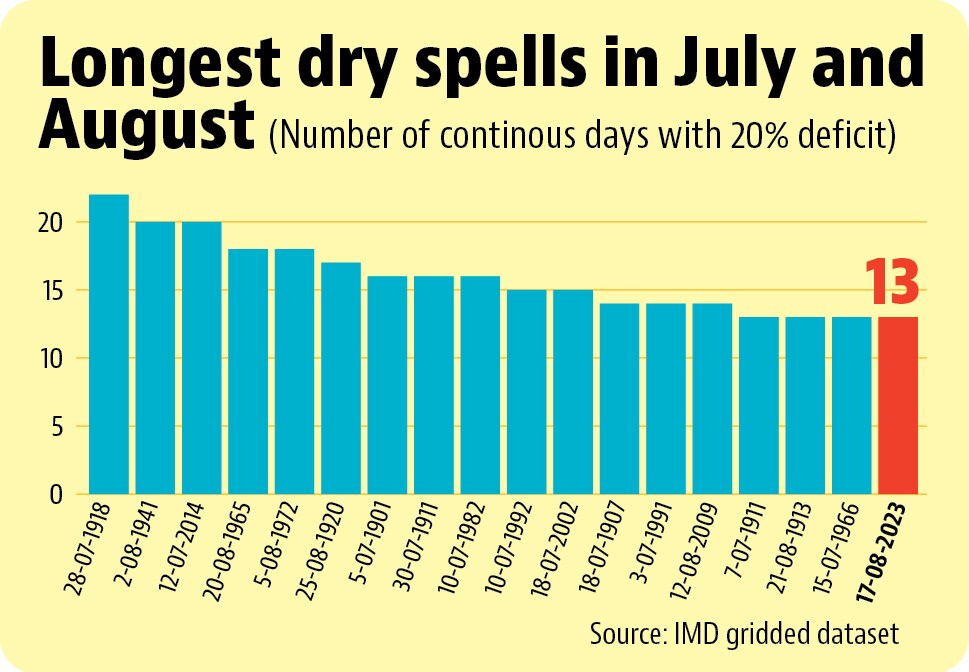
- 2023 had some of the longest dry and wet spells for the monsoon seasonIf continuous days of more than 20% deficit are counted as one dry spell and continuous days of more than 20% surplus are counted as one wet spell, the 2023 monsoon also had some of the longest dry and wet spells for the monsoon season up to September 23. There have been 1,303 such dry spells since 1901 of which 692 have been in July or August , the two wettest months of the season. Among these dry spells, the 13-day dry spell ending on August 17 is ranked the 35th highest or in the top 3% and 15th or in the top 2% if one is only looking at such dry spells in July and August. Similarly, the ten-day wet spell that ended on September 24 is the 30th longest such spell among 1,425 such spells during the monsoon season up to September 25, also in the top 3%.
- The latest wet spell has not improved reservoir conditions muchThe wet spell towards the end of the season is good news. Things would be much worse if the dry conditions of August had persisted this month. This is reflected to some extent in the water storage in reservoirs, according to data from the Central Water Commission (CWC) for 21 states. The departure in storage from the last 10 years’ average has improved in 11 of those states compared to the previous week. However, it has also worsened in 10 states, with the net result that 13 states have a deficit currently, only a small improvement from 16 states with a deficit last week.