E-Paper



Odisha approves SOP for Jagannath Temple’s Ratna Bhandar inventory
The SOP was placed before Lord Jagannath on Tuesday, said Shree Jagannath Temple Administration chief administrator Arabinda Padhee

 Prefer HTon Google


The Odisha government on Tuesday approved a 14-page Standard Operating Procedure (SOP) for the long-pending inventory of ornaments and valuables stored in the Ratna Bhandar of the Jagannath Temple in Puri, with the Temple Managing Committee set to announce the commencement date and auspicious timing after its next meeting scheduled for next week.
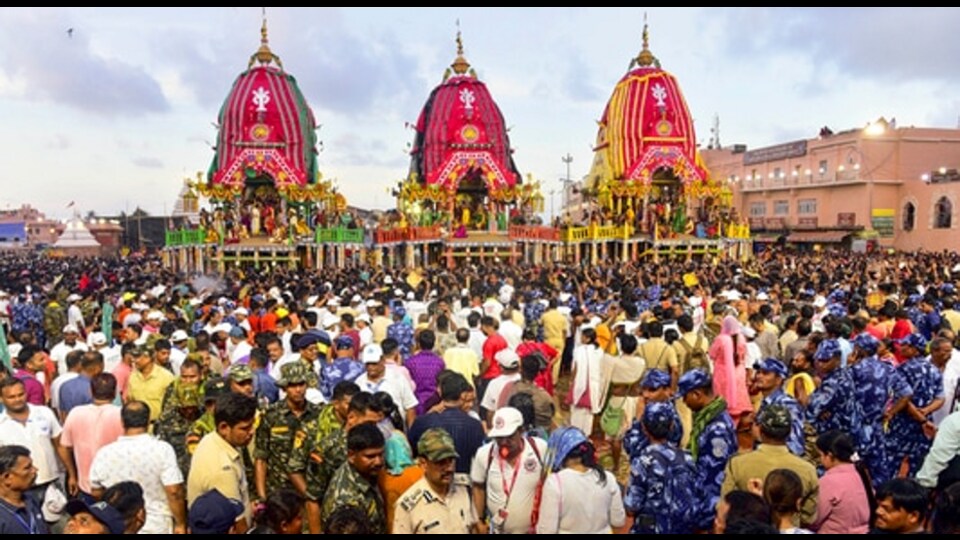
The SOP was placed before Lord Jagannath on Tuesday, said Shree Jagannath Temple Administration chief administrator Arabinda Padhee. The document, cleared by chief minister and law minister before final government approval, outlines the procedure for counting, documentation, and handling of ornaments in the temple treasury.
A month ago, the Orissa high court directed the state government to complete an inventory of the Lord Jagannath temple’s jewellery and valuables within three months following a Public Interest Litigation in the matter.
Padhee said the inventory will be carried out by a supervising and a handling team. The chief administrator will head the supervising team. In his absence, the district magistrate or deputy chief administrator will lead. Not more than three members of the supervisory group will be inside the Ratna Bhandar at any given time.
The handling team of 10 members drawn from temple administration, temple servitors, and representatives from public sector banks will conduct the counting and documentation. “Two goldsmiths from the State Bank of India or other public sector banks will assist in identification and preliminary assessment, alongside expert gemologists. If required, the Reserve Bank of India may provide technical support. Puri Gajapati Maharaja may also be part of the handling team if he chooses to participate,” said Padhee.
The process will be conducted under CCTV surveillance with full photography and videography. A digital catalogue will be prepared, and all participants will be required to sign confidentiality agreements. No mobile phones or unauthorised metal objects will be permitted inside.
The inventory will proceed in phases, beginning with the regularly used section of the Ratna Bhandar, followed by the outer chamber and then the inner chamber. Keys to the inner Ratna Bhandar will be deposited in the treasury at the end of each working day and retrieved the next morning in the presence of a magistrate.
Padhee said approximately 24 suitable working days have been identified before the Rath Yatra festival this year, keeping in mind the heavy footfall on weekends and other major rituals. “Care will be taken to ensure that devotees do not face inconvenience in darshan,” he said. During the inventory, devotees will be allowed darshan only from outside the sanctum sanctorum, with only designated sevayats permitted inside for daily rituals.
Older records, including the 1978 inventory, which took 72 days to complete, and ornament records traced to 1885 and 1982, will be cross-verified. The final inventory list will be submitted to the Temple Managing Committee and forwarded to the state government. The new inventory will not involve any current valuation of the jewellery.
The Ratna Bhandar, located near the sanctum sanctorum of the 12th-century temple, houses centuries-old gold, silver, and diamond jewellery. The last inventory, between May 13 and 23, 1978, recorded 454 gold articles weighing 128.380 kg and 293 silver articles weighing 221.530 kg across both chambers.
In July 2024, all jewellery was removed from the treasury for audit and repair work, which was carried out by the Archaeological Survey of India.