
 E-Paper



Of, by and for women
Self help groups, with 100 mn+ members, are transforming women's lives. Mirai Chatterjee of SEWA, one of the largest SHGs in India, tells us how this came to be

 Prefer HTon Google


Pushpaben, 50, takes care of an elderly woman in Ahmedabad. She is a member of the Home Care Cooperative developed by the Self-Employed Women’s Association, SEWA, in Ahmedabad. Her voice breaks as she remembers the challenges she faced. "Before I joined this cooperative, I had no work. And no food. My sons and I survived on water. Then I heard about this group and began taking care of an elderly woman. Once I earned, I opened a bank account and took loans five times from SEWA Bank, also a cooperative. I bought an auto rickshaw for my son and he now earns ₹400 or 500 per day. Then I bought this house, in my name."
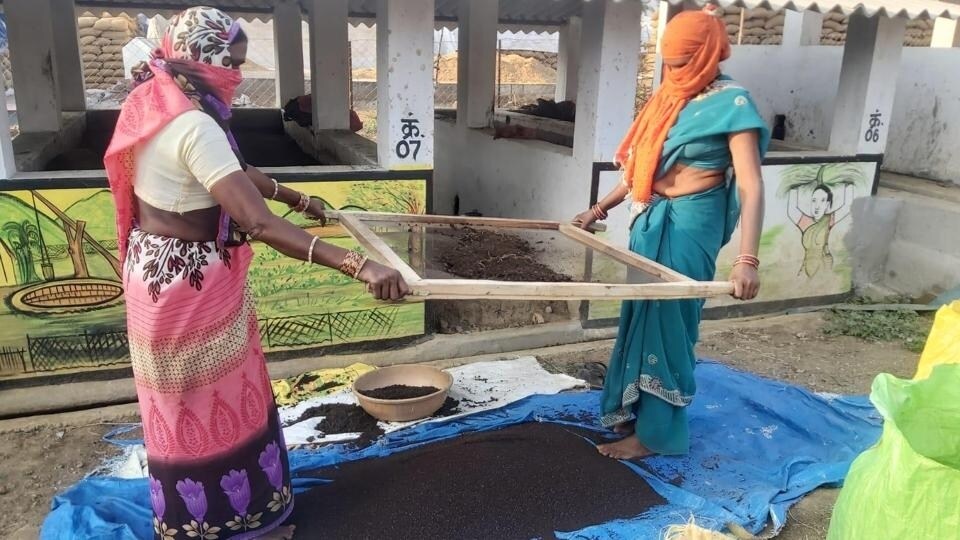
Sangitaben, 37, is a small farmer. She grows okra and sugar cane in the Adivasi Tapi district of South Gujarat. She now is a board member of the Megha Mandli, a cooperative of 1,000 Adivasi women farmers like herself. They have a licence to supply seeds from the government’s seed corporation which reduces input costs. They also sell low-cost farm tools and are encouraging women to earn from poultry as well. Their cooperative has now decided to promote organic farming and sell the jaggery they make in the local market, and online too. Sangitaben says, “I am saving up to buy a tractor. I will drive it myself and reduce the costs of farming. I feel so good when I drive my neighbour’s tractor. My husband says I can do anything!”
Women like Pushpaben and Sangitaben are quietly and steadily transforming the lives of their families and their communities. There are millions like them across the length and breadth of our country. What began as self-help initiatives emerging from the autonomous women’s movement in India and also through the tireless efforts of our civil society organisations, has now been mainstreamed through state and Central government programmes and globally by the World Bank and others. Such self-help groups (SHG) have been part and parcel of our history, culture and landscape. It is not a new invention. What is relatively new is the focus on women’s SHGs as a force for economic empowerment, self-reliance and social change.
In his Red Fort speech this August 15, the prime minister said that the Centre was working with SHGs with the aim of creating 20 million "Lakhpati didis", and announced the Union government's plan to train members of 15,000 women's SHGs to repair and operate drones. The headline number was that 100 million women are already part of such SHGs.
Perhaps the biggest impetus came in the 1970s with the growth of the women’s movement and other people’s movements. SEWA itself was born in those heady times, in 1972, when the late Elaben Bhatt first began organising informal women workers into a trade union, and later into village-based SHGs and their district-level associations, as well as cooperatives and their state-level federation, SEWA Cooperative Federation.
When women like Pushpaben said they could not come out of poverty without regular work and income, Elaben helped them to organise their groups and later registered these as a cooperative.
Karimaben and Rahimaben led a strike of khol or quilt-cover makers in the 1970s for fair wages. They were exploited by local merchants and contractors who paid them a pittance for their long hours of sewing. When this strategy did not work, these courageous women found another tactic: They formed their own group and unit to sew for themselves. Later the group morphed into Sabina, the second cooperative promoted by SEWA after SEWA Bank.
What we learned was that such membership-based, democratic and inclusive collectives, based on self-help principles, can lead to economic empowerment and self-reliance for individual informal women workers, their families and their collective enterprises. The road to self-reliance is full of obstacles and challenges, but adhering to values and some basic principles, women have shown time and again, whether at SEWA, PRADAN, Mission Shakti, Kudumbashree and other state and central government-promoted SHGs, that they can successfully chart their own course to empowerment and self-reliance.
Of foremost significance is the organising, or the process of uniting women as economic actors across caste, ethnic, religious and other lines. It is the process of building horizontal solidarity and sisterhood through membership-based organisations. These organisations elect their own boards or executive committees, building leadership and ownership from below. This is absolutely critical.
Next, each woman must contribute a share --- her time and money — to build the group. The group itself is built around an economic activity --- farming, animal husbandry, craft, services, savings and credit, providing one’s labour like in a cleaning or construction cooperative, among others. This builds ownership, accountability and a stake in the growth and well-being of the collective enterprise.
In fact, SHGs are groups where women are the users, managers and owners.
The group may choose a formal organisational form — a cooperative, Farmer Producer Company or any other collective form that works for them and also where there is ease of registration. This, to date, remains one of the greatest challenges, i.e., the procedures for registration and the host of compliance requirements. “Formalising the informal” is widely discussed these days, but women’s SHGs in India still struggle with formalising their group — no ease of doing business for them in sight, as yet.
Governance is another key issue. We have seen many groups falter and collapse due to poor governance — either accounts are not kept properly, leadership is found to be lacking or the regulatory environment was a barrier or not there to support the group. These are but a few of the challenges that SHGs face. We have seen relatively few instances of fraud or embezzlement compared to other organisations. The women in the group — usually 100-500 is the preferred size — generally know each other, live in the same village or mohalla and are a check and balance on each other. It is more acts of omission than commission that pose the governance problem.
SHGs also serve to develop women’s leadership. In a society where they are barely seen or heard, when women run their own collective businesses, and work hard to make them financially viable and profitable, there is no turning back. Handling money, regulations, officials and the outside world, including markets online and offline, changes them forever. Bringing income into their families and communities also changes the power dynamics and initiates the process of social change. They have more elbow room in their families and win the respect of their village elders and mohalla leaders. They build their own assets and community assets like ponds. Their foodgrains are bought for their state’s public distribution system and many of their products and services also find local, national and even international markets. This is bottom-up, decentralised growth and development, as envisaged by Mahatma Gandhi and others who led our freedom movement. These women understood that this was the path to true “swaraj”.
The key to strengthening this women-led movement for change through SHGs is to let them decide to join hands, pool their resources and build their own democratic, membership-based organisations based on their needs, which they know best. These will then be authentic and self-sustaining. Of course, an enabling environment including access to financial services like working capital, loans, insurance, pension and more, capacity-building, digitization, digital literacy and enterprise support systems that help them create their own business plans, are urgently needed. When women lead through their SHGs, in their own way and at their own speed, it is transformational for them, their societies and our economy.
Mirai Chatterjee is Chairperson of the SEWA Cooperative Federation of 110 primary women's cooperatives in Gujarat. She also leads SEWA's Social Security team


