
 E-Paper



‘Only tunnel of light’: Supreme Court to hear petition challenging abrogation of Article 370
Many petitioners have moved Supreme Court against Centre’s decision to remove special status granted to Jammu and Kashmir and its bifurcation in two union territories.

 Prefer HTon Google


The hearing on plea challenging the abrogation of Article 370 of the Constitution will continue in the Supreme Court on Wednesday. The move took away the special status granted to Jammu and Kashmir.
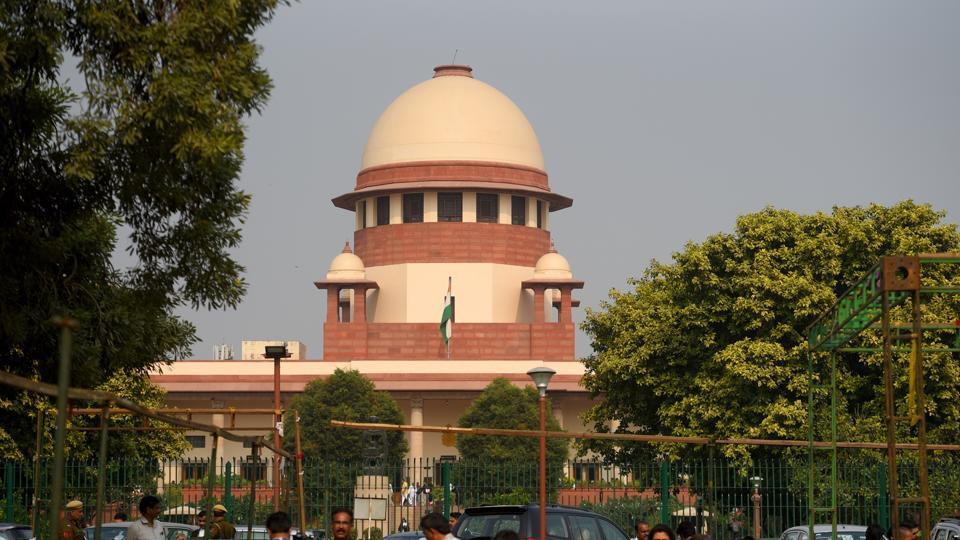
Petitioners challenging the Centre’s decision taken on August 5 last year contended that the Constitution of Jammu and Kashmir cannot be repealed in exercise of powers under the Article, which gave special status to erstwhile state.
The petition, filed by bureaucrat-turned-politician Shah Faesal, Shehla Rashid and others, is being heard by five-judge bench of Justices NV Ramana, SK Kaul, R Subhash Reddy, BR Gavai and Surya Kant. During the course of hearing on Tuesday, senior advocate Dinesh Dwivedi, appearing for one of the petitioners, told the bench that the issue needs to be referred to a larger bench as there is a dispute between two judgements of a five-judge bench which dealt with provisions of Article 370.
The judges said they would first hear the submissions on reference and then would take a call on whether to refer the issue to a larger bench.
Dealing with the Presidential orders of August 5 last year, Dwivedi said due to these orders issued under Article 370 (1) and (3), all provisions of the Indian Constitution have been applied to Jammu and Kashmir.
“This virtually abolishes the Constitution of Jammu and Kashmir. It’s a case of implied repeal where a Constitution has been repealed by an executive exercise of powers,” he argued. Dwivedi said the Centre has limited powers to legislate when it comes to Jammu and Kashmir by virtue of the Instrument of Accession.
“Article 370 was the only tunnel of light connecting the Centre to erstwhile state of Jammu and Kashmir. The Article 370 required that action of government of India should have concurrence of Jammu and Kashmir constituent assembly, which was dissolved in 1957 after framing the Constitution of Jammu and Kashmir,” Dwivedi said.
He said the Constitution of Jammu and Kashmir was not created under the Constitution of India or Article 370 and therefore J&K constitution cannot be repealed in exercise of powers under Article 370.
The lawyer also said that Article 370 was temporary in nature and was to cease after the enactment of the Constitution of Jammu and Kashmir. “Thereafter, the governing relationship between Union and the State was to be regulated by the Constitution of Jammu and Kashmir.”
Dwivedi said the sole object of Article 370 was to ensure that people of Kashmir have a say in their own governance through their own Constitution but this guarantee has been wiped out after the entire Constitution of India is made applicable in the erstwhile state.
Senior advocate Raju Ramachandaran had earlier argued that in the scheme of Article 370, while the democratic power is with the state, the executive power is with the Union government.
A number of petitions have also been filed by lawyers, activists, political parties and other people who have challenged the Jammu and Kashmir Reorganisation Act, 2019, which splits J&K into two union territories - Jammu and Kashmir, and Ladakh.


