E-Paper



Opposition to NEP politically motivated, not imposing Hindi in TN: Edu minister
Union education minister Dharmendra Pradhan said that he respects all languages and there is no imposition of Hindi English or any other language in Tamil Nadu

 Prefer HTon Google


New Delhi: Union education minister Dharmendra Pradhan on Monday dismissed Tamil Nadu chief minister MK Stalin’s opposition to the three-language formula, which makes it mandatory for every school student to study at least three languages under National Education Policy (NEP), saying that “they are not accepting the idea because of their political interest”. Pradhan said that he respects all languages and there is no imposition of Hindi English or any other language in Tamil Nadu.
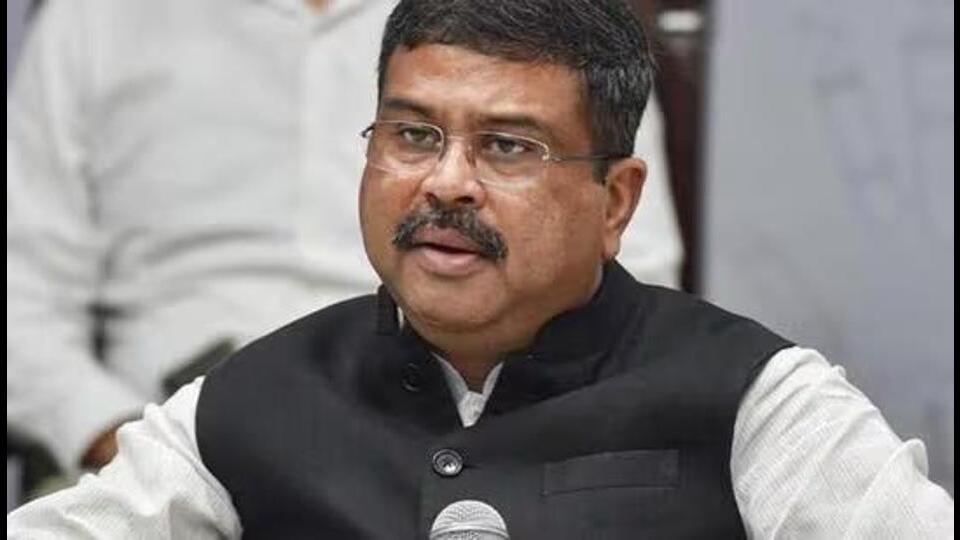
“We all accept NEP, but they are not accepting the idea because of their political interest. I know education is in concurrent list but to create competition among students, to create a level-playing field, we have to come to a common platform. NEP is the new aspirational common platform. I respect all languages. This NEP, envisioned by Prime Minister Narendra Modi, is giving emphasis to the mother tongue,” Pradhan told the media on the sidelines of the 126th Foundation Day of Delhi University’s Hindu College.
Pradhan said that the central government is organising Kashi Tamil Sangamam (KTS) to encourage Tamil civilisation, culture and language. The third edition of KTS began in Varanasi on Saturday intending to strengthen the centuries-old connection between Tamil Nadu and Kashi.
“Tamil is one of the oldest languages of our civilisation. But what is wrong if a student in Tamil Nadu will learn multilingual aspect in study? It can be Tamil, English and other Indian languages. There is no imposition of Hindi or any other language on them. Some friends in Tamil Nadu are doing politics. But the government of India is committed to implementing NEP and there are certain conditions with NEP,” he added.
His comments come a day after Stalin slammed Pradhan over his alleged remarks made during KTS in Varanasi that the southern state will not be provided funds under Samagra Shiksha Abhiyan (SSA) scheme until it accepts NEP and adopts the three-language formula making Hindi compulsory.
Stalin on Sunday in a post on X said, “Tamils will not tolerate the rash blackmail that no funds will be provided until we accept the three-language policy.”
The NEP allows states, regions, and students to choose three languages, provided at least two are native Indian languages. However, Tamil Nadu follows a two-language system with Tamil and English. Regional parties in Tamil Nadu have been opposing the three-language formula raising concerns over the possible imposition of Hindi or Sanskrit under the three-language policy.
Tamil Nadu was allocated ₹2,151.60 crore under SSA – a shared scheme between the Centre and states supporting public schools with a funding ratio of 60:40 but it did not receive any funds from the central government till January 31, 2025, in the financial year 2024-25, minister of state for education, Jayant Chaudhary had told Lok Sabha on February 10.
Tamil Nadu has also not accepted the central government’s PM SHRI (Pradhan Mantri Schools for Rising India) scheme launched in September 2022.