E-Paper



Pakistan’s doubts on JeM role in Pulwama invites India ire
Pakistan foreign minister Shah Mahmood Qureshi’s remarks about his government learning from contacts with Jaish-e-Mohammed (JeM) that the group had denied involvement in the February 14 Pulwama terror attack have triggered anger and consternation in official circles in New Delhi.

 Prefer HTon Google


Pakistan foreign minister Shah Mahmood Qureshi’s remarks about his government learning from contacts with Jaish-e-Mohammed (JeM) that the group had denied involvement in the February 14 Pulwama terror attack have triggered anger and consternation in official circles in New Delhi.
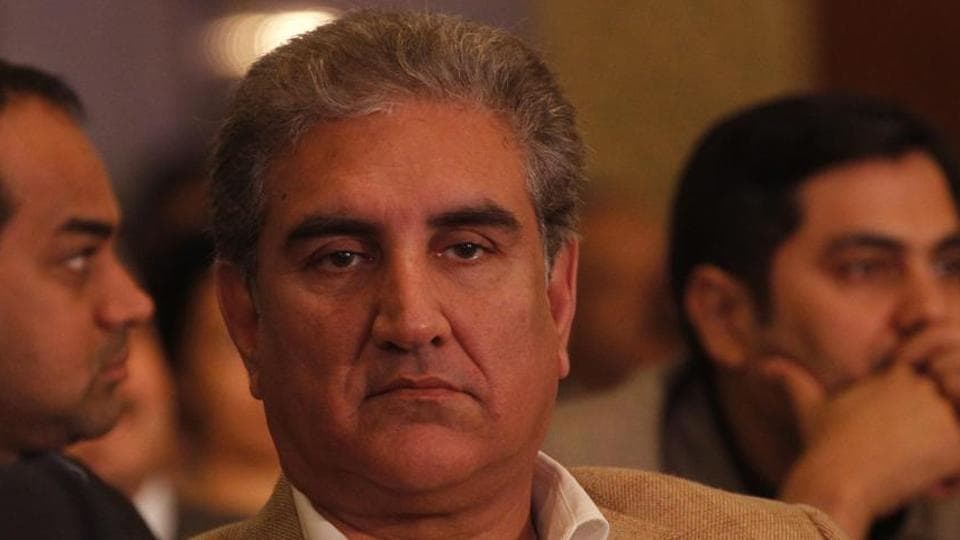
Qureshi’s remarks came against the backdrop of a claim of responsibility by JeM within hours of the attack that killed 40 paramilitary troops and calls from the world community to crack down on terrorists operating from Pakistani soil.
The comments, made in an interview with BBC aired on Friday, came a day after Qureshi acknowledged JeM chief Masood Azhar’s presence in Pakistan and said action could be taken against him only if India provides “solid, inalienable evidence”.
A person familiar with the thinking of the Indian government said Qureshi’s remarks were a reflection of the Pakistani establishment’s deep-rooted ties with the terror group banned by Islamabad in 2002.
“He [Qureshi] has admitted the presence of JeM leader Masood Azhar in Pakistan. He has admitted to their people talking to JeM, thereby establishing the Pakistan government’s linkages to JeM,” the person said.
“They now have to act on terror groups in areas under their control,” the person added, recalling Pakistan’s commitment of 2004 to not allow its soil to be used by terrorist elements.
Qureshi was asked during the BBC interview whether the latest crisis had begun with the attack by Pakistan-based JeM, and he replied, “We’re not sure of that.” When it was pointed out that JeM had claimed responsibility, he said, “They have not, there is confusion on that.”
He added, “The confusion is that the [JeM] leadership, when contacted, they said no.” The leadership of the banned group, he said, had been contacted by “people who’re known to them”, but didn’t offer details.
A security official, who did not want to be named, said Qureshi’s comments went against the stand adopted by the world community and even the UN Security Council, which had named JeM in a statement on the Pulwama suicide bombing issued on February 21.
The statement had called on all states to “cooperate actively with the Government of India and other relevant authorities” to bring the perpetrators, organisers, financiers and sponsors of such attacks to justice.
“It seems the Pakistan government doesn’t really care about all the evidence that’s already available and wants to continue obfuscating,” the security official said. This official added it was significant that Qureshi was the first senior Pakistani functionary to publicly acknowledge Azhar’s presence in Pakistan.
During the interview, Qureshi repeated his call for India to share evidence when he was asked if Azhar was under investigation.“We have courts in this country, the courts are independent. When you take action against an individual...you will have to prove your point in the court of law. What we are saying to the Indians [is] if you have something, please share it with us.”
He said the government was studying a dossier on Azhar and JeM received from India. “If India wants to initiate a dialogue based on this dossier, we are willing to engage with them,” he added.
Asked if he was in favour of the fresh move by France, the US and Britain to designate Azhar a global terrorist by the UN’s 1267 Committee, Qureshi said Pakistan is “open to move in the right direction” if “we have solid evidence”.
People familiar with developments said the Indian government will focus on counter-terrorism efforts in engagements with international partners and Pakistan’s repeated failure to act against designated terrorist individuals and groups such as JeM, Lashkar-e-Taiba,and Azhar and LeT founder Hafiz Saeed.
“It should be noted that virtually no country criticised India’s air strike following the Pulwama attack. But statements issued by key powers such as the US after the Pulwama attack and the non-military action spoke of the need for Pakistan to crack down on terrorists operating from its soil,” a person said.