
PFI ban is like an internal surgical strike: MP home minister Narottam Mishra
The state’s home minister said the ban was necessary to stop the anti-national activities and I thank Prime Minister Narendra Modi for this
The ban and action against Popular Front of India (PFI) is like an internal surgical strike for the security of residents of our nation, said Madhya Pradesh home minister Narottam Mishra said.
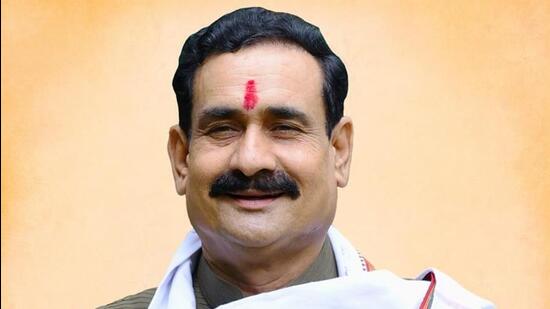
Mishra, who raised demand of putting a ban on PFI last year, said, “This ban was necessary to stop the anti-national activities and I thank Prime Minister Narendra Modi. PFI leaders were trying to create rift among different religion and that’s why incidents of communal tension increased in the state and nation.”
Also Read: ‘Centre took right decision...’: Maharashtra CM hails Amit Shah’s PFI ban
“In Kerala and Karnataka, PFI and some other organisations were found directly involved in the murder of many innocents and their link was found with ISI too”, said Mishra.
Mishra also attacked Rajya Sabha MP Digvijaya Singh for comparing PFI with RSS.
Mishra said, “Digvijaya Singh belongs to Tukde Tukde gang and he supports every organisation that talks about dividing our nation.”
He added that the NIA investigation will reveal more about the working of PFI.
Meanwhile, Congress MLA Arif Masood said, “I have already said if PFI leaders were found involved in any anti-national activities, it should be banned. We welcome the decision but investigative agencies should be clear about what exactly PFI leaders were doing and how. “
Earlier, four leaders of PFI were arrested by NIA and 21 leaders were detained in the state for holding anti-national activities.
ABOUT THE AUTHORShruti TomarI have spent over a decade chronicling Madhya Pradesh’s political and social landscape, covering politics, investigative journalism, crime, human interest, and government policy, blending sharp insight with ground‑level depth. I have closely tracked three assembly elections, three Lok Sabha elections, leadership transitions in MP while exposing governance lapses, tender irregularities, and flawed policy rollouts. My reports have revealed gaps in the Cheetah project, irregularities in medical education, rigging in recruitment exams, and loopholes in policy implementation. In crime reporting, I have moved beyond FIRs to map systemic patterns — from organised crime networks and gender‑based violence to custodial accountability — balancing urgency with sensitivity. My journalism is defined by a commitment to human interest. I have profiled the marginalised Bancchda community, documented atrocities against tribal groups, and highlighted efforts to preserve their culture through heritage liquor and revival of spiritual practices. I have reported on farmers struggling with failed MSP promises, giving voice to those often reduced to statistics in policy files. Passionate about field reporting, I have reported on rampant sand mining in Chambal and Narmada, pharmaceutical companies supplying medicines under altered names, the dire condition of schools and colleges, the plight of commercial sex workers, and skewed sex ratios in specific districts. Beyond deadlines, and as HT’s state correspondent and assistant editor in Madhya Pradesh, I engage with ministers, farmers, students, and activists, believing the best policy stories begin with a single human voice. A postgraduate in Journalism and Mass Communication, I also hold a diploma in sports journalism.Read More

E-Paper


