E-Paper



PLFS 2025: Labour market overcomes Covid shock, data shows
India's 2025 labor market shows a 3.1% unemployment rate, recovering from Covid-19, but faces new challenges from the current oil shock.

 Prefer HTon Google


New Delhi: India’s labour market has almost completely overcome its quantitative and qualitative scarring from the Covid-19 pandemic, the 2025 Periodic Labour Force Survey (PLFS) released by the National Statistics Office on Friday shows. The timing, however, is awkward in a specific sense: this is a lagging indicator arriving at the moment when India faces the biggest oil shock in the history of capitalism — one bound to leave fresh scars even as the old ones close.
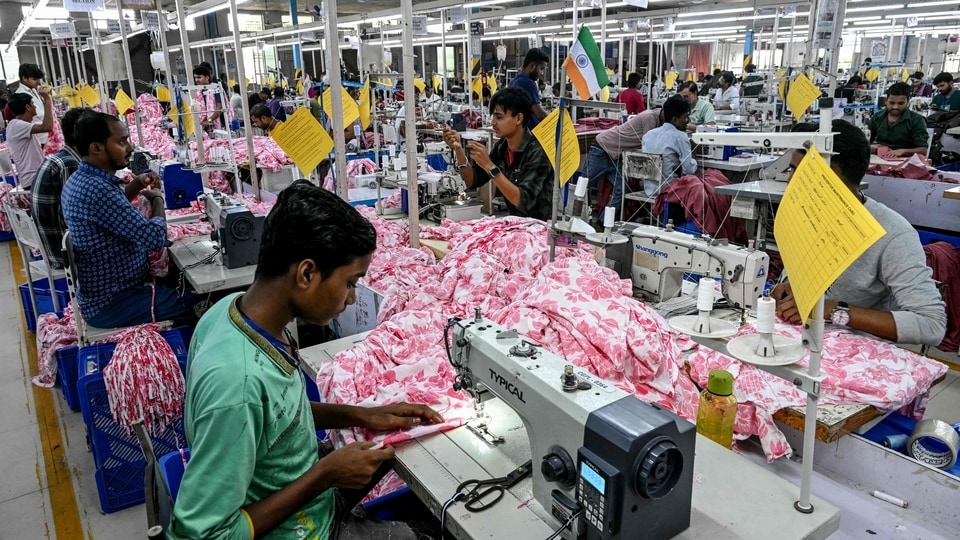
That uncertainty should not, however, obscure what the data actually shows.
The headline unemployment rate in 2025 was 3.1%, but that number has not been the real story in India’s labour market since the pandemic. It has moved within a narrow band of 3.1%–3.2% in every annual PLFS round since 2022-23 — a plateau that followed a sharp fall from the 6.1% recorded when the survey was first launched in 2017-18. The pandemic’s impact on employment, when it struck, showed up only in quarterly data, which tracks whether someone worked at least an hour in the preceding week, a shorter bar than the annual survey’s threshold of at least a month in the preceding year.
The fall in unemployment has not come at the cost of people withdrawing from the workforce. The labour force participation rate (LFPR) — the share of the population either working or actively seeking work — held steady around 45% since calendar year 2023, reaching 44.9% in 2025, marginally up from 44.7% in 2024. Both figures represent a significant improvement over the pre-pandemic baseline: LFPR was under 40% in 2017-18 and 2018-19, the two PLFS rounds unaffected by the pandemic.
Also read: Haryana: HC breather for 10,000 govt employees
The pandemic’s deepest marks were elsewhere. Two distortions defined its scarring: a reverse flow of workers from non-agricultural to agricultural employment, and a surge in unpaid work. The share of workers in agriculture climbed from 42.5% in 2018-19 to 45.6% in 2019-20 — a period that captured the most stringent phase of the national lockdown, declared in March 2020, because the PLFS then followed a July-June annual cycle. Agricultural employment peaked at 46.5% in 2020-21 and retreated only gradually, reaching 43% only in 2025 — almost back to pre-pandemic levels. The share of unpaid workers in household enterprises, most of them in agriculture, posted their steepest annual decline in 2025, falling from 18.2% to 15.6%, after peaking at 19.5% in 2023. Even so, the figure remains above the pre-pandemic baseline of 13.3% in 2018-19, indicating the recovery here is real but incomplete.
Also read: Techie burnt out at 15 LPA job, considers quitting without an offer: ‘Never enjoyed it’
Paid workers’ share has increased overall, as expected. The more significant finding is that growth is highest among salaried workers — the best-compensated category tracked by the PLFS. Their share rose 1.2 percentage points over 2024, reaching 23.6% in 2025, within touching distance of the pre-pandemic high of 23.8% in 2018-19.
A statistical caveat applies. The 2025 PLFS is the first major overhaul of the survey since its inception: it carries a substantially larger sample, designed to support the monthly data releases that began in April 2025, and has shifted its annual reference cycle from July-June to January-December. Experts have said these changes do not compromise comparisons across successive rounds, as HT reported in May 2025.