
 E-Paper



Healthy debate, open discussions hallmark of Indian tradition: PM Modi in Mumbai
PM Modi in Mumbai: This is the PM's first meeting with Uddhav Thackeray amid the ongoing hostilities between the Bharatiya Janata Party and the Shiv Sena-led Maha Vikas Aghadi (MVA) that intensified over the Hanuman Chalisa row.

 Prefer HTon Google


Prime Minister Narendra Modi on Tuesday spoke about the need to strengthen the culture of healthy debates and open discussions that have been a hallmark of India over the years.
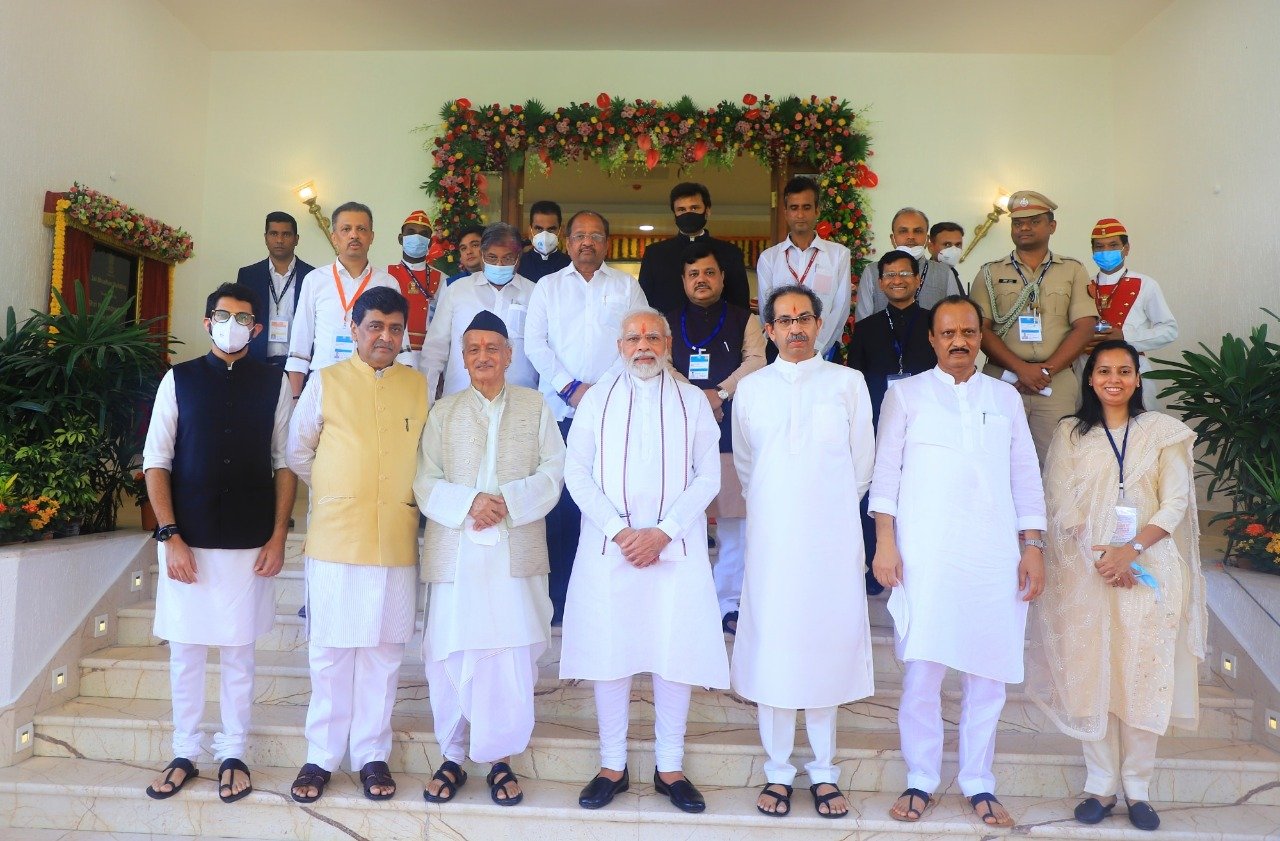
Modi, who was on a day-long visit to Maharashtra, said conducting healthy discussions is part of Indian tradition. “Over the last thousands of years, Indians have spoken openly about the most difficult of the topics and made correct logic an integral part of the society,” he said while addressing an event to mark the 200th anniversary of Mumbai Samachar, one of Mumbai's iconic newspapers, in suburban Bandra.
The PM was earlier received by Maharashtra governor Bhagat Singh Koshyari, chief minister Uddhav Thackeray, his deputy Ajit Pawar and protocol minister Aaditya Thackeray at the INS Shikra heliport in Mumbai.
This is the PM's first meeting with Uddhav Thackeray amid the ongoing hostilities between the Bharatiya Janata Party and the Shiv Sena-led Maha Vikas Aghadi (MVA) that intensified over the Hanuman Chalisa row.
On April 25, the Sena supremo had skipped an event in Mumbai where the Prime Minister was conferred with the first Lata Mangeshkar award.
Addressing an event at the Raj Bhawan in Mumbai, Modi recalled the contributions of Shivaji and Sambhaji while talking about ‘Swaraj’ and patriotism. “When we talk about 'Swaraj', the lives of Chhatrapati Shivaji Maharaj and Chhatrapati Sambhaji Maharaj even today strengthen the sense of patriotism in each Indian,” he said after inaugurating the Jal Bhushan Building and Gallery of Revolutionaries at the governor's house.
Modi also launched a special stamp commemorating the 200th anniversary of Mumbai Samachar . “I congratulate them on completing 200 glorious years. Regional newspapers played an important role in independence struggle. The Parsi community played a big role in national development,” Modi said.
He further said that every institution, be it the media or the legislature, has a key role to play in society. The Indian media has both criticised the policies and also stood for national interest in a constructive manner, the Prime Minister said, adding that he hoped the media will continue to play its role in the next 25 years which his government has called as the “Azadi ka Amrut Kaal”.
Before this, the Prime Minister inaugurated the Jagatguru Shrisant Tukaram Maharaj Temple in Dehu, Pune, while hailing the country's cultural heritage and called it the land of saints.
"We are proud to be one of the oldest living civilisations in the world. If the credit for this goes to anyone, it is to the saint tradition and the sages of India. India is eternal because it is the land of saints. In every era, some great soul has been descending to give direction to our country and society. Today the nation is celebrating the birth anniversary of Sant Kabirdas," PM Modi said during his address on the occasion.


