
 E-Paper



PM Oli’s Ayodhya remark fits the pattern. China is the elephant in the room
PM KP Sharma Oli has earned Beijing’s trust over the last several months with his sniping attacks at New Delhi, accusing India of territorial, and now, cultural encroachment

 Prefer HTon Google


Chastised at home and abroad over his Ayodhya claim, Prime Minister Khadga Prasad Sharma Oli resumed negotiations on Wednesday with his lead rival within the Nepal Communist Party Pushpa Kamal Dahal who has fronted a campaign to oust him from the prime minister’s office. But the negotiations didn’t last for long. After 15 minutes or so, PM Oli who was meeting Dahal at his official residence in Kathmandu’s Baluwatar told Dahal that he wasn’t feeling well and abruptly ended the meeting.
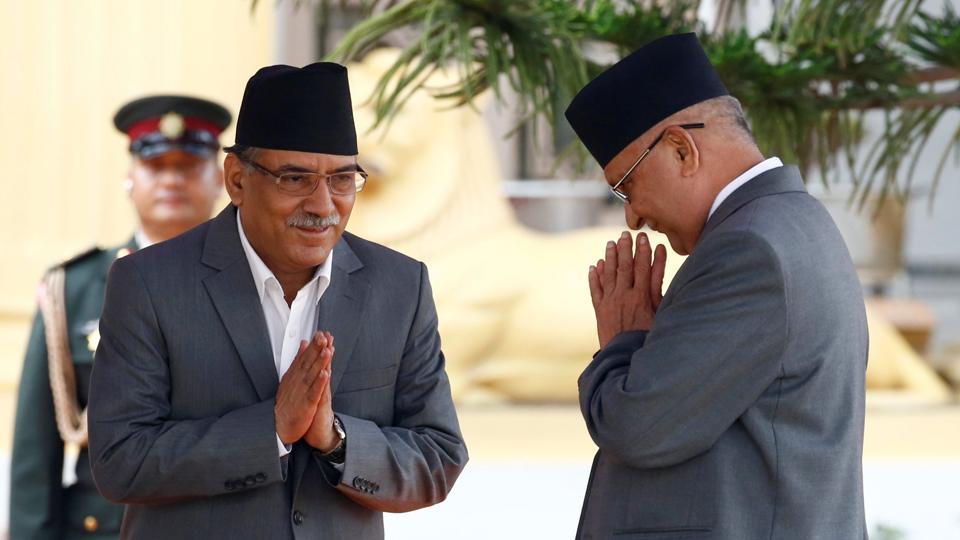
Dahal, a former prime minister commonly known by his nom de guerre Prachanda, has for months tried to get PM KP Sharma Oli to step down from either of the two posts that he holds; the prime minister’s post and the co-chairman of the ruling communist party. But he has been outsmarted by PM Oli on more than one occasion, with some help from China that is comfortable with the 68-year-old Nepal politician and prefers his continuation.
PM Oli has earned Beijing’s trust over the last several months with his sniping attacks at New Delhi, right from setting up a new boundary dispute, claiming that the SARS-Cov-2 pathogen from India is deadlier than the one in China or Italy and accusing India of trying to topple his government.
Also Read: Nepal bought 6 Chinese planes that Dhaka rejected. Now it grounds them: Report
His comment on Lord Ram and the “real Ayodhya” on Monday was part of this continuing tirade against India, designed to drive a wedge between people of the two countries, a Kathmandu watcher in New Delhi said.
When India’s external affairs ministry made it clear that it would not initiate dialogue with Kathmandu after PM Oli pushed Nepal’s new political map through Parliament, it had underscored that the government would continue to work to strengthen people-to-people relations between the two countries.
PM Oli’s claim that Lord Ram was born in Ayodhya, described by his party leaders as ludicrous, was aimed at upsetting this effort. Indian government officials said PM Oli’s larger effort was to stoke anti-India sentiment in Nepal - a continuing effort of his government - by accusing India of encroaching on cultural facts.
Nepal “has become a victim of cultural encroachment and its history has been manipulated,” he said at an event to mark the birth anniversary of Nepalese poet Bhanubhakta, credited for translating Valmiki’s Ramayan into Nepali language.
But PM Oli’s effort backfired. There are already loud voices in his party and outside that have spoken about his concerted effort at chipping away at the goodwill between the two countries.
On Wednesday, Nepal’s leading newspaper Kathmandu Post’s front page story on PM Oli’s Ayodhya remark is titled, “Amid soured Nepal-India ties, Oli is threatening relations between peoples of two countries, leaders and experts say”.
A foreign ministry statement on PM Oli’s Ayodhya remark attempted to give it a new spin. The PM, the statement said, “was simply highlighting the importance of further studies and research... to obtain facts about Shri Ram, Ramayana and various places linked to this rich civilization”.
This isn’t the first time that PM Oli has come under attack in Kathmandu for his sharp tilt against India. “But the elephant in the room is China,” said an analyst based in New Delhi, echoing the government’s reading of PM Oli and his pitch against India. He said PM Oli’s statements and actions fit the pattern of serving China’s interests, starting from the Lipulekh boundary dispute.
In her conversations with PM Oli’s rivals in the communist party, Chinese ambassador Hou Yanqi is learnt to have explained China’s interest in Nepal’s ruling party to ideology: Communist China doesn’t want Nepal Communist Party - formed in 2018 with the merger of 2 leading left parties - to split again. And since PM Oli could split the party if he is up against the wall, the rival camps should take measured steps.


