E-Paper



Politicians can’t be too touchy about critical remarks, says SC
The court pointed out that the rhetoric exchanged between politicians today lacked the restraint seen in earlier times

 Prefer HTon Google


The Supreme Court on Wednesday observed that politicians cannot be “too touchy” when it comes to criticism, adding that there was no place for “hypersensitivity” in an arena where heated exchanges have become commonplace.
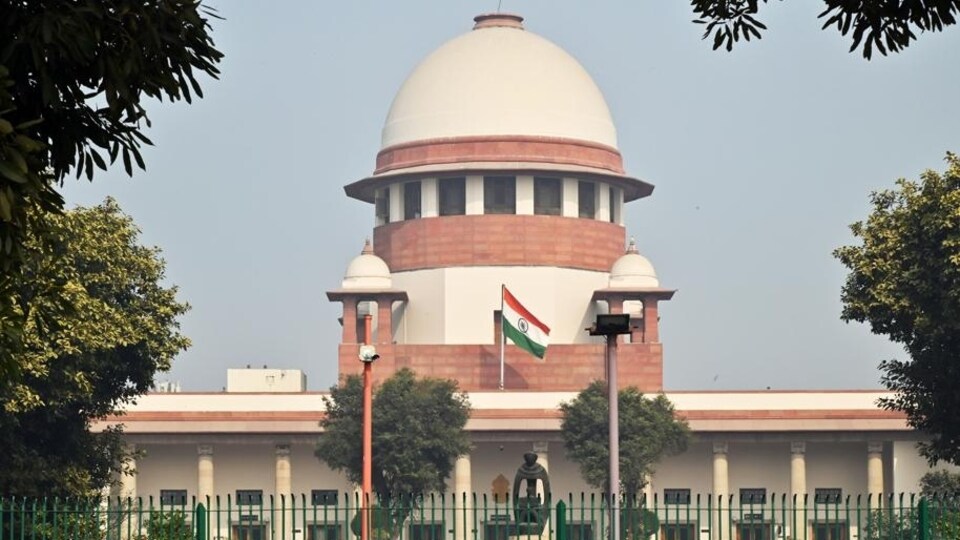
A bench comprising justices Bhushan R Gavai and KV Viswanathan acknowledged the reality of contemporary political discourse, even as it expressed concern over its declining quality, and pointed out that the rhetoric exchanged between politicians today lacked the restraint seen in earlier times.
“Gone is the era when politicians used to be restrained. What do politicians not speak about each other these days? When you enter politics, you should be ready to hear anything about yourself. You cannot be hypersensitive,” the bench said.
The court’s comments came during the hearing of an appeal by Union Minister of State (MoS) L Murugan, seeking to quash defamation proceedings initiated by the Dravida Munnetra Kazhagam (DMK)-affiliated Murasoli Trust over his remarks alleging that its premises were situated on Panchami land -- historically reserved for Scheduled Caste individuals in Tamil Nadu.
Murugan, a prominent Dalit leader and former Tamil Nadu BJP president, currently holds dual portfolios as MoS in the ministry of information and broadcasting and the ministry of fisheries, animal husbandry, and dairying. Tamil Nadu chief minister and DMK president MK Stalin is one of the managing trustees of the Murasoli Trust.
Also Read | SC ends decades-long conflict in Kerala church citing 2017 verdict
During the proceedings, the bench highlighted the deterioration of political debates, citing recent examples from the Maharashtra assembly polls. “Just look at the news reports in the last month from Maharashtra... Someone even said that to be in politics, one must have the skin of a gainda (rhino),” it remarked.
Senior advocate Sidharth Luthra, appearing for the Murasoli Trust, opposed Murugan’s plea, arguing that the minister’s comments were made when he was serving as vice-chairman of the National Commission for Scheduled Castes (NCSC) and therefore carried statutory weight. “At the time, he was not a politician but a member of a statutory body. He had no business making political statements in that capacity,” Luthra asserted.
In response, the bench acknowledged the potential overlap between statutory appointments and political affiliations, remarking, “He might have been a member of the commission then, but you also know how people are appointed.”
Murugan’s counsel, senior advocate K Parameshwar, contended that the statements were political in nature and did not constitute defamation. Seeking an amicable resolution, the bench proposed that Murugan issue a statement in court clarifying that he did not intend to defame the trust or its members. Parameshwar agreed to the suggestion, but Luthra requested a day to seek instructions from his client. Luthra further emphasised, “I have a strong objection to people making such statements while holding statutory offices. One must act honestly and responsibly.”
Deferring its decision to Thursday, the bench said: “Politicians should fight their battles in public.”
The defamation proceedings, stayed by the Supreme Court in September 2023, were initiated by former MP and DMK leader RS Bharathi in 2021 for Murugan’s reported derogatory statements alleging at a press meet in 2020 that the trust’s building in Kodambakkam was built on 12 grounds of Panchami land allotted to persons belonging to Scheduled Castes in the state.
In its complaint, the trust said that Murugan attempted to create an impression as if the trust was being run on unauthorised land. It added that the trust was functioning for more than 35 years in the same place and that there was no question of challenging its title on the property.
In September 2023, the Madras high court had refused to quash the case, observing that there was sufficient evidence for Murugan to stand trial. “In defamation cases, statements must be tested through the lens of a common man who comes across them. Even if the petitioner (Murugan) believes there was no imputation, his comments may be interpreted as repeatedly questioning the right and title of the property over which the trust operates,” the high court said.
The high court rejected Murugan’s defence that his statements were protected under Article 19 of the Constitution, which guarantees freedom of speech. It held that such arguments required a detailed examination of facts and could only be resolved during the trial. The high court directed the special court handling the case to expedite the proceedings and conclude them within three months, compelling Murugan to escalate the matter to the Supreme Court.