
 E-Paper



EC pushes back publication of J&K rolls; may delay elections
The Election Commission of India had directed the publication by October 25, a mandatory process before election dates could be announced


The assembly elections in the Union territory of Jammu & Kashmir may likely be delayed and could happen only in 2023 with a delay in the publication of final electoral roll by a month.
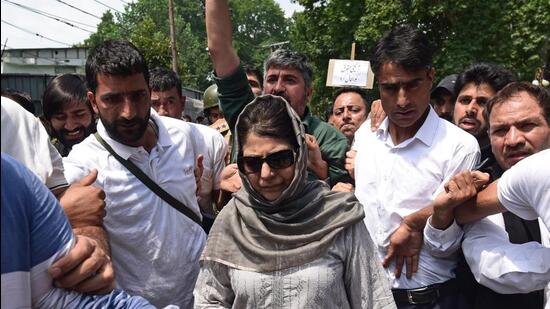
The Election Commission of India (ECI) initially directed that the rolls be published by October 25 as part of the mandatory process before the election dates could be announced. In a notification on Wednesday, J&K’s chief electoral officer Hirdesh Kumar said the final roll will now be published on November 25. A draft roll was to be prepared by August 31 before its finalisation.
“The draft roll shall be published on 15th September and claims and objections to be filed between 15th September to 25th October while final rolls shall be ready by 25th November,” said an official statement issued late on Tuesday by Anil Salgotra, joint chief electoral officer of J&K.
In May, a Delimitation Commission set up to redraw the electoral constituencies in J&K submitted its final report, paving the way for assembly polls.
The Union government has set a delimitation-election-statehood sequence for restoring the status of J&K. In 2019, Article 370 that gave the erstwhile state special status was abrogated and it was broken up into two Union territories, J&K and Ladakh.
J&K has been without an elected government since the Bharatiya Janata Party (BJP) withdrew its support to chief minister Mehbooba Mufti’s People’s Democratic Party-led coalition in June 2018. It was under the President’s rule when Article 370 was abrogated.
Political parties have started preparing for the polls by holding rallies and meetings across J&K.
Government officials said chances of holding the elections this year are now remote, given the delay in the publication of the electoral roll. Large parts of the Himalayan region become snow-bound from December to March.
In its final order, the Delimitation Commission earmarked 43 seats to the Hindu-majority Jammu region and 47 to Muslim-majority Kashmir valley even as the total seats in the assembly were increased to 90 from 83. Out of the seven new seats, six were allotted to Jammu and one to Kashmir. Jammu earlier had 37 seats and Kashmir 46. Kashmir’s representation was brought down to 52.2% from 55.4% of the total seals. The representation of Jammu has been increased from 44.6% to 47.8%.
At an all-party meeting in June last year, Prime Minister Narendra Modi promised to restore J&K’s statehood after the elections are held based on the delimitation process. Regional parties wanted statehood to be restored before the delimitation and elections. The Centre rejected the demand.
PDP spokesman Mohit Bhan said democracy continues to remain in suspended animation in J&K.
“Elections are one of the tools of restoring democracy even that tool isn’t restored in Jammu and Kashmir. All the democratic institutes are being bulldozed in the country, especially in J&K. On the one hand government claims to have restored normalcy in J&K in terms of militancy and on the other hand they are sceptical of conducting elections in the UT.”
National Conference chief spokesman Tanvir Sadiq said that its now the fifth year when J&K is without democratically elected government.
Peoples Conference senior leader and former legislator Nizam ud din Bhat said mainstream national political parties are silent over the conduct of ECI on J&K. “It looks all have connived to “institutional disempowerment of the erstwhile state, now dependent on the whims of bureaucracy and security agencies.”
State BJP spokesman Altaf Thakur said that it’s up to the election commission to hold elections in the UT. “Our party is always ready for polls.”


