
 E-Paper



Rajya Sabha passes Post Office Bill amid debate over privacy concerns
One clause of the bill, however, drew significant opposition from some MPs for threatening people’s privacy by allowing a government-appointed officer to intercept, open or detain any item for national security and allied reasons

 Prefer HTon Google


The Rajya Sabha on Monday passed the Post Office Bill, 2023 that seeks to replace the 125-year-old colonial-era Indian Post Office Act, 1898 that currently governs postal services in India. The bill was passed through a voice vote and was first introduced in the upper house in August 2023.
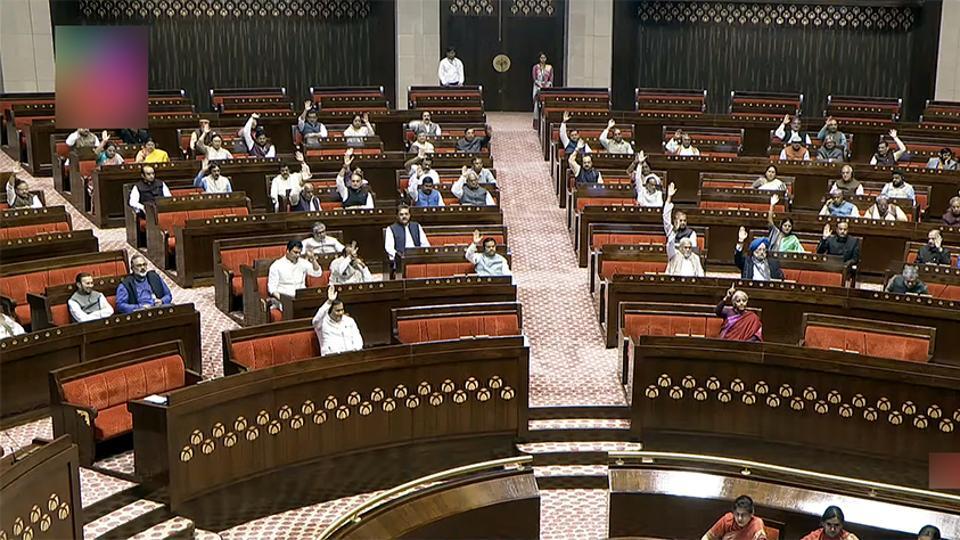
“In the last nine-and-a-half years, postal services and post office have been transformed from a mail delivery institution to a service delivery institution. Post offices have been practically turned into banks. … It is a short law that focusses on shifting this [postal] system from mail delivery to service delivery, from post office to banking services.,” communications minister Ashwini Vaishnaw said.
One clause of the bill, however, drew significant opposition from some MPs for threatening people’s privacy by allowing a government-appointed officer to intercept, open or detain any item for national security and allied reasons.
Clause 9 empowers the central government to notify any officer to “cause any item in course of transmission by the Post Office to be intercepted, opened or detained in the interest of the security of the State, friendly relations with foreign states, public order, emergency, or public safety or upon the occurrence of any contravention of any of the provisions of this Act or any other law for the time being in force”. It also allows the central government to dispose of any such item in any manner.
Congress’s Shaktisinh Gohil said that the Act can be misused and used for increased surveillance of citizens. “The right of privacy is a fundamental right. I understand that security is important and you are doing it for the safety of the people but in the name of security….in which direction are we going?” he said. He also asked the government to clarify what constitutes a “public emergency”.
Gohil also said that the level of the officer need to be specified else “the trust that people have over postmen will be destroyed by this bill”.
Aam Aadmi Party’s Raghav Chadha said that the bill does not lay down any procedures for interception or opening letters of packages. “This is an act of surveillance on citizens, fails to specify procedures and the grounds are very vague. Moreover, there are no consequences for the unauthorised opening of postal articles by a postal officer,” he said.
“This is a violation of articles 19 [fundamental rights] and 21 [protection of life and personal liberty] of the Indian Constitution,” he added.
“The procedure for interception will be introduced through rules,” Vaishnaw said as he explained that the provision for interception of post has existed for decades. To be sure, the new bill, does not provide for introduction of procedure of interception through rules.
The extant act of 1898 allows for interception too but slightly differently. Section 26 empowered the central government, the state government, or a specially authorised officer to direct, through a written order, any postal article or class or description of postal articles to be intercepted, detained or disposed “on the occurrence of any public emergency, or in the interest of the public safety or tranquillity”. In case of doubt whether something was a public emergency or done in interest of public safety, a certificate from the central or state government, as the case may be, was required.
Under the new bill, a written order is not required.
Similarly, an officer of the post office, empowered by the central government, could “search or cause search to be made” for “any goods of specified description” that have been prohibited or restricted by any law.
The new bill, under clause 9(3), allows the central government to empower any Post Office officer “to deliver an item, received from within or beyond the limits of India and reckoned to contain anything liable to duty or which is suspected to contain any prohibited item to such customs authority or any other authority as may be specified in the said notification, and such customs authority or any other authority shall deal with such item in accordance with the provisions of any law for the time being in force”.
Nationalist Congress Party member Fauzia Khan said that the legislative intent of the bill is unclear. “It plans to turn us into one of the most surveilled nation,” she said. “Officers get an immunity shield and may indulge in corrupt practices through it,” she said.
Responding to criticism, Vaishnaw said the provision for interception is meant for national security. “In a society that is complex and diverse, and times that are difficult, it is very important that interception is undertaken. This provision is kept for national security,” he said. He also added that the government has a right to keep track of illegal substances, like narcotics being transported through postal networks.
“There is absolutely no question of privatisation of post offices,” Vaishnaw said in response to such concerns. “The government has no intention of privatising the postal services...The aim of the bill is to allow for inclusion of other services [such as banking, direct benefit transfer] within the remit of the act,” he said.
The new bill does not define what kind of materials cannot be sent through post. The extant act prohibits the postal transmission of unauthorised lottery tickets, “indecent or obscene printing, painting, photograph, lithograph, engraving, book or card, or any other indecent or obscene article”, and postal articles whose covers have any words, marks or designs that are “indecent, obscene, seditious, scurrilous, threatening or grossly offensive”.
The Bill, in keeping with the current act, exempts the post office and the officers from any liability with regard to a service until and unless the officer has “acted fraudulently or wilfully caused loss, delay or mis-delivery of service”. All offences and penalties under the current act were removed through the Jan Vishwas (Amendment of Provisions) Act, 2023. This included illegal opening of postal articles by an officer which was punishable with imprisonment of up to two years and/or a fine.
The bill requires the appointment of a director general to make regulations to provide services through the post office. These services have not been defined yet and will be prescribed by the central government. The director general can also fix the charges and terms and conditions for such services.
The director general can make regulations related to the supply and sale of postage stamps and postal stationery while in the current Act, the power rests with the central government. However, only the central government is authorised to make rules under the new bill.
(With inputs from Abhya Adlakha)


