
 E-Paper



‘Ready to work with India’, says China ahead of key Doval-Wang talks | What's on agenda
National Security Advisor Ajit Doval will meet Chinese Foreign Minister Wang Yi in Beijing for the first Special Representatives meeting in five years.

 Prefer HTon Google


China is ready to work with India to bring bilateral ties back on track “as soon as possible,” the China's foreign ministry said on Tuesday ahead of the key talks between India's National Security Advisor Ajit Doval and Chinese Foreign Minister Wang Yi at the India-China Special Representatives' slated to take place on Wednesday.
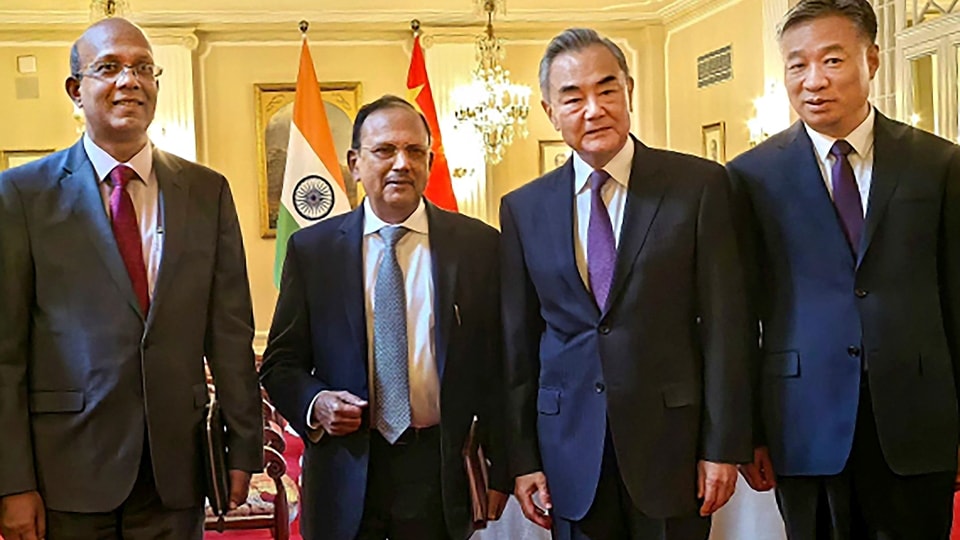
The statement from Chinese Foreign Ministry Spokesperson Lin Jian came on the eve of border talks between the nuclear-armed neighbours, the first since December 2019, in Beijing.
Also Read: Ajit Doval, Wang Yi resume border talks after 5 years
“China is ready to work with India to implement the important common understandings between our leaders, respect each other's core interests and major concerns, strengthen mutual trust through dialogue and communication, properly settle differences with sincerity and good faith, and bring bilateral relations back to the track of stable and healthy development as soon as possible,” the Spokesperson said, according to ANI.
Doval-Wang talks | What's on agenda
On Tuesday, India's National Security Advisor Ajit Doval arrived for talks with China's Foreign Minister, Wang Yi, for the 23rd Special Representatives meeting. They serve as Special Representatives of their respective countries.
The meetings between Doval and Wang after December 2019 have been on multilateral issues and not boundary resolution.
Meanwhile, the Ministry of External Affairs in New Delhi stated that the two representatives will discuss the “management of peace and tranquillity in the border areas and explore a fair, reasonable and mutually acceptable solution to the boundary question.”
In October, India and China reached an agreement regarding patrolling arrangements along the Line of Actual Control (LAC) in the border areas. The border standoff began due to actions of the Chinese military in India's eastern Ladakh in May 2020.
Also Read: India, China hold 1st diplomatic dialogue since disengagement
External Affairs Minister S Jaishankar informed the Parliament last week, that the disengagement between India and China has been “fully achieved” in eastern Ladakh through a “step-by-step process,” culminating in Depsang and Demchok.
India-China border standoff
The military standoff along the Line of Actual Control (LAC) in eastern Ladakh began in May 2020, and a deadly clash in Galwan Valley in June of the same year severely strained ties between India and China. Apart from trade, relations between the two countries came to a near halt.
The standoff officially ended after the disengagement process was completed at the last two friction points, Demchok and Depsang, under an agreement reached on October 21.
Wednesday’s meeting of Special Representatives (SRs) is considered important as it marks the first structured dialogue between the two countries aimed at restoring relations. This meeting, taking place after five years, follows the last SRs meeting in 2019 in Delhi.
The SRs mechanism, formed in 2003 to address the 3,488 km-long India-China border dispute, has met 22 times. While it hasn't yet resolved the boundary dispute, both sides view it as a valuable tool for managing recurring tensions between the two nations.


