
 E-Paper



Real targets of Nepal PM Oli’s new political map are in Kathmandu
Nepal’s new political map that claims the Lipulekh Pass, Limpiyadhura and Kalapani in Uttarakhand’s Pithoragarh as its own is part of an exercise in Kathmandu to consolidate PM Oli’s support.

 Prefer HTon Google


Nepal prime minister KP Sharma Oli’s push to fast-track release of a new political map on Wednesday is linked to his huge climbdown last month when he had to cancel an ordinance within five days, people familiar with the development said.
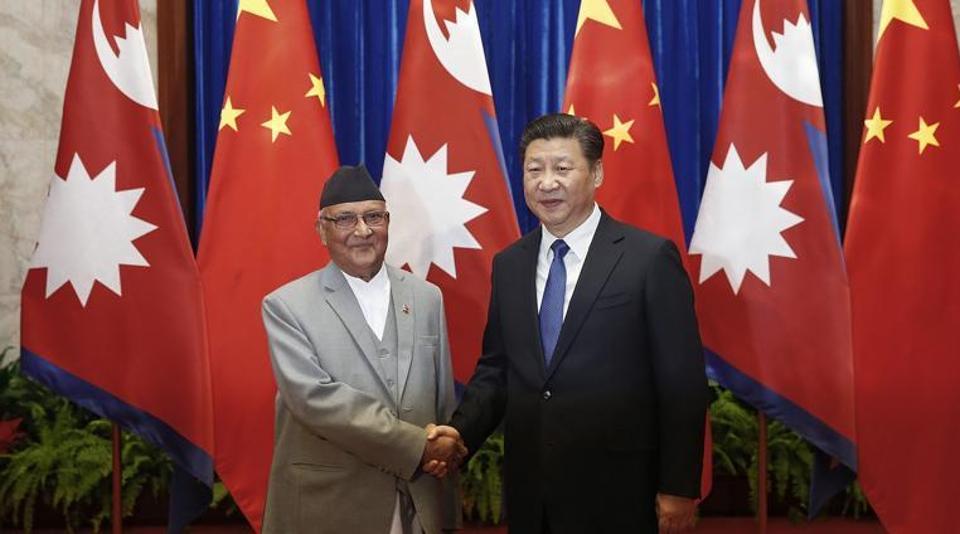
There is a concerted effort by the Oli government in recent days to play the anti-India card to whip up ultra-nationalistic emotions to settle domestic scores, sources told Hindustan Times.
“By raising an ultra-nationalistic sentiment, Oli has left his comrades - former PMs, Pushpa Kamal Dahal “Prachanda” and Madhav Kumar Nepal - with no option but to side with him and make India the casualty in the cross-firing between the two groups, a second person, a Kathmandu watcher, said.
Nepal’s new political map that claims the Lipulekh Pass, Limpiyadhura and Kalapani in Uttarakhand’s Pithoragarh as its own is only one part of this exercise. PM Oli’s statement in parliament on Tuesday that claimed the coronavirus infection coming from India is “more lethal” than those from China and Italy is another.
The two former prime ministers, who have been accused of destabilising the KP Sharma Oli-led government, are seen to have played a lead role in the tug-of-war that played out in Nepal’s power politics.
At a time when Nepal, like the rest of the world was battling Covid-19, the prime minister had surprised his country when he got twin ordinances notified.
These two made it easier for parties to split and register a new faction and were widely perceived to be part of an exercise by PM Oli to strengthen himself in the party and the government.
But he had to stand down on April 23 and scrap the ordinances within five days to buy peace with his prime detractors. Energy minister Barsaman Pun told the Kathmandu Post that the Cabinet scrapped the ordinance following what he described as “excessive criticism”.
According to reports from Nepal, the Communist Party of China’s international liaison department also stepped up efforts to broker peace between the comrades in Nepal.
It was this shade of domestic power play at work when land management minister Padma Kumari Aryal on Wednesday held up a new map of Nepal. According to a report in the Kathmandu Post on her Press conference, she hoped India would take Nepal’s decision to publish the new map in a “positive way”. She didn’t elaborate.
The 80-km stretch of road that New Delhi built Uttarakhand’s Dharchula to Lipulekh to make it easier for pilgrims to reach Kailash Mansarovar in the Tibet Autonomous Region offered the perfect opportunity.
Army chief Gen Manoj Mukund Naravane brushed aside the shrill voices from Kathmandu, underlining that there was no dispute over the land on which the road had been built. Gen Naravane went on to suggest that the protests could be at the behest of “someone else” – a veiled reference to China.
Prime Minister Oli, who is seen to be heavily tilting towards China, has described Gen Naravane’s comment as “inappropriate”.
KALAPANI
Kalapani is a 35 square kilometre area in Uttarakhand’s Pithoragarh district. Nepal claims this area as part of its Darchula district.
The tri-junction point of Lipulekh, Kalapani and Limpiyadhura in Nepal’s northwest separates China and the Tibet Autonomous Region to the north and India’s Kumaon to the south. The Mahakali river has been considered as a natural demarcation line to separate the borders.
Indian security officials say China has tacitly recognised India’s claim over the Kalapani area when it agreed to open a border trade post at Lipulekh in 2015.
India reacts to Nepal’s map
The external affairs ministry described the new political map as an “artificial enlargement of territorial claims” and asked Kathmandu to refrain from “unjustified cartographic assertion”.
“This unilateral act is not based on historical facts and evidence. It is contrary to the bilateral understanding to resolve the outstanding boundary issues through diplomatic dialogue,” External Affairs Ministry Spokesperson Anurag Srivastava said.


