
 E-Paper



RJD, JD(U) eye Yadav votes in Kosi, Mithilanchal, Seemanchal in 3rd phase of Bihar polls
Out of the total 78 seats going to polls, 65 seats which fall in the Mithilanchal, Champaran, Kosi and Seemanchal belt have a sizeable Yadav population with Madhepura assembly seat accounting for around 40% of that particular caste group.

 Prefer HTon Google


With a large number of seats in the Kosi and Seemanchal belt going to polls in the last leg of the Bihar assembly election on November 7, the caste arithmetic has come into focus with the Yadav voters likely to tip the scales.
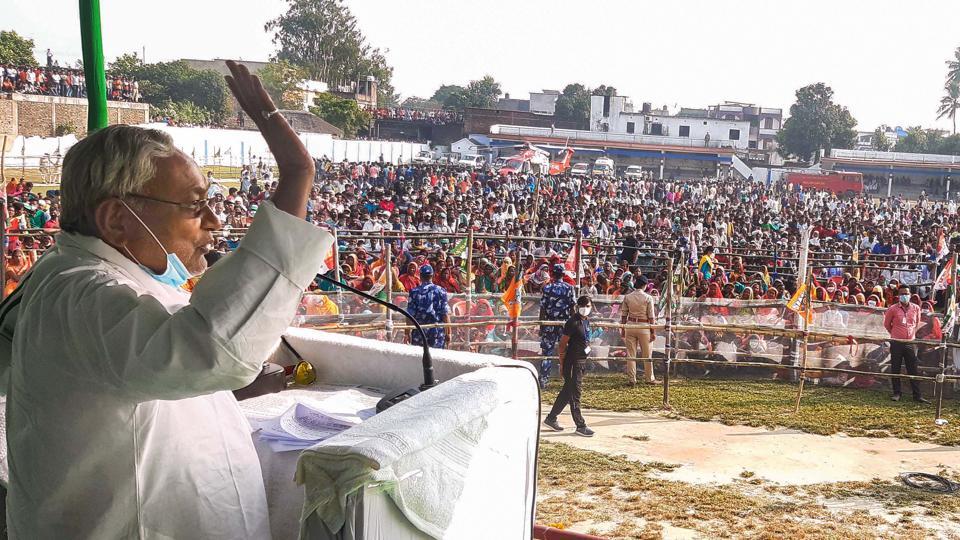
Out of the total 78 seats going to polls, 65 seats which fall in the Mithilanchal, Champaran, Kosi and Seemanchal belt have a sizeable Yadav population with Madhepura assembly seat, known as Gopeland (land of Yadavs) accounting for around 40% of that particular caste group.
Both the ruling NDA and RJD-led grand alliance have high stakes in this region hoping to get a slice of Yadav votes. While the RJD having a traditional support base among Yadavs has 12 candidates from the caste group in the fray from Saharsa, Supaul, Madhepura arc, the ruling JD(U) has seven candidates in the fray in this area.
The prominent Yadav faces in the third phase of election on Saturday include daughter of veteran socialist leader Sharad Yadav, Suhasini from Bihariganj (contesting on a Congress ticket), Nikhil Mandal, (grandson of former chief minister and chairman of Mandal Commission recommendations report on job reservations, B P Mandal), contesting from Madhepura seat on JD(U) ticket and two ministers in the Nitish Kumar government, Narendra Narayan Yadav (Alamnagar) and Bijendra Prasa Yadav (Supaul).
In the 2015 assembly polls, the JD(U) as an ally of the RJD-Congress Mahagathbandhan had won the maximum seats in this arc with 19 seats followed by RJD with 14 while Congress managed to get 11 seats. The rest were won by different parties. The BJP had won 18 seats in this region.
Observers feel the JD(U) did get advantage of RJD’s support base among the Yadavs in this region to win a good number of seats in the last election. But, interestingly, in the 2019 parliamentary election, the RJD lost all parliamentary seats in this heartland of Yadavs including Madhepura, which was won by the JD(U)’s Dinesh Chandra Yadav.
Click here for full coverage of Bihar Assembly Election 2929.
It had raised questions on RJD chief Lalu Prasad’s slipping grip over his own Yadav vote base that showed signs of split with poll results indicating that the ruling BJP and JD(U) managed to woo the caste group in its fold.
This time, the poll equations look a bit different as the ruling JD(U) contesting majority seats in Madhepura-Supaul is faced with the challenge of keeping Yadav voters in its side amid the chances of consolidation on caste lines due to the RJD’s bid to project Tejashwi Prasad Yadav as Chief Ministerial face and also poll promise of providing 10 lakh jobs.
Former MP and chief of Jantantrik Adhikar Party( JAP) Rajesh Ranjan alias Pappu Yadav, a prominent Yadav face in Kosi region, too is a claimant on Yadav votes in the Madhepura- Saharsa belt and poses a threat to the RJD and NDA.
Aman Kumar, a businessman in Madhepura, engaged in business works maintained the Yadavs in Kosi belt prefer to vote on factors like credentials of candidates and local issues instead of caste factor alone, unlike in central Bihar where caste based polarisaiton among different caste groups is common.
“The JD(U) and RJD both are eying the Yadav vote bank. But this time, there will be division of voters due to triangular contests in many seats in Kosi area as LJP is contesting in many seats,” Kumar added. In the Madhepura assembly seat, the contest is a three-way fight among RJD’s Chandrashekhar, JD(U)’s Nikhil Anand and LJP’s Sakal Yadav.
“It is true Yadavs had an inclination towards the NDA in 2019 due to the Hindutva factor and Prime Minister Narendra Modi. But there is a difference in voting pattern between Lok Sabha and assembly polls. This time, Yadavs and other caste groups especially youths have jobs on their minds and also harsh memories of the lockdown when migrants returned in hordes. In my view, it’s not religion but caste feelings would be influencing the voting pattern of all groups including Yadavs,” said D M Diwakar, a political observer and former director, A N Sinha Institute of Social Studies, Patna.
“The BJP would get a good share of Yadav votes. We are getting encouraging responses in every constituency from all sections,” claimed former union minister and BJP MP Ram Kripal Yadav. He did not comment whether he foresees a big shift of Yadavs this time towards RJD because of Tejashwi’s face.
JD(U) state spokesperson Rajeev Ranjan said the RJD’s so-called Muslim-Yadav combination cracked in 2019 polls even in Muslim dominated Seemanchal. He said chief minister Nitish Kumar has got votes of all castes, sections. “It is development that influences votes in Bihar now. Not any caste,” he said.
Incidentally, Tejashwi recently told HT that he did not agree there has been any crack in its core vote base of Yadavs. “The RJD contested 19 seats in the 2019 polls. It got around 15-16 % of votes. Was it without our base votes being intact. Besides, we are an A to Z party having support in all caste groups and sections,” he said.
However, some like Nawal Kishore Choudhary, another political observer, maintained there is still doubt the Yadavs this time would vote in a consolidated manner with the caste group choosing to vote on various factors like development, education and employment in recent elections.
“It is wrong to stereotype Yadavs as aligned to any one particular party or so as the community has changed its way of voting mainly the youths. The RJD’s bid to woo Yadavs by projecting a chief ministerial face may help the party to check the fast erosion of Yadav votes from its side in some way. But there will be a split of Yadav votes towards NDA , GA and other fronts as well,” he said.


