
 E-Paper



Modi government concerned over cluster bombing of Kharkiv by Russia
There are heightened fears about the Kharkiv situation as nearly 2500 Indian students are trapped in the war zone which is facing aerial bombardment from Putin’s forces

 Prefer HTon Google


The cluster bombing of Kharkiv residential localities by Russian military aircraft has heightened the concerns of the Narendra Modi government as nearly 2500 Indian students are trapped in the warzone of Ukraine’s second largest city. While the Modi government has not only deputed four senior ministers for evacuation duties in countries bordering Ukraine, but Indian diplomats are also being pressed from all over Indian missions in Europe to help the evacuation process.
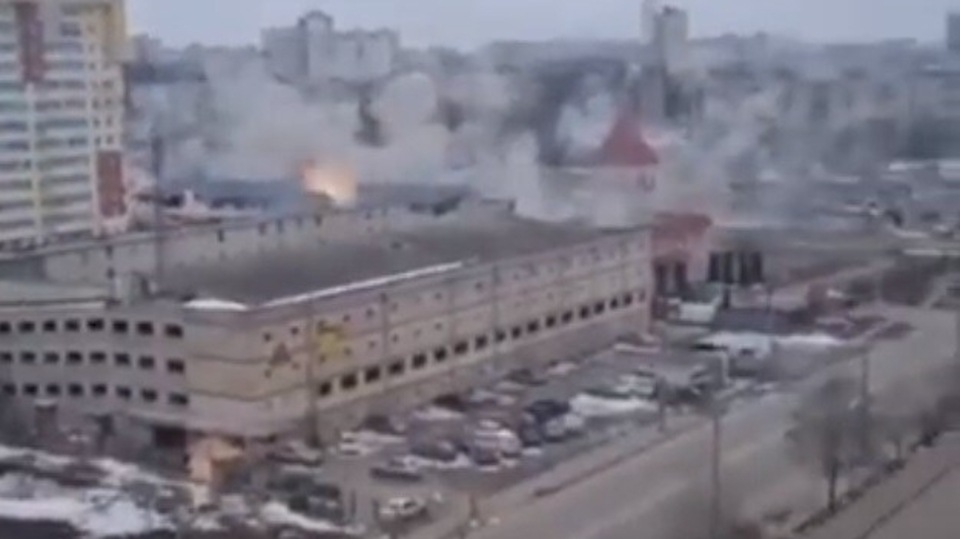
However, there are heightened fears about the Kharkiv situation as Russian forces subjected the city, located in north-east of Ukraine, to continuous artillery shelling and aerial bombardment. The only saving grace is that the Russian forces are doing deliberate bombing by avoiding Russian inhabited localities in Kharkiv and Kyviv so that there is no domestic back-lash in Moscow.
The assessment is that while Russian forces have enough firepower to decimate Kyviv and Kharkiv, the Red Army is being bogged down by stiff Ukrainian resistance with urban guerilla warfare breaking out on streets of Ukraine cities. According to latest reports, as many as 11 civilians have been killed in the cluster bombings, while a school has been destroyed.
Read- 70 Ukraine soldiers killed as Russia hits military base: 10 updates
It is quite evident that the Russian invasion forces have virtual domination of Ukraine skies, but the cities are still under Ukraine control and holding off against Putin's offensive. Fifth day into the Ukraine offensive, Russian President Putin has got the tiger by the tail as he cannot afford to be seen politically and militarily humiliated by puny Ukraine.
For Russia, status quo or ceasefire is not longer an option as it will have political repercussions for President Putin in Moscow. It is for that very reason, the Russian President has pumped in armour, rocket and missile regiments into Ukraine and clearly will not stop till such time he takes control of Kyviv.
Given the massive response of the West to the Ukraine invasion, many experts feel that President Putin should have confined his offensive to only the Donbas region with Crimea already under its control. However, this argument is countered by others who say that limiting offensive to Donbas region would have ensured that the rest of Ukraine would be sitting in NATO and EU’s lap and compromising the Russian sphere of influence.
Although the US understands the Indian position on Ukraine invasion given its past strategic legacy with Russia, the Indian puiblc opinion is split with the old-timers supporting Moscow and the younger lot in favor of Ukraine. But this situation will totally change in case any Indian student is unfortunately caught in crossfire in the Kharkiv or Kyiv warzone.


