E-Paper



S-400 deal ‘advancing well’ despite US threat of sanctions: Russian ambassador
India and Russia signed a $5.4-billion deal for five S-400 systems in October 2018, and the first batch is expected to be delivered by the end of 2021. All deliveries will be completed in a five-year period

 Prefer HTon Google


Russia’s ongoing deals with India for military hardware, including for S-400 air defence systems, are “advancing well” despite the threat of potential US sanctions, Russian ambassador Nikolay Kudashev said on Monday.
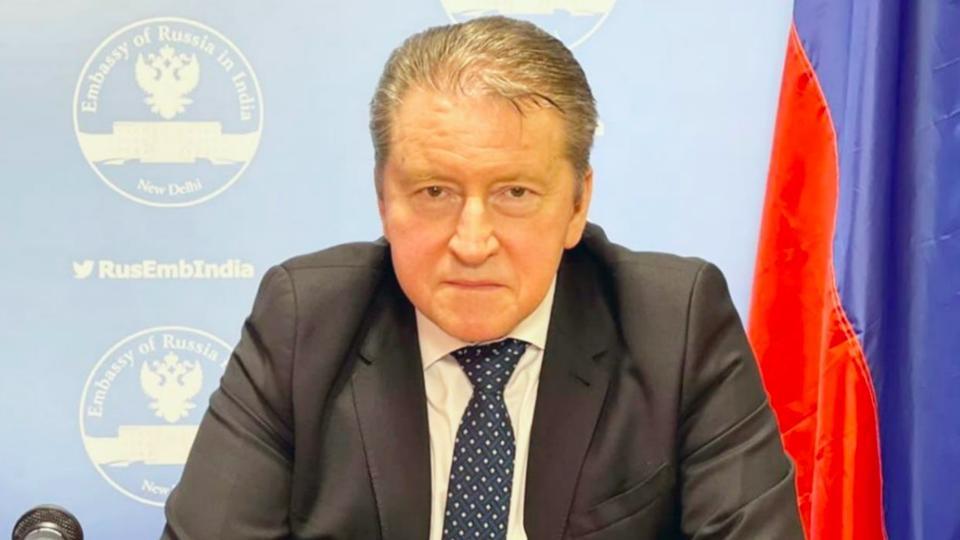
There can be “good progress” if decisions related to the procurement of Ka-226 helicopters and production of AK-203 assault rifles are expedited, and Russia is prepared to share the most advanced technologies with India in line with the “Make in India” and “Aatmanirbhar Bharat” initiatives, Kudashev told a news briefing.
His remarks came against the backdrop of the US imposing sanctions last on Turkey over its $2.5-billion deal with Russia for the S-400 air defence system under the Countering America’s Adversaries Through Sanctions Act (CAATSA). US officials have warned that India’s acquisition of hi-tech Russian systems could attract similar sanctions.
“As far as current deals [are] concerned, we are advancing well, including with S-400 supplies. If relevant decisions to start works related to Ka-226 helicopters and AK-203 rifles production are expedited, soon we will see good progress, which is especially important due to deep interests expressed by the Indian armed forces,” Kudashev said.
Also Read: Russia understands India’s vision of Indo-Pacific, has concerns about Quad: Russian diplomats
India and Russia signed a $5.4-billion deal for five S-400 systems in October 2018, and the first batch is expected to be delivered by the end of 2021. All deliveries will be completed in a five-year period.
Asked specifically about the threat of US secondary sanctions against India under CAATSA, Kudashev said Russia, like India, doesn’t recognise sanctions other than those imposed by the UN Security Council. Roman Babushkin, chargé d’affaires at the Russian embassy, described US secondary sanctions on arms purchases from Russia as “illegal tools of unfair competition and pressure”.
Kudashev said both Russia and India are disciplined members of international arms control regimes and their bilateral military-technical cooperation will not introduce “any threat to the regional balance”.
“As far as sanctions are concerned, it’s hard to predict and let the Biden administration first announce publicly its plans and foreign policy vision. We do not recognise or welcome unilateral sanctions as a tool...of interstate or international relations, sanctions other than those applied by the UN Security Council, this is also the case of Turkey,” he said.
“As far as India is concerned, we share the same platform. India’s position is crystal clear – no sanctions are acknowledged other than those applied by the UN Security Council. Whatever the future is, we believe that our ties will stand the coming challenges,” he added.
Kudashev said the “unparalleled defence cooperation” between India and Russia is based on “real exchange of technologies and joint ventures helps India to advance local production and expand its military export potential”. The two sides are working on co-development and co-production of equipment, components and spare parts, improving the after sales service system and deepening localisation programmes.
Russia is also looking forward to participating in Aero-India 2021, where it will showcase the Su-57, Su-35 and MiG-35 combat jets, Ka-52, Ka-226, Mi-17B-5 and Mi-26 helicopters, and the S-400 and Buk missile systems.
“We are ready to share almost everything we have, doubly so since the Make in India and Aatmanirbhar Bharat initiatives and the emergence of the military-technical economic corridors in Tamil Nadu and Uttar Pradesh create especially favourable conditions. There are no obstacles to our cooperation,” Kudashev said.