E-Paper



S-400 deal is on despite US objections, says Russia
India and Russia are on the same page on the situation in Afghanistan as both sides want the Taliban to deliver on commitments to form an inclusive government and prevent terrorism and instability from spilling over into neighbouring countries, Lavrov said.

 Prefer HTon Google


The deal between India and Russia for S-400 air defence systems is being implemented despite the US attempts to “undermine this cooperation”, Russian foreign minister Sergey Lavrov said on Monday.
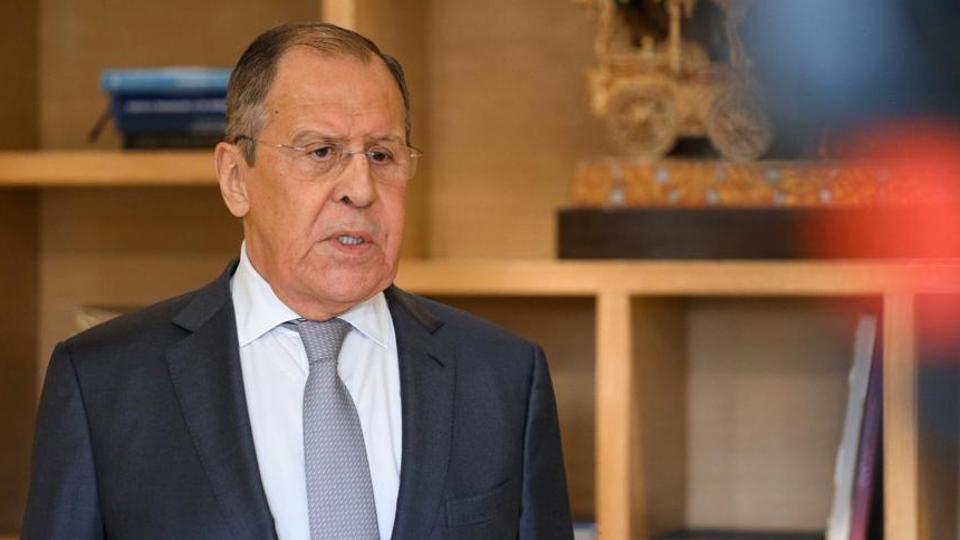
India and Russia are on the same page on the situation in Afghanistan as both sides want the Taliban to deliver on commitments to form an inclusive government and prevent terrorism and instability from spilling over into neighbouring countries, Lavrov said.
Talking to the media after the maiden India-Russia 2+2 dialogue of defence and foreign ministers, Lavrov said the Russian side raised its concerns about “Indo-Pacific strategies” and “non-inclusive blocs” such as AUKUS, the defence alliance between Australia, the UK and the US, during the talks.
“The S-400 deal doesn’t have only symbolic meaning, it has a very important practical meaning for Indian defence capability and the situation is basically underway. The deal is being implemented,” he said, referring to the $5.4-billion deal signed by India to acquire five S-400 systems.
“We witnessed attempts on the part of the US to undermine this cooperation and make India obey the American orders to follow the American vision of how this region should be developed. Our Indian friends clearly and firmly explained that they are a sovereign country and they will decide on whose weapons to buy and who is going to be a partner of India in this and the other areas,” he said.
Russia-India ties are a “specially privileged strategic partnership” and Monday’s meeting of a bilateral military technical commission is a “manifestation that this cooperation is in the interest of both countries”, Lavrov added.
Russia continues to be a key supplier of military hardware to India, which has diversified arms purchases in recent years by acquiring combat jets, helicopters and advanced weapons from the US, France and Israel.
The US has threatened to impose sanctions on the S-400 deal under the Countering America’s Adversaries Through Sanctions Act (CAATSA), but India has said its defence procurements are guided by a policy of strategic autonomy. The delivery of the first S-400 system to India coincided with President Vladimir Putin’s visit for an annual summit.
Lavrov said the situation in Afghanistan was discussed at the 2+2 meeting. “We share the view [with India] that the Taliban must deliver on their commitments to ensure an inclusive government structure and respect human rights, prevent the drug threat and the terrorist threat remaining in the country, and prevent instability from spilling over from Afghanistan into neighbouring countries, primarily into Central Asia,” he said.
Russia is opposed to any attempts by the US or NATO (North Atlantic Treaty Organization) to shift forces withdrawn from Afghanistan to neighbouring countries, and the Central Asian states have said this will be unacceptable, Lavrov said. India and Russia also agreed to work closely together, including within the Shanghai Cooperation Organisation (SCO), to coordinate their actions on Afghanistan.
Lavrov, who has for long been critical of the Indo-Pacific concept, said the Russian side had focused at the 2+2 meeting on developments in Asia-Pacific, where “elements of instability have been accumulating which could undermine the universal framework of cooperation”.
He added, “We expressed our concern about the activities taking place in this region under the slogan of Indo-Pacific strategies, where we see non-inclusive blocs. The latest example is AUKUS, a military-technical alliance between the US, Great Britain and Australia and there are a lot of questions on the plans to supply to Australia or make in Australia nuclear-powered submarines.”
Lavrov questioned whether these plans comply with International Atomic Energy Agency (IAEA) norms and non-proliferation rules. “From a regional perspective, to what extent will Australia stick to its obligation on the nuclear weapons-free zones in the Southern Pacific?” he said.
The Indian side, Lavrov contended, “distanced themselves from the AUKUS bloc”. He said, “They are part of the Quad group, which brings together India, Japan, Australia and the US, and India...emphasises its interest in economic infrastructure and transport projects within this framework.”