E-Paper



‘Malicious, false, orchestrated by Pakistan’: MEA rejects OIC's ‘anti-India’ references during Baghdad meet
The ministry of external affairs noted that the OIC has no locus standi ‘whatsoever to comment on matters that are strictly internal to India.’

 Prefer HTon Google


New Delhi on Monday dismissed “anti-India references” in several documents adopted at a meeting of foreign ministers of the Organisation of Islamic Cooperation (OIC) as “biased and false” moves “orchestrated by Pakistan” and reiterated that the grouping has no right to comment on the country’s internal affairs.
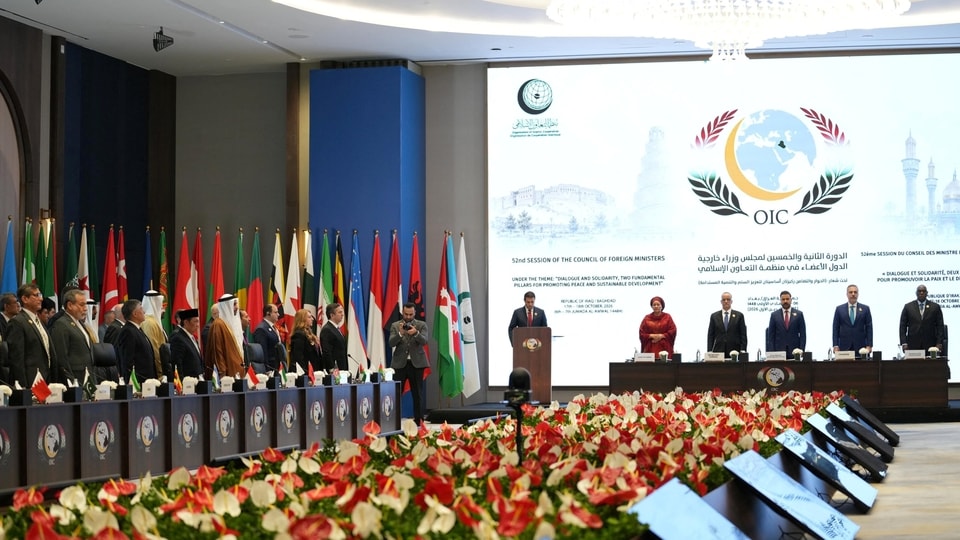
The OIC foreign ministers’ meeting, held in the Iraqi capital of Baghdad between October 17-18, adopted several resolutions and a declaration that contained references to Jammu and Kashmir and India’s religious minorities. The declaration reiterated OIC’s solidarity with the people of Jammu and Kashmir and support for “their inalienable right to self-determination”.
MEA slams OIC's ‘anti-India’ references
The “anti-India references in the resolutions” of the OIC foreign ministers’ meeting are “malicious, biased and false, and have been orchestrated by Pakistan”, the external affairs ministry said in a statement. “We are disappointed that the OIC has once again allowed itself to be misused by Pakistan for its bigoted agenda,” it said.
New Delhi reiterated its stance that the OIC “has no locus standi whatsoever to comment on matters that are strictly internal to India”. The Union Territories of Jammu and Kashmir and Ladakh are integral and inalienable parts of India, the statement said. “Politically motivated propaganda can never alter this reality,” it added.
Since the scrapping of Jammu and Kashmir’s special status in 2019, there has been “significant economic growth and benefits accruing directly to its people through infrastructure development, tourism and connectivity”. This is in contrast to the situation in Pakistan-occupied Kashmir, “where Pakistan has unleashed violence, repression and brutality on civilian protesters, killing scores of them, including women and children”, the statement said.
Also read: Tiger Shroff attack: How Lawrence Bishnoi gang’s overseas network operates
India slams Pakistan for PoJK situation
“No amount of media blackout has been able to hide these grave violations of human rights,” the statement said. “The only issues related to Jammu and Kashmir that remain to be addressed are Pakistan vacating from areas under its illegal and forcible occupation and ceasing its continued support to cross-border terrorism.”
Fabricated and hostile references against India in the OIC resolutions, “including insinuations related to Islamophobia”, are a desperate attempt by Pakistan to divert global attention from its “own appalling record of minority persecution and sectarian violence, apart from governance failure and political instability”.
The statement said that the OIC’s repeated endorsement of “patently malicious propaganda and narratives peddled by Pakistan” raises serious questions about its credibility and integrity. The Indian side also urged members of the grouping to reform the organisation.
There were references to India or Jammu and Kashmir in the resolutions on Muslim minorities in non-OIC member states, the work of the OIC independent permanent human rights commission, and political affairs.