
 E-Paper



SC order on Aadhaar can plug leakages; restrict data mining | Opinion
Aadhaar was a concept introduced by the Congress-led UPA and implemented across schemes by the BJP-led NDA. The order of the constitution bench should end the debate over Aadhaar’s validity.


The Supreme Court’s judgment holding the 12-digit biometics-based Aadhaar project “constitutionally valid” is a balanced view as it will help governments plug leakages in administering schemes while restricting the possibility of data mining by the private sector.
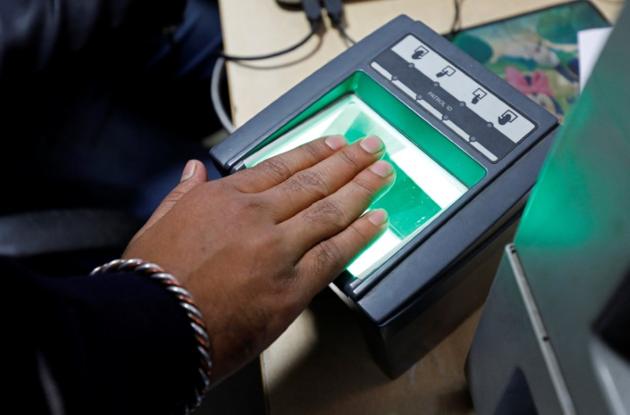
The majority judgment read by justice AK Sikri said Aadhaar is meant to help benefits reach the marginalised sections of the society and takes into account people’s dignity, not only from the individual but also from the collective point of view. “Aadhaar means unique and it is better to be unique than being best,” the court said. The court also said Aadhaar should not be mandatorily linked with bank accounts and for appearing for school and higher education examinations but agreed with linking the number with the PAN (permanent account number), mandatory for filing of income tax returns.
In 2009, when Infosys co-founder Nandan Nilekani, who was then appointed as the chairman of the Unique Identification Authority of India (UIDAI), and then Planning Commission vice-chairman Montek Singh Ahluwalia announced the 12-digit unique identity number, the aim of the programme was to link it to the delivery of government schemes to plug leakages.
At the time, the concern of the UPA-2 government was to manage the fiscal deficit as the burden of subsidies and social welfare schemes was rising with no effective mechanism to plug leakages. A 2005 study of the Planning Commission estimated that about 45% of the food grains under the public distribution system (PDS) were not reaching the entitled beneficiaries.
UIDAI’s approach was different from that of the government’s other departments that issue identity documents. There was no verification of documents submitted as the system was based on the concept that biometrics don’t cheat. Minimum demographic information of an individual was taken for the purpose of de-duplication to create a unique number that was valid across India.
The exercise was massive as 1.2 billion had to be provided with a unique number in less than 10 years (as per resolution of the National Development Council) and, as expected, UIDAI faced some teething problems. Some enrolment agencies did not adhere to UIDAI protocols, resulting in allegations of corruption. There were some technical glitches that resulted in the rejection of enrolments (less than two percent) and some states governments erroneously displayed Aadhaar number of beneficiaries on digital platforms.
UIDAI had also faced a barrage of questions from activists and technocrats in India and abroad. Some of these were valid, resulting in the improvement of the system, and others opposed Aadhaar on the grounds of privacy and possible misuse by the state. The SC had dealt with the privacy concern on data mining by private entities by saying that no private company or bank can ask for an individual’s Aadhaar number. India does not have a separate privacy law though in July, the BN Srikrishna committee submitted a draft data privacy bill to the government.
Aadhaar’s aim is to transparently deliver the benefits of welfare schemes worth Rs 10 lakh crore in 2017-18 (the spending on 20 major schemes by the Centre and the states ). Even 10% leakage would mean a loss of Rs 1 lakh crore annually. Even as it sought to do this, Aadhaar did exclude some in states such as Jharkhand and Rajasthan, but now has in place strong protocols to ensure such exclusions do not happen.
Aadhaar was a concept introduced by the Congress-led UPA and implemented across schemes by the BJP-led NDA. The order of the constitution bench should end the debate over Aadhaar’s validity and the two major political parties should come together to use technology for poverty alleviation and checking corruption.


