
 E-Paper



SC to deliver order on stopping fresh sale of electoral bonds ahead of polls
Advocate Prashant Bhushan, representing ADR, argued that there was a serious apprehension that any further sale of electoral bonds before the upcoming state elections would further increase illegal and illicit funding of political parties through shell companies


The Supreme Court will Friday deliver its order on a plea to stop the fresh sale of electoral bonds from April 1 till the top court decides on the validity of the instrument used for donating money to the political parties.
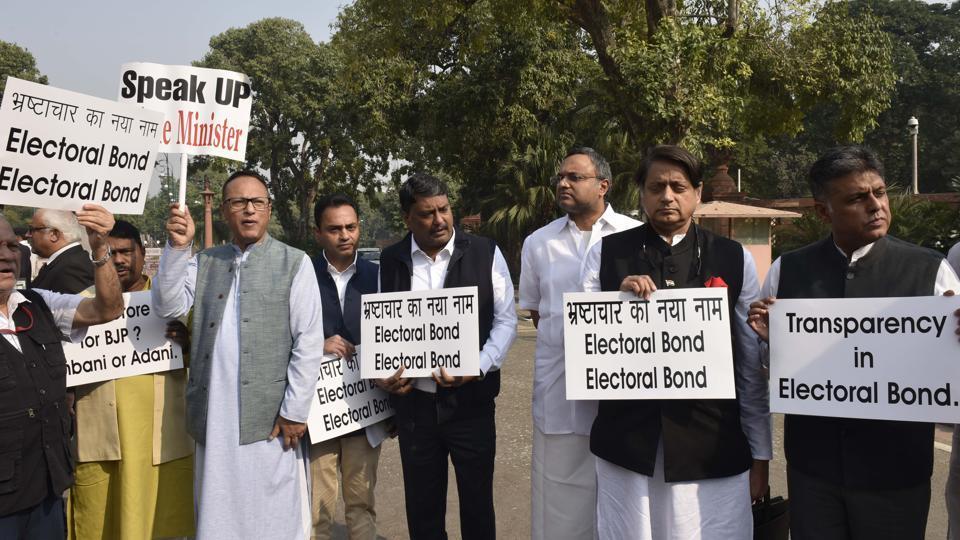
A bench, headed by Chief Justice of India SA Bobde, will pronounce its order on the interim application moved by the Association for Democratic Reforms (ADR), which has requested that the court restrain the sale of these bonds ahead of the assembly elections in four states and a Union Territory.
The elections start on March 27, and end on April 29. The counting of votes is on May 2.
Before the bench, which also included justices AS Bopanna and V Ramasubramanian, ADR questioned what it called “anonymous funding to political parties”, adding transparency in elections was a right of voters not under the Right to Information Act but as a matter of right in a democracy.
Also Read | EC supports electoral bonds, seeks transparency: Here’s what it told SC
Advocate Prashant Bhushan, representing ADR, argued that there was a serious apprehension that any further sale of electoral bonds before the upcoming state elections in West Bengal, Tamil Nadu, Kerala and Assam, would further increase illegal and illicit funding of political parties through shell companies.
Rebutting the allegations, attorney general KK Venugopal, appearing for the Centre, referred to certain checks and balances. He said that parties were required to file their income tax returns each year showing how they expended the money. The political party could face deregistration if it was found to participate in anti-national or illegal activities. Venugopal also said that the use of bonds was essential for the country as it curbed black money being used in elections.
On its part, the Election Commission (EC) told the Supreme Court that it supported the existing system of political party funding through electoral bonds, although it added that it would like the process to be more transparent.
Senior advocate Rakesh Dwivedi appearing for EC said, “The Commission is supporting electoral bonds and not opposing it. If we don’t support it we will go into a pre-existing system of receiving donations through cash. Electoral bonds goes one step forward as all bonds have to be obtained from the bank only. This way there is accountability. But we are also asking for transparency. That can be considered later by the court.”
The new application has been moved in a pending petition on this issue by the same organisation filed in 2017. ADR pointed out that the petition challenging electoral bonds wa pending in the Supreme Court since September 2017. The matter was last heard on January 20 last year, following which ADR requested the court in October last year to list the matter ahead of the assembly elections in Bihar.
In its PIL, ADR sought that the amendments carried out to the Finance Act providing an anonymous route for political parties to receive corporate funding through electoral bonds be struck down. These donations enjoy 100% tax exemption as they don’t have to be reported to the Income Tax department either, the petition added.
“The Electoral Bonds Scheme has opened the floodgates to unlimited corporate donations to political parties and anonymous financing by Indian as well as foreign companies which can have serious repercussions on the Indian democracy,” that application filed by ADR stated, adding that the Finance Act of 2017 exempts use of electoral bonds from disclosure under the Representation of Peoples Act.
ADR moved applications in March 2019 and again in November 2019 to stay the implementation of the Electoral Bond Scheme but they were not granted. In April 2019, the Supreme Court, in an interim order, asked political parties to disclose to the Election Commission in sealed covers details of donations received by way of electoral bonds.
In the same order, the top court observed that the matter of electoral bonds gives rise to “weighty issues which have a tremendous bearing on the sanctity of the electoral process in the country” which require an in-depth hearing.
Out of more than ₹6,000 crore worth of Electoral Bonds sold so far, nearly ₹2,551 crore were sold in 2018-19.
As per the annual audit report submitted by Bharatiya Janata Party (BJP) with the Election Commission, the party received the highest amount of electoral bonds amounting to ₹1450.89 crore i.e. 56.9% of the total. The Congress received nearly ₹383.26 crore which is 15% of the total.
The amount received by the BJP in 2018-19 was nearly seven times the amount it received the previous year and alone constituted 60.2% of the total income, which in the previous year was only 20.4%.
Electoral bonds received by Congress in 2018-19 amounted to ₹383.26 crore whereas it was only ₹5 crore in 2017-18. Electoral bonds accounted for 41.7% of the total income earned by INC in 2018-19, while it was only 2.5% of the income in 2017-18.


