
 E-Paper



SC tells Kerala guv to refer to its verdict on pending bills
The judgment held that governors cannot keep bills pending indefinitely and that they must give their assent if the legislature re-adopts the bills despite their objections

 Prefer HTon Google


The Supreme Court on Monday suggested Kerala governor Arif Mohammed Khan should go through its judgment released a day ago, mapping out the powers and corresponding duties of governors with regard to the bills sent for their assent by state legislatures. The judgment held that governors cannot keep bills pending indefinitely and that they must give their assent if the legislature re-adopts the bills despite their objections.
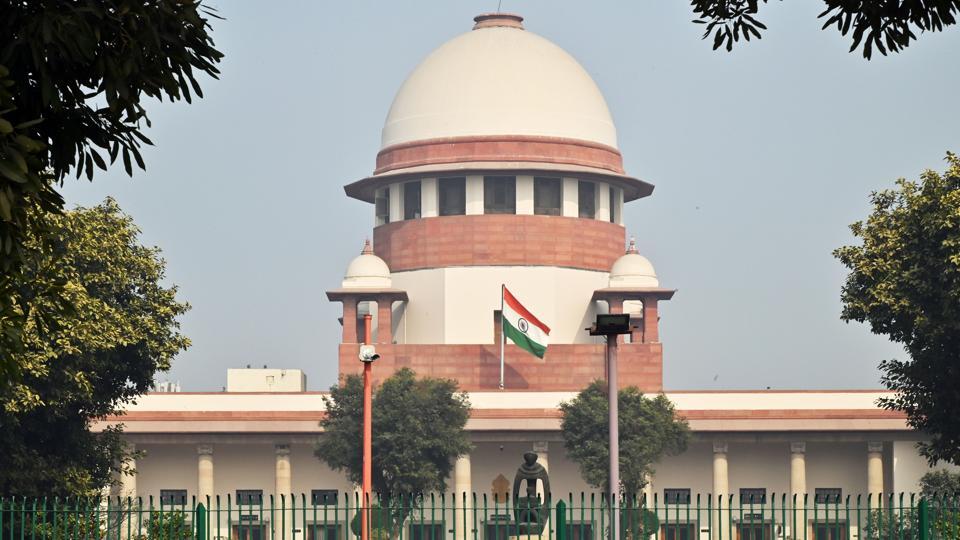
“We uploaded the order in Punjab matter last night. Ask the governor’s Secretary to look at the order and tell us on Tuesday (November 28) what your response is,” a bench, headed by Chief Justice of India Dhananjaya Y Chandrachud, told attorney general R Venkataramani.
The bench, also comprising justices JB Pardiwala and Manoj Misra, was hearing a petition filed by the Kerala government on a stalemate over eight bills, pending with the governor for a period ranging between seven and 26 months.
Representing the state government, senior advocate KK Venugopal complained that several bills sent for Governor’s assent have been pending for the last two years. “All the ministers have met him (governor). The chief minister has also met him several times,” said Venugopal, adding that eight bills remain pending.
At this, the CJI told the A-G that the governor’s office should peruse the judgment passed in a similar matter filed by the Punjab government.
In its judgment released on Thursday, the top court held that Governors “cannot be at liberty to keep bills pending indefinitely”, emphasising that the exercise of unbridled discretion in areas not entrusted to the discretion of the governor risks walking roughshod over the working of a democratically elected government in the state.
The 27-page judgment said that state governors must show deference to the use of expression “as soon as possible” under Article 200 of the Constitution, making it obligatory to quickly return a bill with a message on the reconsideration of the proposed law if they chose to withhold their assent.
“Constitutional language is not surplusage. The expression ‘as soon as possible’ is significant. It conveys a constitutional imperative of expedition. Failure to take a call and keeping a bill duly passed for indeterminate periods is a course of action inconsistent with that expression...The governor cannot be at liberty to keep the bill pending indefinitely without any action whatsoever...The governor is not at liberty to withhold his action on the bills which have been placed before him,” said the court.
The court pointed out the governor must return a bill to the legislature for a review if she decides not to give her assent to it because any other interpretation of the constitutional provision would mean that the governor, as the unelected head of state, can virtually veto the functioning of the legislative domain by a duly elected legislature by simply declaring that assent is withheld without any further recourse.
It acknowledged that the governor is entrusted with certain constitutional powers. “However, this power cannot be used to thwart the normal course of lawmaking by the state legislatures...the power to take decisions affecting the governance of the state, or as the case may be, of the nation essentially lies with the elected arm of the government. The governor is intended to be a constitutional statesman, guiding the government on matters of constitutional concern,” underlined the bench.
The court’s judgment came on a petition moved by the Punjab government against state governor Banwarilal Purohit keeping four bills, including those pertaining to fiscal management and the administration of gurudwaras, pending since June.
The verdict came at a time when Raj Bhavans in several states have been locked in confrontation with the elected governments. In the last few months, Telangana, Tamil Nadu and Punjab, besides Kerala, have approached the Supreme Court, seeking directives to their respective governors.
On November 20, the court expressed its displeasure at the delay on the part of the governors in giving assent to bills passed by state assemblies, as it took up the related petitions moved separately by Tamil Nadu and Kerala governments and asked for responses of their respective governors. The petition moved by the Tamil Nadu government is expected to come up for hearing on December 1.
The Kerala government, too, has taken on its governor Khan in the apex court for delaying certain key bills, some dating back almost two years. Kerala has accused Khan of acting in a manner which “defeat the rights of the people” by withholding the passage of eight bills on issues ranging from public health, higher education, Lokayukta, etc.



