
 E-Paper



For foreign secretary Harsh Vardhan Shringla, it is neighbourhood first
Since PM Narendra Modi took office in 2014, the government has focused on cementing and improving ties with its neighbours.


Foreign secretary Harsh Vardhan Shringla on Friday assured Chinese ambassador Sun Weidong that there was no travel ban on Chinese nationals or other foreigners based in mainland China over the coronavirus outbreak, even as he noted that 2020 marked an important milestone in the bilateral ties between the two nations. Shringla also met the high commissioners of Bangladesh, Nepal and the Maldives to discuss bilateral relations and emphasise India’s “neighbourhood first” policy, days after taking over as the Indian foreign secretary.
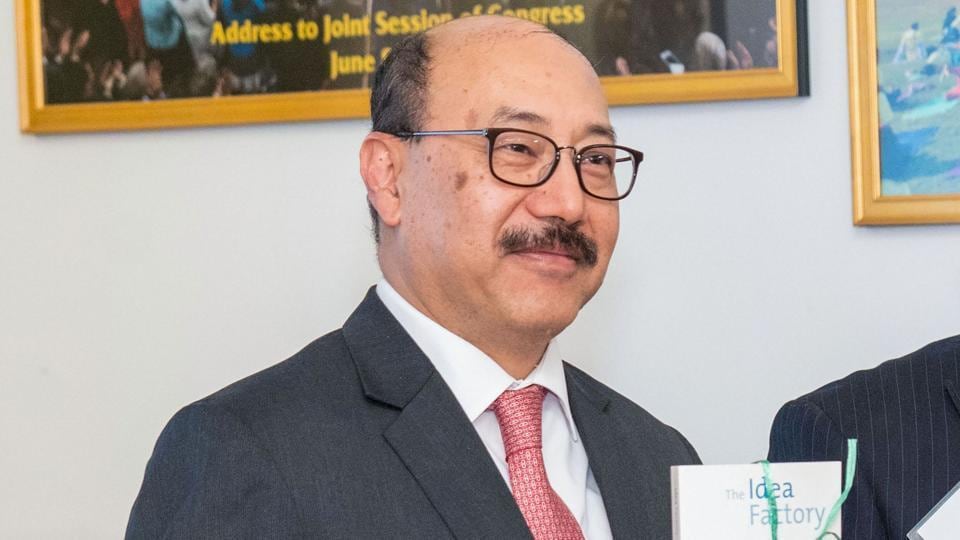
People aware of the developments said Shringa told Weidong that if anyone from China wished to travel to India, they could apply for a fresh visa. Weidong, who called on the foreign secretary to discuss ties, briefed Shringla on the measures taken by the Chinese government to tackle the coronavirus outbreak. While appreciating China’s efforts, Shringla requested the Chinese authorities to ensure that Indian students evacuated from Wuhan did not suffer academically, they added.
The foreign secretary also noted that this year marked an important milestone as India and China will celebrate the 70th anniversary of the establishment of diplomatic relations. Several activities have been planned by both sides to commemorate the occasion, he said.
In his meeting with new Bangladesh high commissioner Muhammad Imran, Shringla expressed satisfaction at the transformation in bilateral ties in recent years. He underlined the highest importance that India accords to Bangladesh, in keeping with its “neighborhood first” policy.
The foreign secretary also met Nepal’s ambassador Nilamber Acharya. This was Shringla’s first formal meeting with a resident ambassador in Delhi, which demonstrated the priority India attaches to its close and multi-faceted relationship with Nepal, officials said. He reiterated India’s commitment in taking forward the bilateral relations based on mutual trust and benefit.
Shringla also received the outgoing high commissioner of Maldives, Aishath Mohamed Didi, and acknowledged the positive transformation in ties over the last 14 months, since President Ibrahim Mohamed Solih came to power. The foreign secretary congratulated Maldives on its readmission to the Commonwealth and conveyed his best wishes to the envoy, who will be assuming the office of the minister of gender, family and social services on her return to Maldives.
Since Prime Minister Narendra Modi took office in 2014, the government has focused on cementing and improving ties with its neighbours. While leaders of the South Asian Association for Regional Cooperation (SAARC) attended his swearing-in five and a half years ago, leaders of the Bay of Bengal Initiative for Multi-Sectoral Economic and Technical Cooperation (BIMSTEC) attended his swearing-in after his second victory in 2019.
India has pushed regional connectivity projects in the neighbourhood and deepened both government to government cooperation, as well as people to people linkages. The enhanced involvement of China across politics and economy in capitals, from Kathmandu to Colombo to Male, has also led to Delhi deepening its engagement and leveraging its traditional strengths in the region.


