
 E-Paper



Start reopening schools for classes 6-8, Odisha’s child rights body to govt
According to Odisha Economic Survey of 2018-19, more than 20% of the 51,311 villages in the state do not have mobile phone connectivity.


Bhubaneswar: Odisha’s child rights body on Thursday asked the Naveen Patnaik government to resume offline classes for students of classes 6. 7 and 8 in a phased manner, a move that comes two days after a class 7 student fell from a boulder he had climbed on to get a stable internet connection to attend online classes.
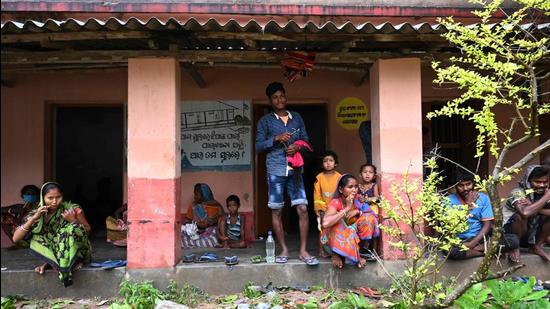
Andrea Jagaranga of Kandhapendaraguda village in Padmapur block of Rayagada district had gone to a hill with his friends due to poor network connectivity in the village when the accident took place. He died soon after due to the injuries sustained in the accident.
The 13-year-old’s death spotlighted the digital divide in Odisha and beyond, particularly after schools turned to online classes due to the Covid pandemic.
In her letter, Odisha State Commission for Protection of Child Rights (OSCPCR) chairperson Sandhyabati Pradhan did not refer to the death but welcomed the school and mass education department’s recent move to resume in-person teaching for students of classes 10 and 12, saying it was an appreciable step. The government should next allow students of classes 6, 7, and 8 to return to schools in a phased manner, she said.
So far Odisha has started offline classes for students of class 9, 10, 11 and 12.
“The department may issue necessary instruction to allocate one and half hour each day for two days in a week to each class and the school management committees must be consulted prior to reopening of schools,” Pradhan wrote in her letter.
As per Odisha Economic Survey of 2018-19, more than 20% of the 51,311 villages in the state do not have mobile phone connectivity. And internet penetration in the state is 28.22% compared to the national average of 38.02. The school and mass education department of the state admitted that online education did not reach at least a third of 6 million school students last year.
Earlier this month, the Union education ministry told Parliament that nearly 30 million children in India did not have a digital device to access education online. In Odisha, over 1.5 million children do not have access to a computer, tablet, or smartphone.
Between May and June 2020, Oxfam India, an NGO surveyed close to 1,200 parents and 500 teachers across Odisha, Bihar, Jharkhand, Chhattisgarh and Uttar Pradesh and found that 80% parents said their children did not receive education during the lockdown. Four of five students said they didn’t receive textbooks for the 2020-21 academic year while more than one-third of the children had not received midday meals.
A survey by Azim Premji University among 16,067 children from Classes 2-6 in 1,137 government schools across five states in January 2021 found on an average 92% of students had lost at least one specific language ability and 82% had lost at least one specific mathematical ability compared to previous years.
Anil Pradhan, convenor of the Odisha Right to Education Forum, said the commission’s suggestion was a welcome step.
“Online education is not feasible for primary school students due to lack of necessary infrastructure. Young minds can grasp education better in classrooms,” he said.
Director of health services, Dr Bijay Kumar Mohapatra said there is no need to panic about Covid cases among the age group of 0-18 years. “Children were also getting affected in the first surge and second surge. However, there is the need of taking precautions as experts suggest that there are more chances of children getting affected in the third wave. The situation is being monitored on a daily basis and necessary steps are being taken,” he said.



