
 E-Paper



Subhash Chandra case: Why banks lose money in personal guarantor claims
The insolvency court’s approval of Zee Group founder Subhash Chandra's ₹6.5 crore repayment plan has raised questions about how much banks can recover.

 Prefer HTon Google


The insolvency court’s approval of Zee Group founder and chairman emeritus Subhash Chandra's ₹6.5 crore repayment plan has raised questions about how much banks can recover from personal guarantors when company loans go bad.
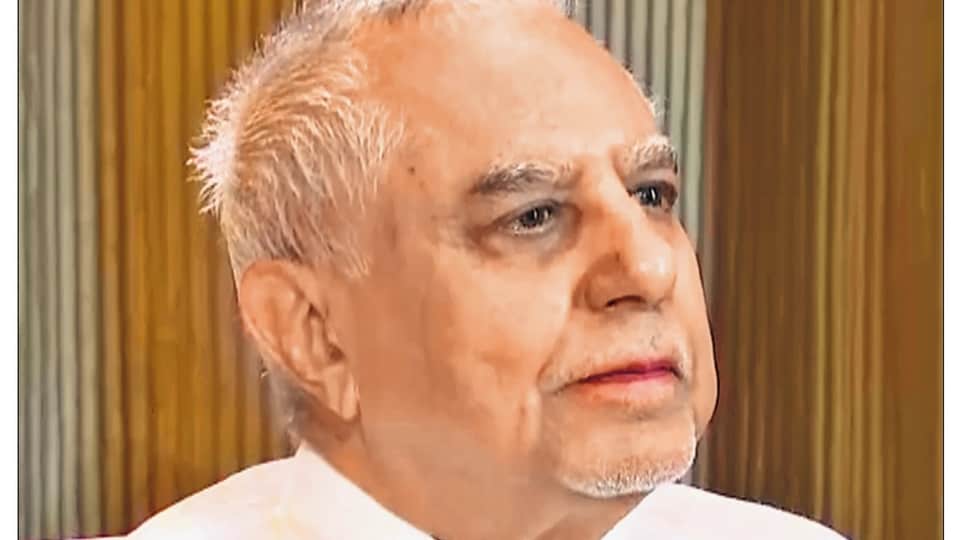
Mint explains what personal guarantor insolvency means, why recovery can still be low, and the nuances in the recent Subhash Chandra case.
What is the law on personal guarantors?
A personal guarantor is someone who vouches for a borrower, guaranteeing repayment of the loan in case of a default. Under the Insolvency and Bankruptcy Code (IBC), personal guarantors can face separate insolvency proceedings. The IBC lays down the definition of a personal guarantor, how creditors can start the process and prepare the repayment plan, and how it is binding upon approval by the National Company Law Tribunal (NCLT).
Deep Dive

In simple terms, a guarantor can be held personally responsible, but the actual recovery depends on the assets available with the guarantor.
Amendments introduced in 2026 have strengthened disclosure requirements. Guarantors must now provide details of assets held directly or indirectly, including beneficial interests and digital assets. The aim is to give creditors and the resolution professional a clear picture of the guarantor’s assets.
Also Read I India, Canada could sign investment protection pact by end of year: Sitharaman
Why do banks need personal guarantees from company promoters?
Banks typically seek personal guarantees from promoters as an additional layer of protection when lending to companies. It helps the bank to attach assets of the guarantor through a court.
But a guarantee does not replace the lender’s primary assessment of the borrower’s ability to repay, which in a company’s instance is based on its assets and its ability to generate cash flows.
A promoter guarantee should be viewed as a “second way out” for a lender, a senior private sector banker said on condition of anonymity. “We don’t give a loan just based on a guarantee. Ultimately, it is the cash flow that pays the bill.”
Also Read I India, Canada can bring more certainty to global growth: Nirmala Sitharaman
Even then, the guarantee does not necessarily mean the promoter has sufficient wealth to make good the company’s liabilities.
The value of a promoter’s guarantee can vary over time, depending on the promoter’s personal wealth and the changes in the group’s businesses and assets.
How successful have personal insolvency cases been so far?
Data from the Insolvency and Bankruptcy Board of India showed that, as of June, creditors have got about 1% of their admitted claims against personal guarantors since fiscal year 2020 (FY20).
Of the 2,137 proceedings against personal guarantors where resolution professionals were appointed, 64 have led to an approved repayment plan. In other words, for every ₹100 loan that went bad and was backed by personal guarantees, just ₹1 was recovered.
What is the nub of the problem and what do legal experts say?
According to lawyers, the main problem is that personal-guarantor insolvency can establish liability but does not guarantee recovery.
“The purpose of personal guarantor insolvency under the IBC is not to guarantee a particular recovery but to bring the guarantor’s assets and financial position within a transparent and enforceable process,” said Dikshat Mehra, a partner at Rajani Associates. “Accountability is distinct from recovery.”
Somdutta Bhattacharyya, a partner at Argus Partners, said the NCLT’s role is limited to checking statutory compliance and legality once creditors approve a plan and does not extend to questioning the commercial wisdom of the committee of creditors or the reduction in recoveries agreed upon.
What is Chandra’s case history?
Chandra was admitted into insolvency in April 2024 on a plea by Indiabulls Housing Finance, now Sammaan Capital, after he had given a personal guarantee for a ₹170 crore loan to Vivek Infracon that turned bad.
After more than two years of proceedings, NCLT member Nilesh Sharma on Tuesday approved Chandra’s ₹6.5 crore repayment plan, acting as the tiebreaker after the original two-member bench gave differing views. Sharma relied on the majority creditors’ approval and their commercial wisdom, finding that the procedural lapses and objections were not serious enough to reject the plan.
The plan received 80.81% support from creditors by value, although several lenders opposed it.
To be sure, Sharma’s opinion is not the final consequential order and the matter has been sent back to the regular bench for further directions. Once the final order is passed and Chandra fully implements the repayment plan, he will complete the personal insolvency process and exit insolvency.
What has Chandra said about the case?
Chandra said he had only provided personal guarantees for loans taken by companies associated with the Essel Group, not personally borrowing money.
The companies for which he had given guarantees borrowed almost ₹45,000 crore as of January 2019, of which about ₹43,000 crore had since been repaid. This could not be independently verified by Mint.
He also said his net worth was ₹31.79 crore in 2024, including a house worth about ₹25 crore, and that the repayment plan was based on what he could pay from his personal assets.
Also Read I The real measure of financial intelligence is not a job title
On the other hand, according to the NCLT order, one respondent had alleged that the resolution professional wrongfully admitted the claims of five entities – Veena Investments, Direct Media Distribution Ventures, World Crest Advisors, Lemonade Capital Advisors, and Corpcall Capital Advisors – which collectively held 61.78% voting share and helped approve Chandra’s repayment plan.
However, the tribunal found no evidence establishing them as related parties.
On Friday, Chandra’s office said the companies belonged to Jawahar Goel, his younger brother whose business interests were separated from Chandra’s in 2008-09 through a family business separation.


