
 E-Paper



Chandra Grahan 2026: Will the eclipse be visible in India? All you need to know about its astrological significance
The eclipse also occurs during the Full Moon and coincides with Raksha Bandhan in India. Let's find its timing, visibility, and astrological significance.

 Prefer HTon Google


The August 28, 2026 lunar eclipse, or Chandra Grahan, will bring a striking celestial event for skywatchers in several parts of the world. But if you are in India, there is one important point to know, skywatchers will not be able to see the eclipse from the country.
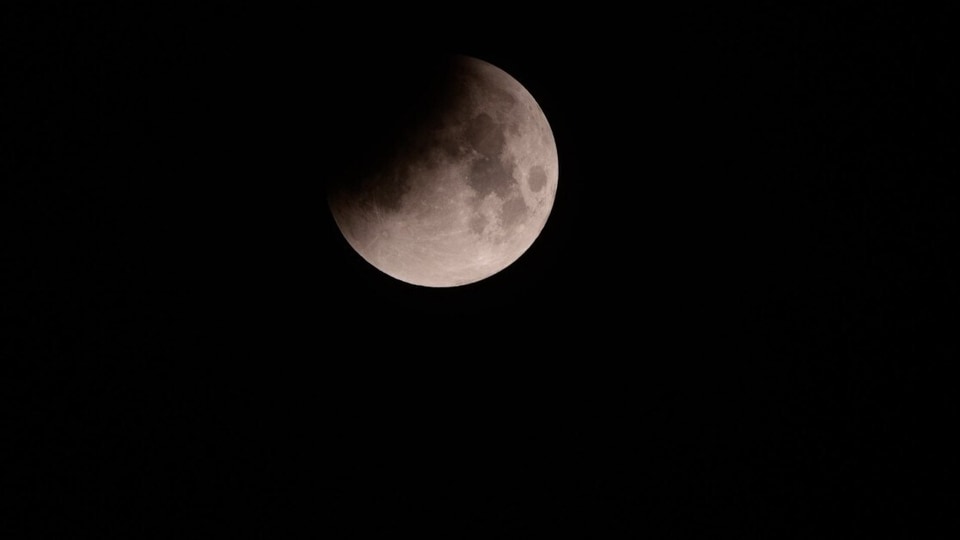
The deep partial lunar eclipse will occur as the Moon passes through Earth's shadow. According to NASA, nearly the entire lunar disk will enter Earth's darker central shadow during the event.
The eclipse also occurs during the Full Moon and coincides with Raksha Bandhan in India, prompting questions about its timing, visibility, Sutak, and significance in astrology.
Chandra Grahan 2026: Will it be visible in India?
No, the August 28 lunar eclipse will not be visible from India.
NASA's eclipse information shows that the event will be visible from parts of the Americas, Europe and Africa. Space.com also notes that observers in India will miss the eclipse because the Moon will be below the horizon during the event.
For Indian readers, this means you will not see the Moon darken or develop the reddish colour associated with a lunar eclipse.
If you are an NRI living in a region where the eclipse is visible, your local experience will be different. Check your local eclipse timing and weather conditions before heading outside.
Chandra Grahan 2026 timings in India:
Penumbral eclipse begins : August 28 at 6:54 a.m. IST
Partial eclipse begins: August 28 at 8:04 a.m.
Partial eclipse ends: August 28 at 11:21 a.m. IST
Penumbral eclipse ends: August 28 at 12:31 p.m. IST
NASA places the greatest eclipse at 4:13 a.m. UTC, when about 96.3% of the Moon will be inside Earth's umbral shadow.
Why will the Moon appear reddish?
A lunar eclipse occurs when Earth comes between the Sun and Moon and blocks direct sunlight from reaching the lunar surface.
Some sunlight still passes through Earth's atmosphere. NASA explains that Earth's atmosphere filters the light, allowing more red and orange wavelengths to reach the Moon. This can give the eclipsed Moon a copper or reddish appearance.
Because most of the Moon will enter Earth's umbra, the August eclipse may look similar to a Blood Moon.
Also Read August 2026 Blood Moon: Why the Full Sturgeon Moon could turn red and what astrology says
What does Chandra Grahan mean in astrology?
Astrology gives the eclipse a different layer of meaning from astronomy.
According to traditional Vedic astrology, this eclipse occurs in Kumbha Rashi, or Aquarius, and is linked with Shatabhisha Nakshatra. Some Jyotish traditions consider lunar eclipses a time for reflection, prayer, meditation or spiritual practices.
According to astrologers, an eclipse through the positions of the planets, zodiac signs and nakshatras and offer guidance based on those calculations.
What about Sutak and Raksha Bandhan?
The eclipse's connection with Raksha Bandhan has also led to questions about Sutak, the traditional period associated with an approaching eclipse.
Practices around Sutak vary between religious traditions, families and regions. Since this particular eclipse is not visible from India, traditions that link Sutak observance to local eclipse visibility may not apply in the same way.
If you follow a particular religious tradition, check with your family priest, temple or trusted religious authority for guidance.
Disclaimer: This article is based on general information and basic interpretations of astrologers. Reader's discretion is advised.


