
 E-Paper



Supreme Court binds Centre on five-year tenure rule for NCLT appointments
There were 20,963 cases pending before various benches of NCLT as of May 31, 2022, according to a recent statement by minister of state for corporate affairs Rao Inderjit Singh


After the government’s decision in September 2019 to appoint 28 members of the national company law tribunal (NCLT) for a three-year tenure was challenged by the NCLT bar association in the Supreme Court, the country’s highest judicial authority on Monday told the Centre that it shall be bound to appoint the NCLT members for a five-year period in accordance with the Companies Act.
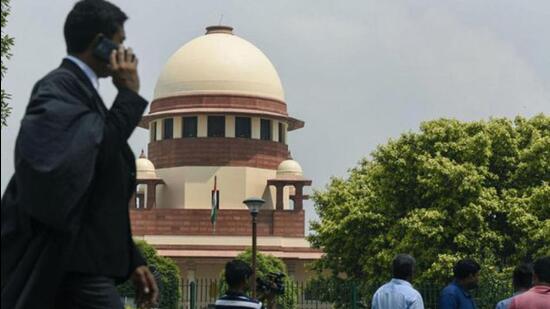
“In future, the Centre will be bound by Section 413(1) of the Companies Act 2013 (that prescribes five-year tenure for President and members of NCLT),” the bench of justices Dhananjaya Y Chandrachud and Sudhanshu Dhulia said as it disposed of the plea filed by the bar association.
Only 23 out of the 28 members were in service when the apex court began examining the matter in April this year. The SC did not interfere with the September 20, 2019 order, which led to the appointment of these 23 members for a three-year tenure because of certain developments that took place in the intervening period.
On June 14, eight out of these members were granted extension of additional two years (five years in total), or up to 65 years of age, whichever is earlier. Also, the Supreme Court Selection Committee headed by Chief Justice of India (CJI) on June 21-22 recommended names for the appointment to the remaining 15 vacancies.
The top court observed that the issue of appointments was not challenged by the affected members but by the bar association. “Plea of the bar association can only be that vacancies be filled up expeditiously so that the work of the tribunal is not hampered. The bar association cannot have a choice on who should be members and for what time,” the bench said.
Also Read:Supreme Court refuses to stay retirement of 15 National Company Law Tribunal members
The Centre, represented by additional solicitor general (ASG) Balbir Singh, opposed the bar association to plead the cause of the affected members as they had accepted the offer with open eyes knowing fully well that the tenure was of three years.
“For the reasons indicated above, we are not acceding to the prayer of extension of tenure of persons appointed in September 2019 from 3 years to 5 years”, the bench said.
It clarified that this order will not affect the June 14 notification extending the tenure of 8 members which comprised of 2 judicial members and 6 technical members. Further, the court noted in its order that once 15 posts are filled up, another 15 vacancies will be processed for appointment, the process of which began with the issue of advertisement, the last date for which is August 12. In this round, ASG Singh informed the Court that some of the members, initially appointed for 3 years under the September 2019 order, had applied.
In June, the Centre even filed an affidavit explaining the reasons for granting the extension to eight and not the entire batch of 23 persons. The incongruity of these members selected for 3-year tenure was drawn to the attention of the SC selection committee headed by CJI in its meetings held in April and June. The committee called for a report from NCLT President on the work performance and suitability of the 23 members. The Centre also provided confidential inputs on their character and antecedents. On a comprehensive examination, the Selection Committee allowed the Centre to take the appropriate decision that led to the June 14 order.
Representing the petitioner bar association, senior advocate UK Chaudhary told the SC that the petition raised a larger issue on whether Section 413(1) of Companies Act, providing five-year tenure can be given a go-by. Further, if there is any adverse report about members, Section 417 of the same Act provides for a procedure of their removal.
“It is equally important that persons of integrity are selected to man tribunals... Such a request cannot be acceded to when the members themselves have not moved this Court and this Court is not dealing with removal of members. Such an exercise in these proceedings will be wholly inappropriate,” the bench told Chaudhary.
In their petition seeking a stay on the September 2019 notification, the bar association said, “The early expiration of tenure will create a lacuna that will adversely affect the disposal of matters pending before the Tribunals. The numerous pending cases before the NCLT accompanied with the delay in the appointment of members are a major roadblock in efficient delivery of justice.”
There were 20,963 cases pending before various benches of NCLT as of May 31, 2022, according to a recent statement by minister of state for corporate affairs Rao Inderjit Singh.


