
 E-Paper



Supreme Court dismisses CBI plea to resume investigation against DK Shivakumar
CBI, which registered the DA case against DK Shivakumar on October 3, 2020, approached the Supreme Court to request that the high court’s stay order on the investigation be cancelled.

 Prefer HTon Google


NEW DELHI: The Supreme Court on Monday refused to interfere with an order of the Karnataka high court staying the probe into a disproportionate assets case against Karnataka deputy chief minister DK Shivakumar and told the Central Bureau of Investigation (CBI) to approach the high court where the matter is still pending.
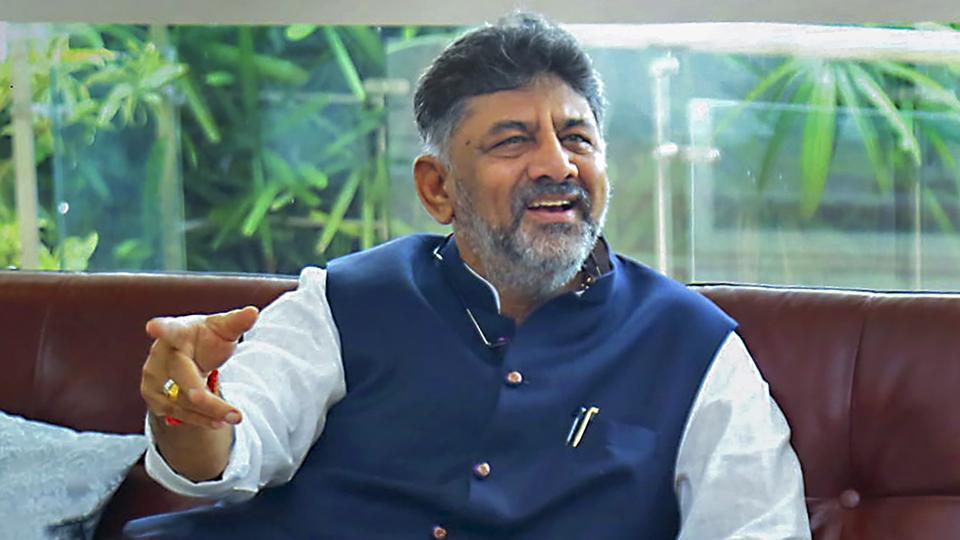
On a petition by Shivakumar, the high court on February 10 stayed the CBI investigation into the case which accused Shivakumar of accumulating disproportionate assets (DA) worth over ₹74 crore between 2013 and 2018.
CBI, which registered the DA case against the Congress leader on October 3, 2020, approached the Supreme Court to request that the high court’s stay order on the investigation be cancelled.
A three-judge bench comprising justices BR Gavai, CT Ravikumar and Sanjay Kumar, however, dismissed the petition, pointing that the high court was still considering the case.
“Since the petition arises out of an interim order, we are not inclined to entertain the petition. All options available to parties are kept open to be decided by the high court,” the three-judge bench said.
CBI, which was represented by additional solicitor general (ASG) SV Raju, informed the court that Shivakumar had approached the high court by filing a separate petition questioning the state government’s notification granting sanction for his prosecution under Section 6 of the Delhi Special Police Establishment Act (DSPE) in September 2019. This petition was dismissed by the high court on April 20 which has subsequently been stayed by a division bench.
CBI also challenged this high court order passed on June 12 by a separate appeal and urged the court to have the present matter heard with the other appeal.
But Shivakumar’s lawyer senior advocate Abhishek Manu Singhvi opposed the CBI request claiming that the high court was on the verge of passing a final order. “These interim ladders are unnecessary. The present appeal is against an interim order after which several orders came to be passed in the high court which have not been challenged. In any case, the writ petition (in the HC) is on the threshold of getting decided.”
CBI claimed that the decision on the validity of the sanction order will have a bearing on the present petition where Shivakumar has questioned the FIR against him. The court responded: “If the other case is decided in your favour, you can point it out to the high court.”
The top court also declined Raju’s request to ask the high court to expedite the proceedings, saying the agency could directly make the submission to the high court. “The petitioner is at liberty to seek expeditious hearing of the case. The high court may consider the request as per law.”
CBI has claimed that the wealth of Shivakumar and his family increased by 45% when he was a legislator between 2013 and 2018 and that his assets were ₹74.93 lakh more than his known sources of income. The case has its origin in an income tax search in 2017 at Shivakumar’s residence that led to recovery of a little over ₹41 lakh.
A case was registered against the Congress leader and others under the provisions of the Income Tax Act and Section 120B (criminal conspiracy) of the Indian Penal Code. This trial was stayed by the Supreme Court in August 2021. However, the FIR became the basis for the Enforcement Directorate (ED) to launch separate proceedings since Section 120B is a scheduled offence under the Prevention of Money Laundering Act (PMLA).
In September 2019, ED wrote to the state government sharing leads from the probe and requested the state government undertake an investigation under the Prevention of Corruption Act. Following this on September 25, 2019, the government granted CBI sanction to investigate the case which led to the agency filing a preliminary enquiry (PE) in March 2020 against Shivakumar and two others.


