E-Paper


National Company Law Tribunal administration ‘completely hijacked’ by corporate affairs ministry: Supreme Court
The court stressed that the NCLT president must be allowed to administer the institution independently, without the ministry seeking a “complete grip”.

 Prefer HTon Google


The Supreme Court on Thursday said the Union ministry of corporate affairs (MoCA) had “completely hijacked” the administration of the National Company Law Tribunal (NCLT), warning that the ministry’s bid to exercise control over the tribunal was undermining its autonomy and functioning.
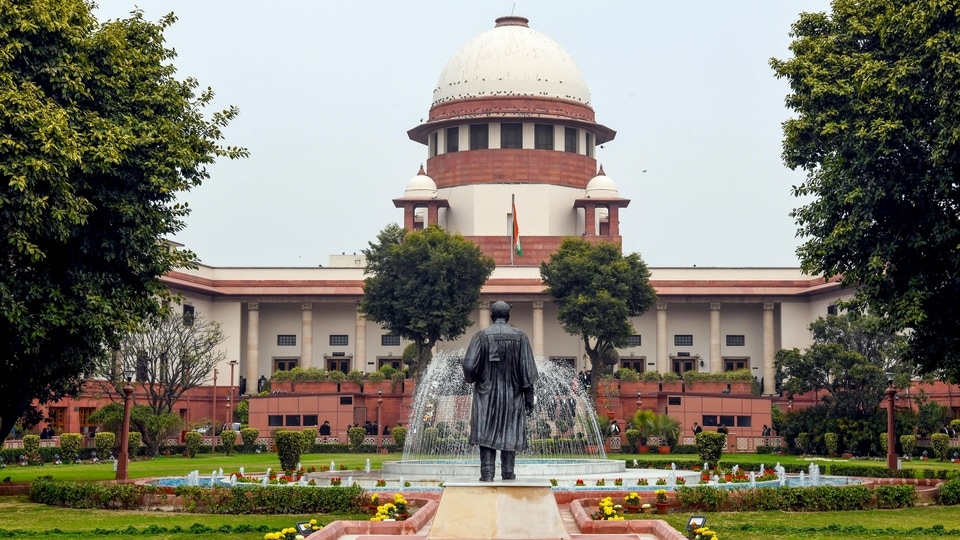
The court stressed that the NCLT president must be allowed to administer the institution independently, without the ministry seeking a “complete grip” over its functioning.
“We are compelled to observe this has been completely hijacked by Ministry of Corporate Affairs. That is the problem. And that is impinging on the autonomy of the institution…We feel there should be complete autonomy with the NCLT. The president must be allowed to work with autonomy,” said a bench, led by Chief Justice of India Surya Kant.
The bench, also comprising justices Joymalya Bagchi and V Mohana, was hearing a suo motu case on infrastructure deficiencies, staff shortages and administrative difficulties affecting the NCLT and the National Company Law Appellate Tribunal (NCLAT).
Also read: ‘Orders becoming a mockery’: Supreme Court pulls up Delhi govt over firecracker curbs
SC questions ministry's role in NCLT appointments
The court’s remarks came amid concerns over the ministry’s decision to outsource recruitment of administrative personnel at the NCLT to a private company, raising questions about who should exercise control over appointments in a judicial institution.
A lawyer appearing for contractual employees told the bench that the ministry had awarded a contract on October 6 to a foreign company operating in India to deploy administrative staff, including deputy registrars, assistant registrars and stenographers. The arrangement could displace existing contractual employees from November 1 or 2, the court was informed.
The bench, however, made it clear that it was not inclined to protect contractual employees merely because they had served for years, or to allow private contractors to determine the tribunal’s staffing arrangements. Instead, it indicated that the authority to appoint personnel should rest with the NCLT president.
“We will not allow you people to continue, we will not allow these private contractors to continue. Let the reference come from the NCLT president. The entire power of appointment must be with the president only,” the bench remarked.
Questioning whether employees appointed without a competitive recruitment process could claim a right to regularisation or continued service, the court also referred to allegations of misconduct by some contractual staff, including instances in which judicial records were allegedly removed and criminal cases registered.
Also read: Multiple life terms cannot run one after another: SC
Tribunal faces major staff shortage
The staffing controversy has unfolded against the backdrop of a severe manpower crunch at the tribunal. Of the 320 sanctioned regular administrative posts at the NCLT, only 67 have been filled, leaving 253 vacant. The court was also informed that 16 posts among judicial and technical members remained vacant.
The NCLT Bar Association separately drew attention to the deteriorating condition of the tribunal’s principal bench in Delhi, where infrastructure problems were affecting judicial work.
“The roofs are collapsing, 8th floor of the Principal Bench has been shut down, 7th floor has been shut down, two floors have been shut down. All courts are functioning at half strength. It is in shambles,” senior advocate Sanjiv Sen, appearing for the Bar Association, told the bench.
Attorney General R Venkataramani, representing the Centre, informed the court that recommendations for appointments were in the pipeline and proposed a joint meeting involving government representatives, the NCLT president and members of the Bar to address the problems.
NCLT, NCLAT asked to submit requirements within four weeks
The bench, however, turned to the tribunal leadership itself for a comprehensive assessment of its requirements, asking the presidents of the NCLT and NCLAT to submit proposals detailing their needs for infrastructure, personnel and administrative support. The proposals are to cover land and buildings, supporting staff and the desirability of appointing an officer of deputy registrar or joint registrar rank at every bench to ensure proper maintenance of judicial records.
The court asked that the information be furnished within four weeks and requested the attorney general to impress upon the Union government the need to provide basic amenities to both tribunals at the earliest.
Issuing notice on the connected petition challenging the outsourcing arrangement, the court indicated that its examination would extend beyond the immediate service concerns of contractual employees to the larger public interest involved in ensuring the tribunal’s effective and independent functioning.