
 E-Paper



Supreme Court reserves order on sending ‘services’ case to five-judge bench
A three-judge bench headed by CJI NV Ramana will decide on the limited question of whether a five-judge bench, which interpreted the power of the Delhi assembly under Article 239AA by its judgment of July 4, 2018, should also determine whether Delhi can legislate on ‘services’.

 Prefer HTon Google


The Supreme Court on Thursday reserved its order on referring to a Constitution bench the power tussle between the Centre and the Delhi government on which of them has the legislative competence to transfer and appoint officers in the Capital.
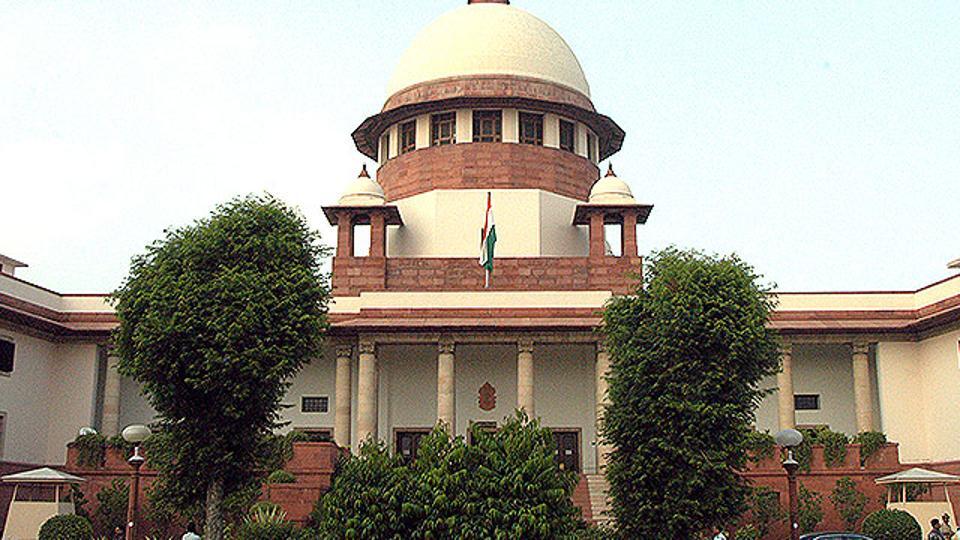
A three-judge bench headed by Chief Justice of India (CJI) NV Ramana will decide on the limited question of whether a five-judge bench, which interpreted the power of the Delhi assembly under Article 239AA by its judgment of July 4, 2018, should also determine whether Delhi, which enjoys a unique place in the Constitution since it has an assembly despite being a Union territory, can legislate on “services”.
Earlier, a two-judge bench of the top court in February 2019 gave a split verdict on the issue, due to which the matter was referred to a three-judge bench. On Thursday, the bench, also comprising justices Surya Kant and Hima Kohli, asked the Delhi government if it had any objection to the matter being referred to five judges. Two days ago, the Centre moved an application stating that the matter on “services” should be considerated by a five-judge Constitution bench as it raised a substantial question of law on the interpretation of Article 239AA.
Senior advocate Abhishek Manu Singhvi, appearing for Delhi government submitted that the July 2018 verdict by a Constitution bench held the field by ruling that barring land, law and order, and police, the legislative competence of Delhi assembly extended to all other issues.
“Once the Constitution bench has decided the matter, there is no point in asking again and again for a reference. This amounts to saying we want a Constitution bench to consider the decision of another Constitution bench. If at all, a Constitution bench sits, the matter should then go to a seven-judge bench. This argument by Centre is an attempt to review and reconsider the earlier judgment on a plea of reference.”
Solicitor general (SG) Tushar Mehta, appearing for Centre, denied that there was any suggestion to refer the matter to a seven-judge bench. He referred to Article 239AA(3), which says, “Subject to the provisions of Constitution, the Legislative Assembly (of Delhi) shall have power to make laws for the whole or any part of the National Capital Territory with respect to any of the matters enumerated in the State List or in the Concurrent List in so far as any such matter is applicable to Union territories….”
Highlighting the words “in so far as any such matter is application to Union territories”, Mehta said, “The interpretation of the above phrase is central to any interpretation, as regards the legislative power of the legislative assembly of NCT of Delhi and its coextensive executive power.”
“Unless the issue, which prevented the decision on dispute as regards legislative powers of the legislative assembly of NCT of Delhi over Entry 41 of List II, is decided by a bench of same or larger strength, the dispute cannot be effectively decided.”
The Court then told Singhvi, “We feel you have made enough effort, why not to refer the matter to Constitution bench? We will take a call on this point.”
Singhvi said that once a Constitution bench hearing begins, there is no control on how arguments are to be put before it. “There will certainly be an attempt by the other side to show that the earlier Constitution bench decision was erroneous,” Singhvi said.
The Centre in its application for referring the matter to a Constitution bench informed the court that a review petition has been moved by it challenging the July 2018 verdict, and the split verdict of February 2019.
The bench indicated to both Delhi and Centre that if a five-judge bench is formed, it would expect both sides to complete arguments by May 15 to enable the judges reflect on the arguments during the summer recess.
Delhi does not have a public services commission of its own and uses officers of the central services – IAS, IPS, DANICS (Delhi Andaman and Nicobar Islands Civil Service) and DANIPS. The tussle lies over who has the power to transfer or order postings of these officers in the Capital. In May 2015, the Union home ministry issued a notification empowering the Lieutenant Governor (LG) to exercise power in respect of matters connected with “services”, which led the Delhi government to file a petition before the Delhi high court, and further in appeal to the top court.
The Centre has maintained that while the Constitution bench held that Delhi assembly has executive power, it was not held to the exclusion of Centre.


