
 E-Paper



Supreme Court stays defamation proceedings against Arvind Kejriwal, Atishi
The Supreme Court said it needed to be examined if Rajiv Babbar was an aggrieved person to file the criminal defamation complaint

 Prefer HTon Google


NEW DELHI: The Supreme Court on Monday stayed the criminal defamation proceedings against Aam Aadmi Party (AAP) convenor Arvind Kejriwal and Delhi chief minister Atishi in connection with a statement made in 2018.
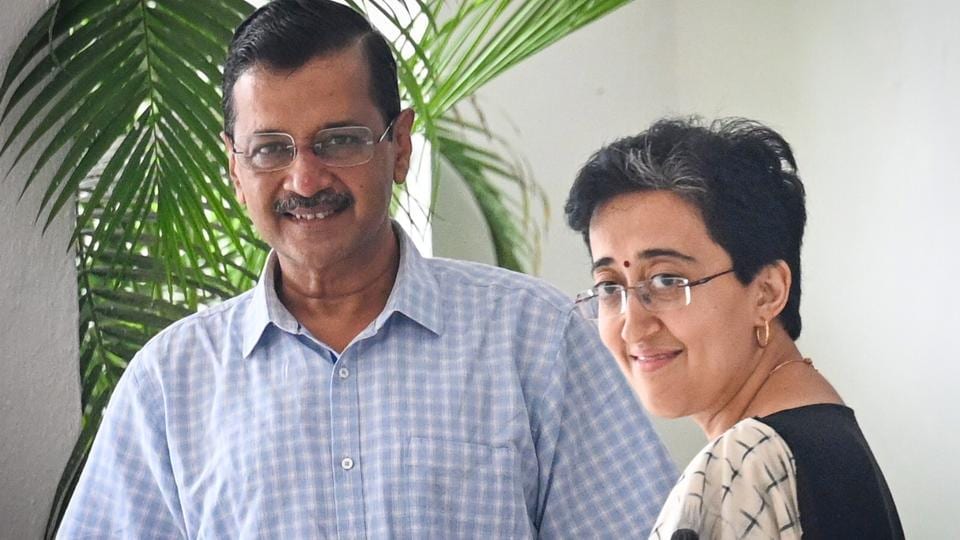
“Further proceedings in the case are stayed,” a bench of justices Hrishikesh Roy and SVN Bhatti said on a plea by Kejriwal and Atishi, challenging the Delhi high court order of September 2 that refused to quash the defamation proceedings against Kejriwal and Atishi. The high court order implied that AAP convenor Arvind Kejriwal would have to appear before the trial court on October 3 to face criminal defamation proceedings on a complaint of Rajiv Babbar, an authorised representative of Delhi BJP Pradesh committee.
The proceedings stem from allegations made by the two AAP leaders, allegedly accusing the Bharatiya Janata Party (BJP) of orchestrating the deletion of 3 million voters’ names, from specific communities, from Delhi electoral rolls.
The bench, which will take up the case after four weeks, said it needed to examine if Babbar was an aggrieved person under Section 199 of the Code of Criminal Procedure. The bench also said that the petition raised a larger issue of whether the threshold for criminal defamation for speeches in political discourse should be higher.
Senior lawyer Abhishek Manu Singhvi, who appeared for the petitioners along with Vivek Jain. doubted the maintainability of the defamation complaint by pointing out that the statement alleged to be defamatory did not name Babbar. He stated that Section 199 of the Code of Criminal Procedure (CrPC) lays down the procedure to prosecute a defamation complaint and provides that only a “person aggrieved” can file the complaint.
“Babbar claims to be the authorised representative of Delhi BJP, It is not an entity in law and a general indiscriminate class cannot file a defamation complaint. Further, Babbar is not concerned with my complaint. He is representative of a non-qualified entity,” said Singhvi. He further said that the AAP convenor had said that it was “shameful” that the BJP orchestrated the deletion of names from the voter list and such language is part of political discourse. As regards Atishi, Singhvi said that nothing is attributable to her except for her picture in one of the posters as the statement was made by Kejriwal alone.
Singhvi also drew a parallel to a similar case decided on September 10 where the top court stayed defamation proceedings against Congress MP Shashi Tharoor for his remark against PM Narendra Modi quoting an article of 2012 published by Caravan magazine. The magazine carried a statement by an unnamed RSS leader who compared PM Modi to a “scorpion sitting on a Shivling”.
The order was passed by a bench headed by justice Hrishikesh Roy who said that the manner of speech used by Tharoor was a “metaphor”.
Singhvi even suggested that the Kejriwal matter could heard along with Tharoor’s pending petition. Babbar was the complainant in the case against Tharoor too.
Senior advocate Sonia Mathur appearing for Babbar sought to distinguish the present case from the September 10 order. She said, “Here there is reference to caste and the imputation is against the BJP which brought harm to the caste.” She said that while Babbar filed the complaint against Tharoor in his individual capacity, the present complaint was filed following a letter by BJP on January 16, 2019 authorising him to file the complaint as an authorised representative of the party.
The bench remarked, “If we take it that the complainant or the complainant political party are political entities, this has happened during elections (in the run up to the 2019 Lok Sabha pollls). Can’t we not take it that this was part of political discourse that was said to garner votes.”
Mathur argued that rather than focus on the person filing complaint, the character of the complaint must be seen. The bench did remark that the statement by Kejriwal did lack “sobriety” and said, “Lakshman rekha (dividing line) in these cases has to be decided.”
Singhvi pointed out that past decisions of the top court dealing with defamation law vis-a-vis fundamental freedom of speech has required the threshold to place reasonable restrictions on free speech to be very high.
Noticing these judgments in S Khushboo v Kanniammal (2010) and Subramanian Swamy v Union of India (2016), the bench said, “The issue as to whether respondent 2 (Babbar) is an aggrieved person within the definition of Section 199 of CrPC needs to be examined.”
Similar examination needs to be made whether political party can be an aggrieved party under the relevant section.”
Further, the court observed, “In other words, whether the threshold for criminal defamation is to be taken at a higher threshold level for political persons and political parties.”
The Delhi high court order that was under challenge in the top court said that the AAP leaders’ accusation implied that the ruling BJP engaged in corrupt practices by manipulating the voter rolls and removing names, to influence public opinion. The high court deemed the statements to be defamatory since they tarnished the reputation of the party and undermined public trust in the party.


