
 E-Paper



Bilkis case: SC to hear petitions against remission to 11 convicts
On the previous date of hearing, the court was informed that except for one of the convicts, all remaining 10 convicts were served notice

 Prefer HTon Google


The Supreme Court on Monday agreed to hear petitions filed by Gujarat riots victim Bilkis Bano and other eminent citizens challenging the remission granted by the Gujarat government to 11 convicts who raped her and killed members of her family as she was fleeing from her village during the 2002 riots.
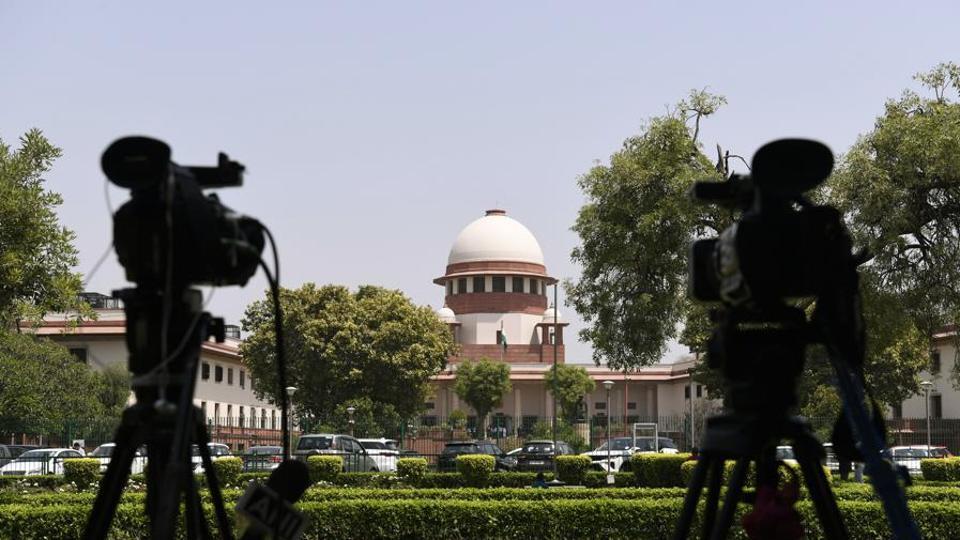
A bench of justices BV Nagarathna and Prashant Kumar Mishra posted the matter for issuing directions on July 17 after being told that the 11 accused have been served notice through insertions in two local language newspapers in Gujarat.
No hearing in the court can proceed unless all parties in a case are served proper notice of the proceedings; in May, the court was upset over the matter being delayed on account of technicalities. Seeking a report from the registry on May 9 of all unserved parties in the matter, the court directed the petitioners to intimate the accused persons through newspapers, commonly accepted as a mode for general intimation to the public.
Advocate Shobha Gupta produced the newspaper clippings and filed an affidavit testifying serving of notice to the respondents. With this, the proceedings will now proceed; the Gujarat government is represented in the matter by solicitor general Tushar Mehta.
Apart from Bano, the court is also hearing a bunch of public interest litigations (PIL) filed by Trinamool Congress MP Mahua Moitra and former Communist Party of India MP Subhashini Ali, among others.
On the previous date of hearing, Gupta informed the court that except for one of the convicts, Pradip Ramanlal Modhiya, all remaining 10 convicts were served notice. Gujarat police pasted the court notice outside Modhiya’s residence in Gujarat. His phone was found to be switched off and members of his household refused to take the notice on his behalf.
Although Modhiya was represented by a lawyer in one of the PILs, he informed the court on the previous occasion that he had no instructions from his client to appear in Bano’s matter. The court frowned upon the tactics and had said during the earlier hearing, “Do not make a mockery of this court by playing such games.”
To ensure fair play, the court said, “We cannot compel a lawyer to appear in the matter. If we will be bogged down by these technicalities, we will lose sight of the main matter.” and proceeded to pass the order to serve the noticer.
The Gujarat government in August last year released the 11 convicts who were found guilty by a trial court in Maharashtra, where the trial was shifted, for the rape of Bano and murdering 14 persons, which included seven family members of Bano, including her child.
The petitions challenged the grant of remission by pointing out that the present remission policy in Gujarat does not permit premature release of rape convicts. Since it was a case investigated by the Central Bureau of Investigation, they questioned the lack of consultation with the agency.
The petitions even argued that the Maharashtra government should be the competent authority to consider remission as they were convicted by a court in that state.
However, the state government and the convicts relied on an apex court order of May last year which decided in the case of one of the convicts that Gujarat, where crime took place, and not Maharashtra will be the appropriate government to decide the issue of remission under Section 432 of Code of Criminal Procedure.
Applying the policy applicable in the state at the time of their conviction, the Gujarat government granted remission under the old 1992 premature release policy. A review petition filed by Bano challenging the top court’s May judgment was rejected in December last year.


