
 E-Paper



Supreme Court to hear review plea against PMLA verdict in open court tomorrow
Karti Chidambaram’s review petition cited more than 40 grounds to challenge the July 27 judgment, arguing that the reasoning of the top court was flawed and erroneous, and was contrary to settled decisions by the Supreme Court


NEW DELHI: The Supreme Court has agreed to hear in open court on Thursday a review petition filed by Congress leader Karti Chidambaram against its verdict last month upholding the provisions of search, seizure and arrest under the Prevention of Money Laundering Act (PMLA) 2002.
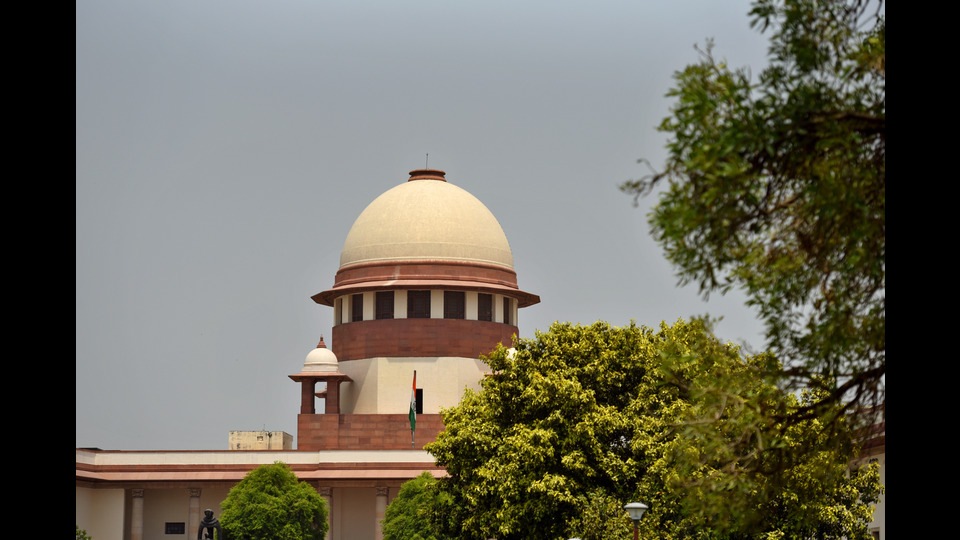
The review petition, filed by parliamentarian Karti Chidambaram, an accused in the INX Media case, questioned the findings of the Supreme Court bench in its July 27 verdict which also underlined that the power given to the central probe agency for making arrests, carrying out searches and seizures are valid under the Constitution and do not suffer from the vice of arbitrariness.
“The application for oral hearing is allowed. List the matter in the court on August 25,” said the court’s brief order on Wednesday.
Since the judgment was given by a three-judge bench headed by justice AM Khanwilkar (who retired on July 29) and justices Dinesh Maheshwari and CT Ravikumar, the review petition was heard in chambers by Chief Justice of India (CJI) NV Ramana along with the other two judges who decided the matter.
Review petitions are usually considered inside the judges’ chambers and no open court hearing takes place.
The Supreme Court hearing of the matter assumes significance amid the opposition’s allegations against the Centre on misuse of central probe agencies over the arrest of leaders.
Karti filed the review petition on Monday, citing more than 40 grounds to challenge the July 27 judgment, and arguing that the reasoning of the top court was flawed and erroneous, and was contrary to settled decisions by the Supreme Court.
It also contended that the verdict violated the constitutional guarantees protected by apex court judgments in the past and questioned the court’s decision to test the validity of the PMLA provisions without deciding the moot constitutional issue: whether such amendments could be introduced under the parent Act by way of a money Bill. This question is pending before a five-judge Constitution bench in the Roger Mathew v South Indian Bank case of 2020.
“On this ground alone, the impugned judgment deserves to be reviewed,” the plea said.
The plea also questioned how the judgment validated each provision of the PMLA as constitutional without understanding its far-reaching consequences.
It also challenged the judgment for allowing retrospective operation of the law by allowing PMLA proceedings to be initiated against a person who is charged with an offence which later in point time gets included as a predicate offence under the schedule attached to PMLA.
“An act committed even 100 years ago (in respect of an offence under IPC) can be resurrected and the person concerned can be accused of ‘money-laundering’ after the PMLA was brought into force and the offence included in the Schedule… Such a result is expressly forbidden by Article 20 of the Constitution,” the petition said.
In a separate judgment on Tuesday, a three-judge bench headed by CJI NV Ramana struck down two offensive provisions on prosecution and confiscation under the Prohibition of Benami Property Transactions Act, 1988 , observing that a law which is overly broad, disproportionately harsh and operates without adequate safeguards is unconstitutional
Tuesday’s verdict coupled with concerns regarding “arbitrary application” of a PMLA provision was seen to open a window for challenging the July 27 judgment by the court that affirmed ED’s vast coercive powers under the PMLA.


