
 E-Paper



Supreme Court upholds Orissa high court’s power to suo motu designate senior advocate
The top court’s decision has made it clear that despite the 2017 and 2023 ruling, the full court of the high court is empowered to designate senior advocates

 Prefer HTon Google


NEW DELHI: The Supreme Court on Monday upheld the Orissa high court’s full court decision to confer senior designation to five lawyers in 2021, reiterating that the procedure laid down by the top court for senior designations does not take away the high court’s suo motu power to designate senior advocates based on fairness, transparency and objectivity.
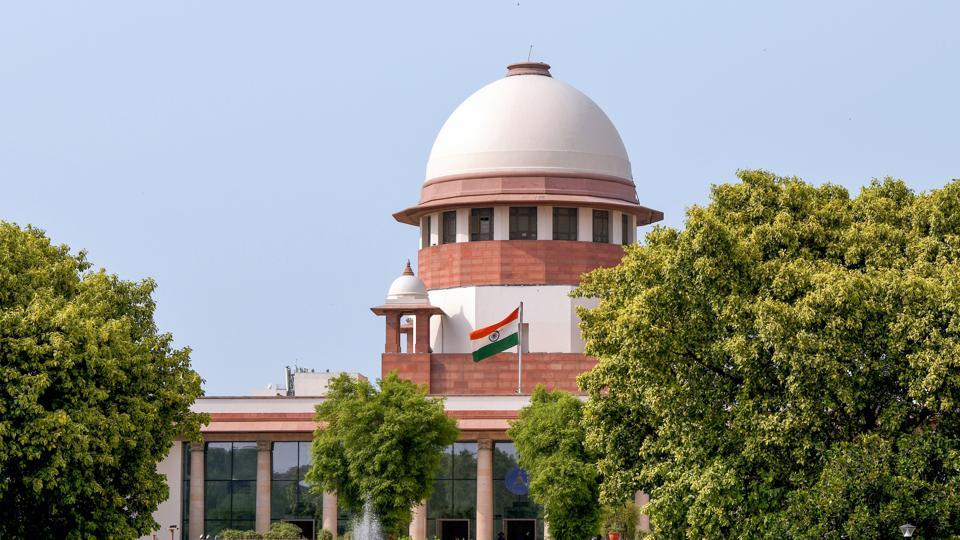
A bench of justices JB Pardiwala and R Mahadevan further said that nobody can claim senior designation as a matter of right based on seniority, experience or popularity as this discretion is conferred upon the high court or the Supreme Court, which should be satisfied that the advocate possesses outstanding ability, integrity, and professional standing.
The top court had the occasion to consider the matter on a petition filed by the Orissa high court which appealed against its own decision passed on the judicial side on May 10, 2021, striking down the rule which permitted the full court (comprising all judges of the high court) to suo motu recommend a lawyer for designation as senior advocate.
Reviving the rule and setting aside the May 2021 order, the top court said that the procedure for senior designations formulated in two decisions of the top court in Indira Jaising-I (2017) and Indira Jaising-II (2023) provide for three modes by which senior designation can be conferred.
This can be done by way of a written proposal by the chief justice or sitting judge of the high court, or an application made by the advocate concerned or suo motu by the full court. In 2019, the Orissa high court framed the High Court of Orissa (Designation of Senior Advocate) Rules, 2019 which conformed to the top court’s judgments.
On May 13 this year, another three-judge bench examined these two decisions of 2017 and 2023 in Jitender alias Kalla v State of NCT of Delhi, and reaffirmed the validity of suo motu designations by the full court, provided that it adheres to the constitutional principles of fairness, transparency, and objectivity.
“As a matter of judicial discipline, we respectfully follow and concur with the judgment in Jitender @ Kalla, as it squarely applies to the present case. Accordingly, no reconsideration of the issue involved herein is warranted,” the judgment authored by justice Mahadevan said.
The five lawyers who were made senior advocates were Durga Prasad Nanda, Gautam Mishra, Debi Prasad Dhal, Karunkar Hena and Santanu Kumar Sarani.
Based on the suo motu decision taken by the full court, they were designated senior advocates even as the high court separately invited applications from eligible advocates as per its notification issued in April 2019.
After the high court struck down the suo motu decision on the judicial side, the five lawyers were considered along with other applicants. On April 27, 2022, pursuant to the high court order, they were again designated as senior advocates. This decision was never under challenge.
The top court’s decision has made it clear that despite the 2017 and 2023 ruling, the full court of the high court is empowered to designate senior advocates. “The designation of a senior advocate is a mark of distinction granted by the court in recognition of exceptional legal acumen and advocacy. It is not conferred as a matter of right, nor can any advocate claim it merely on the basis of seniority, experience, or popularity,” the top court said.
The bench stressed that courts were not expected to grant this status arbitrarily or as a matter of favour. “At the same time, the process for designation must be merit-based, transparent, fair, and free from personal preferences or informal influences.”
Senior advocates are designated under Section 16 of the Advocates Act, 1961, an honour conferred by the high court or Supreme Court in recognition of an eminent standing, ability and knowledge or experience of law at the Bar.
The 2017 and 2023 decisions introduced a permanent committee in the Supreme Court and high courts to assess suitability based on a point-based criteria that assessed candidates on the basis of years of experience, contribution to judgments, publications, and expertise in any domain of law. The committee replaced the system of secret ballot followed earlier by judges of the constitutional courts to confer senior designation to eligible lawyers, specifying that secret voting could be resorted to in a given case.
The latest decision in Jitender alias Kalla discontinued the points-based assessment while retaining the other aspects decided by the earlier two decisions.


