E-Paper



Tackling pollution to provide clean drinking water for all
A World Bank report ,Quality Unkown: The Invisible Water Crisis, released in August this year, using a vast database on water quality, showed it would be nearly impossible to meet the global targets set to save the deteriorating environment by 2030.

 Prefer HTon Google


Not just air, water pollution is also a major concern with most water bodies being used as dumping sites for industrial waste, untreated sewage and even solid waste matter, making water largely unfit for drinking and a health hazard.
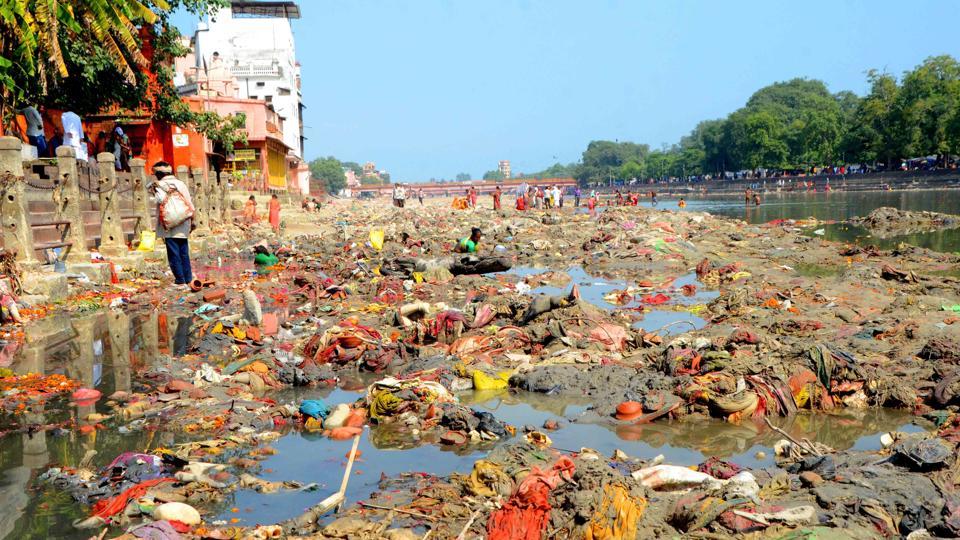
Several studies have shown how water pollution remains a global challenge, especially chemical contamination.
A World Bank report , Quality Unkown: The Invisible Water Crisis, released in August this year, using a vast database on water quality, showed it would be nearly impossible to meet the global targets set to save the deteriorating environment by 2030. Failure to meet the targets will eventually have an impact on the overall health, economy, education, and so on, of all countries.
The 193 United Nations (UN) member-states agreed on September 25, 2015 to a 15-year target of 17 sustainable development Goals (SDGs), with 169 targets aimed at helping everyone live healthier, more prosperous lives on a cleaner planet.
SDG 6 refers to clean water and sanitation for all, but the UN World Water Development Report found about three out of 10 people - 2.1 billion - did not have access to safely managed drinking water at home in 2015. India was no different, with many parts of the country reporting water contamination due to arsenic, mercury, cadmium and fluoride, among others.
Arsenic contamination, especially is huge, and was first reported in 1983 from West Bengal. Since then, it has affected at least six other Indian states -- Jharkhand, Bihar and Uttar Pradesh, in the floodplains of the Ganga river; Assam and Manipur in the floodplains of the Brahamaputra and Imphal rivers and Rajnandgaon village in Chhattisgarh, according to the abstract, Groundwater Arsenic Contamination in India: Vulnerability and Scope for Remedy, prepared by experts from the National Institute of Hydrology, Roorkee.
Some experts say it is a problem in the floodplains of all rivers originating from the Himalayas and the Barail range in the northeast.
Arsenic poisoning leads to symptoms such as skin diseases, liver toxicity, heart ailments, destruction of red blood cells, and even cancer
Efforts have been made by various agencies and individual experts in devising ways to ensure safe water supply to the affected population.
Robin Dutta, a professor in the chemical sciences department at Tezpur University in Assam, has been working on a technique to remove arsenic and fluoride from water since 2005, and after five years of work, finally the technique became functional in 2010 and first tested in Assam’s Jorhat city, one of the severely affected areas in the state.
The technique was patented in 2017.
“While most other contaminants such as lead, mercury etc. are a man-made problem, arsenic and fluoride contamination is due to natural causes and affects vast areas and larger populations. We developed two methods for removal of arsenic and fluoride that are easy to make and very cheap, which makes it useful at the grassroots level,” says Dutta.
The techniques have been named Arsiron Nilogon (for removal of arsenic) and Fluoride Nilogon (for fluoride removal).
“Arsiron Nilogan is a technique wherein we create a condition that’s similar to underground water that doesn’t have arsenic by making use of catalysts such as cooking soda, potassium permanganate and ferric (iron) chloride. These are all commonly available chemicals. As a result of the chemical process that takes place by mixing these compounds together, arsenic settles on coagulated ferric chloride and can be removed through filtration technique,” says Dutta.
The basic idea behind the technique was to convert a difficult-to-remove form of arsenic to an easy-to-remove form. The cost of using the technique is as low as 1 paisa for filtering one litre of water.
The Fluoride Nilogon technique involved treating water with crushed limestone that absorbs fluoride and phosphoric acid. The contaminant in this case can also be filtered out. The cost is even lower than the arsenic removal technique at 0.4 paise to filter a litre of water.
With support from the department of science and technology for his project, Dutta is already working on expanding the technique to other states such as Bihar and Uttar Pradesh that are also grappling with water contamination.
Dr Kuttanellore Muraleedharan, director of the Council of Scientific and Industrial Research (CSIR)-Central Glass & Ceramic Research Institute (CGCRI), has also worked on filtration techniques that help remove hazardous contaminants from water.
“Be it arsenic, iron or other elements dissolved in water, our ceramic membrane technology is capable of purifying it with good results,” he says.
CGCRI experts developed the technology over a decade ago but it picked up only about 5-6 years ago. A filtration plant can be installed at the community level to filter water for as low as 20 paise per litre.
“It can purify everything else apart from the saline contamination for which reverse osmosis (RO) technique is good enough. There have to be slight modifications done before installation based on the type of contaminant in water. The device can stay active for 6-7 years,” said Dr Swachchha Majumdar, a researcher at the CGCRI lab who is also part of the team that developed the technology.
The institute has tied up with a manufacturer and takes orders for installation of the plant at its laboratory. “It is our indigenous product and our laboratory takes the orders,” he added.
Dr Muraleedharan says, “There is a huge need to come up with innovative techniques for water purification that are affordable for masses at the ground level as water contamination is a major issue in India.”