
 E-Paper





Follow the latest breaking news, major developments and agenda-setting stories from India and around the world with the newsdesk at Hindustan Times. Operating round the clock, the desk brings together experienced editors, reporters and correspondents to deliver fast, accurate and contextual reporting across subjects that influence public policy, governance, business, society and international affairs. The HT News Desk covers politics, elections, government policies, the economy, business and markets, science and technology, the environment, law and order, infrastructure, education, climate issues and geopolitics, while closely tracking developments across states, institutions and global capitals. The team also leads coverage of major breaking news events, policy announcements, court proceedings, natural disasters, public emergencies and significant international developments. Reports published by the newsdesk are based on information gathered from reporters on the ground, official statements, government agencies, court records, regulatory filings, recognised institutions and other authoritative sources. Stories undergo editorial scrutiny and verification processes to ensure accuracy, fairness and relevance, and are updated as events evolve and additional information becomes available. Whether covering a key political decision in New Delhi, an economic policy shift affecting millions, a landmark court ruling or a major global event, the HT News Desk aims to provide readers with reliable, fact-based journalism that delivers not only the latest developments but also the context and analysis needed to understand their wider implications.
Tale of two states: More voters in Gujarat opted for NOTA than in Himachal Pradesh
In percentage terms, 1.8 per cent voters in Gujarat pressed the NOTA button on electronic voting machines in Gujarat, as against 0.9 per cent in the hill state.


Gujarat voters have emerged to be twice as likely to reject all candidates in the fray, compared to their counterparts in Himachal Pradesh, with over 5.5 lakh in Prime Minister Narendra Modi’s home state opting for the NOTA (None of the above) button.
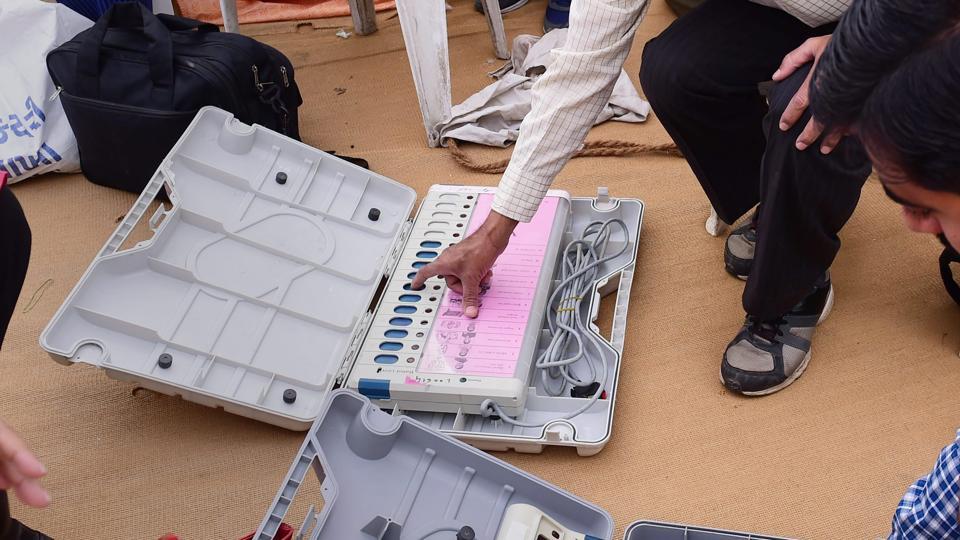
In percentage terms, 1.8 per cent voters in Gujarat pressed the NOTA button on electronic voting machines in Gujarat, as against 0.9 per cent in the hill state (over 33,000 voters).
In case of Gujarat, the NOTA vote share was higher than that of any party other than the Congress and the BJP. While the BJP has secured over 49 per cent votes, the Congress got nearly 41.4 per cent and independents across the state together polled 4.3 per cent.
In Himachal Pradesh, BJP has got 48.7 per cent votes as against the Congress’ 41.8 per cent, while independents got 6.3 per cent. CPM also managed to score more than the NOTA with 1.5 per cent votes.
In Gujarat chief minister Vijay Rupani’s Rajkot West seat, the NOTA votes were more than 3,300, while the same in Vadgam (where Congress-supported independent Jignesh Mevani won) were over 4,200. In Godhra also, NOTA counted over 3,000.
The NOTA option enables a voter to officially and secretly register a vote of rejection of all contesting candidates.
In the 2014 Lok Sabha polls, when NOTA was introduced for the first time in any parliamentary election, close to 60 lakh voters (1.1 per cent) opted for this option, which was more than the votes polled for more than 20 parties.
Before the introduction of EVMs, when voting was done through ballot papers, voters could put in the ballot paper without marking against any candidate thereby rejecting all candidates. Such a vote was counted as a rejection. However, this rejection option was not available to voters on the EVM and therefore the NOTA button was introduced.


